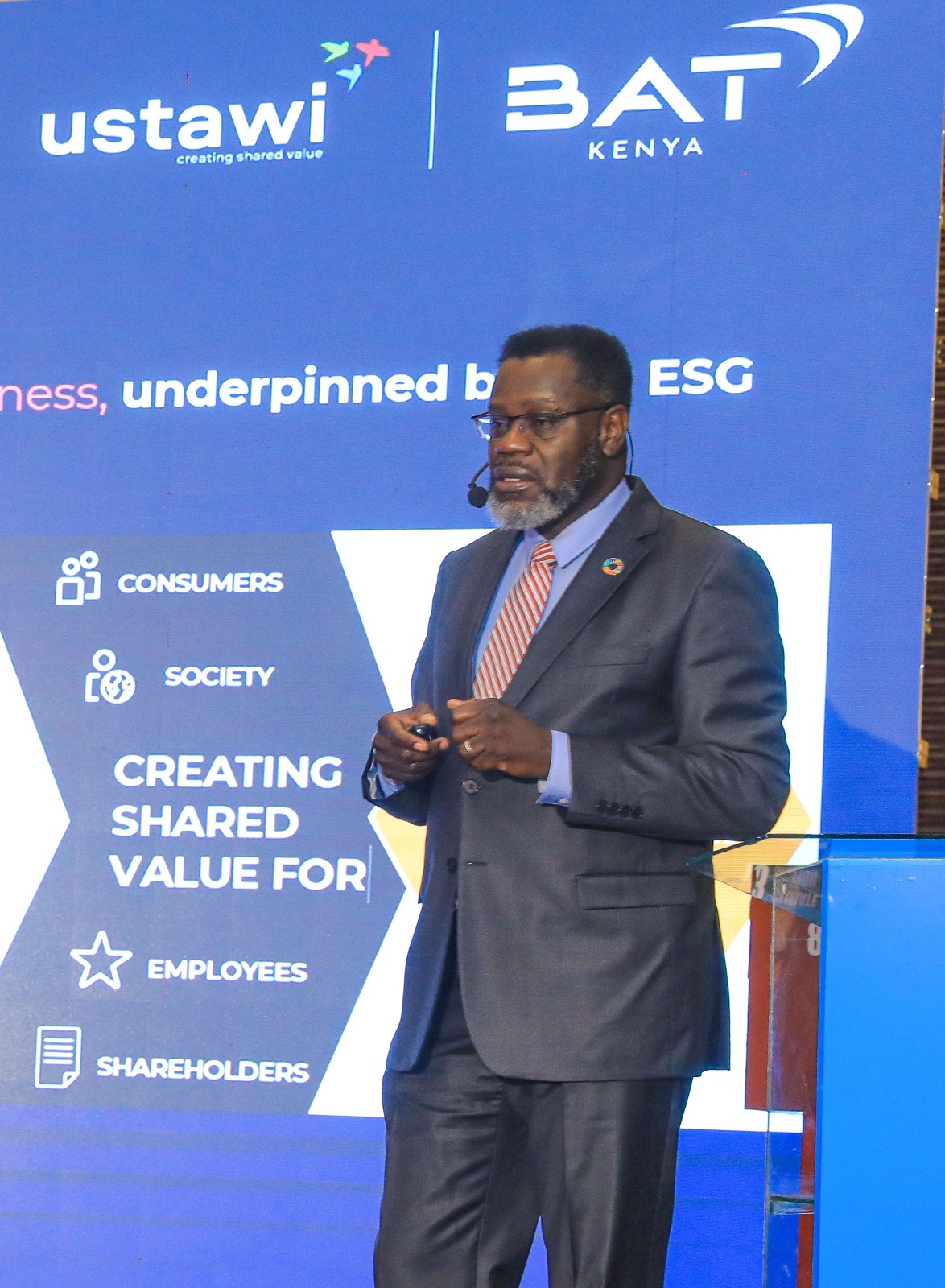
BAT managing director Crispin Achola/HANDOUT
BAT has a long history and rich heritage in Kenya. The company has been around since 1907 and listed on the Nairobi Securities Exchange since 1969. Its business involves activities ranging from the growing of tobacco leaf to the distribution and sale of finished tobacco products and nicotine products without tobacco.
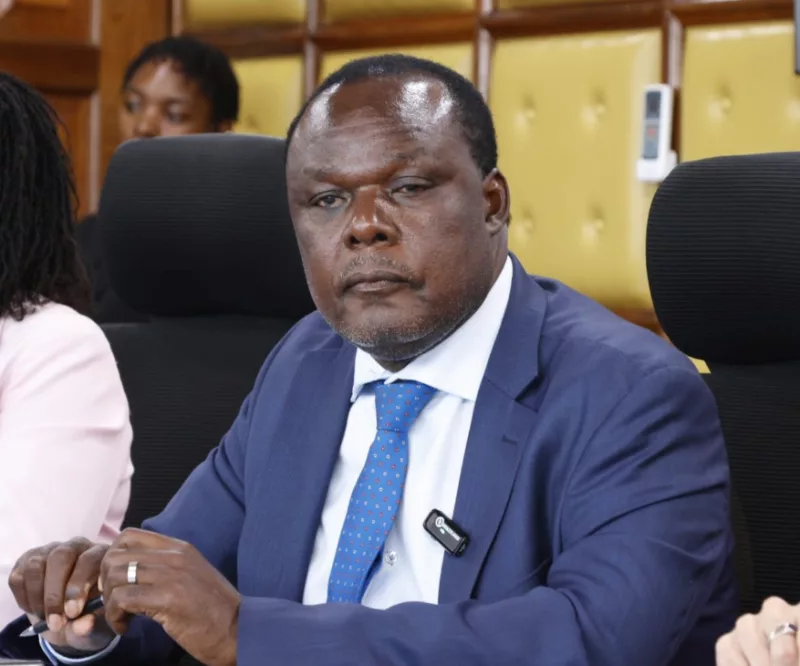
The Star spoke to managing director Crispin Achola on the company’s journey, industry challenges and future plans.
BAT has had a presence in Kenya since 1907, tell us about the journey of 118 years and BAT Kenya as a manufacturing hub for the region?
BAT has a long history and rich heritage spanning over a century in Kenya.Our journey is one of business growth, evolution and transformation. We have a vertically integrated, that is end-to-end operation in Kenya, from tobacco farming and processing to product manufacturing, sales and exports into various markets in East and Southern Africa.Our tobacco farming operation partners with about 2,000 contracted tobacco farmers concentrated in the western Kenya counties of Migori, Busia, Homabay and Bungoma, as well as Meru to the East of the country.
BAT Kenya is a key manufacturing hub for the BAT Group in Sub-Saharan Africa. Our operation comprises a Green Leaf Threshing Plant (GLT) in Thika and a cigarette manufacturing factory in Nairobi’s Industrial Area. The cigarettes manufactured at our Kenya factory are sold locally for domestic consumption and also exported to countries such as Uganda, DRC, Mauritius, Rwanda and beyond. In addition to cigarettes, we export cut rag (loose processed) tobacco to various markets in the region.BAT Kenya exports about 65 per cent of its production from the Nairobi factory, thereby contributing to the Country’s exports agenda, in addition to driving the local economy as a leading local manufacturer. Beyond tobacco products, BAT Kenya sells oral nicotine pouches, as part of our smokeless product portfolio. Through science and innovation, BAT aims to create A Better Tomorrow by building a smokeless world. Our nicotine product portfolio is a catalyst for our business transformation, anchored on BAT’s ambition to reduce the health impact of our business through offering a greater choice of less risky products for our consumers.
The company has been listed at the Nairobi Securities Exchange (NSE) since 1969. How has this influenced returns to shareholders?
BAT Kenya’s listing on the Nairobi Securities Exchange in 1969, then known as the Nairobi Stock Exchange, cements our position as one of the first present-day entities to have been listed on the stock market. This has been key for the business in its quest to create shared value through returns on investment for its approximately 6,000 shareholders, of whom around 5,800 are local entities and individuals.
Notably, we are on record as having paid one of the highest dividends per share in the history of the NSE to its shareholders in 2022 when BAT Kenya recorded a dividend yield of 12.4 per cent. Over the past three years, the company has had an average dividend yield of 12.6 per cent, with 2024 recording the highest yield at 13.3 per cent.
We endevour to maintain a dividend payout ratio of not less than 65 per cent of net earnings, subject to various considerations. Over the last six years (2018-2024), the company has had an average payout ratio of 89 per cent. This approach is guided by a deliberate and strategic approach to deliver sustained shareholder value.
With over Sh45 billion in shareholder dividends paid over the last decade and one of the highest payout ratios, as well highest dividend-yielding securities on the NSE, BAT Kenya has solidified its place as a top-performing listed company in Kenya.
What would you say is your general contribution to the country’s economic growth?
On the back of solid business fundamentals, we are committed to creating shared value for our stakeholders through sustained socio-economic contribution. This ambition is embodied in our sustainability agenda themed USTAWI and is underpinned by integrity, ensuring that we are doing business the right way.
Overall, in the last business year 2024, we contributed over Sh37 billion in direct and indirect economic value, through payments to various stakeholders including contracted tobacco farmers, employees, suppliers and shareholders. This also includes various taxes paid to the government of Kenya. We have paid over Sh100 billion in taxes over the last six years. We also contribute approximately 100 million dollars (Sh12.9 billion) in foreign exchange to the local economy annually. Beyond payments, we continue to invest in sustainability initiatives such as solar energy, where we have invested about Sh140 million in the last three years.
We also continue to invest in our people, who are the cornerstone of our success. Part of this includes supporting the livelihoods of over 80,000 Kenyans in our value chain, including suppliers, tobacco farmers, employees and traders.
For our contracted farmers, we drive various initiatives under BAT’s THRIVE programme which is aimed at enhancing farmer livelihoods and supporting women development and job creation. For example, in 2024, our contracted tobacco farmers earned an approximate total net pay of Sh1.1 million for 4.7 million kilogrammes of tobacco purchased by the company.
We deploy various sustainable agriculture initiatives to enhance crop yield for farmers, including use of hybrid seeds which are more weather resistant, mechanisation and innovations such as floating seedbeds which also help in driving water stewardship. To enhance food security and drive economic empowerment, we issued 13.8 tonnes of maize seed, over 11,000 avocado seedlings and 21 kilogrammes of vegetable seeds to farmers on this programme in 2024. These efforts, amongst others, resulted in over 98 per cent of BAT Kenya’s 1,800 plus contracted farmers growing alternative crops.
We also launched a Sh10 million multi-year Rural Women Development Programme (RuWDep) in 2023 for our contracted women farmers and the spouses of men farmers. This programme focuses on initiatives such as building financial literacy and sustainable agriculture. For our employees, we champion various initiatives including wellbeing programmes, as well as diversity and inclusion to help build a more equitable organisation. In 2024, we achieved and surpassed our target three years ahead of time, to achieve 57 per cent representation of women in senior leadership teams against a 45 per cent target by 2025. Notably, our EXCo comprises 77 per cent women, all by merit.
Our performance in various aspects has earned up various accolades and external recognition, including certification for the eighth consecutive time as a top employer in Kenya and Africa by the global top employers institute, as well as various awards by the Kenya Association of Manufacturers’ Energy Management Awards, Gender Mainstreaming Awards and Champions of Governance Awards hosted by the Institute of Certified Secretaries.
The overall cost of doing business in Kenya is said to be high including electricity and operations costs, what is your take?
While the cost of doing business in Kenya is generally high compared to other neighbouring markets and has continued to rise over the years, BAT Kenya’s resilience is anchored on demonstrated business agility over time. This has helped us adapt to a changing and dynamic business environment and evolving consumer needs. Key considerations for our business include the increasing incidence of illicit trade in cigarettes in various markets, geopolitical tensions and currency volatility, as a result of our predominantly export-oriented business.
From a domestic perspective, our biggest challenge tends to be constrained consumer purchasing power due to the high cost of living, which has led to consumers downtrading to lower priced brands. This reduces consumption of legitimate products and impact revenues, but more worryingly, contributes to a surge in the trade of illicit tax-evaded cigarettes, which currently sits at an estimated 37 per cent of the Kenya market.
Illicit trade not only undermines industry revenues, it also impacts the livelihoods of Kenyans, and deprives the government of much needed tax revenue, approximated at KShs 9 billion annually.
It is time that Kenya addressed this issue decisively, through enhanced enforcement action and multi-stakeholder collaboration, bearing in mind the quantum of the challenge. Key to this is robust cross-border monitoring as majority of the illegal cigarettes in Kenya are smuggled across the border, management of legitimate demand and factory audits and tougher penalties for illicit traders.
Additionally, evidence-based excise tax frameworks are also key to addressing disparities across markets, to help mitigate smuggling from lower tax jurisdictions to higher tax ones.
This multipronged approach will help address cross-border excise disparities which spur smuggling of tax evaded cigarettes into Kenya, which accounts for the largest portion of illicit products in the market.
What is the company’s future in Kenya?
BAT Kenya is an organisation that is on a transformation journey, anchored on BAT’s ambition to create A Better Tomorrow by building a smokeless world. To deliver this, we have an enabling strategy that is anchored on three pillars: to drive Quality Growth, build a Dynamic business and a Sustainability future.
This is underpinned by our sustainability strategy which aims to create shared value for our stakeholders, on the back of five strategic impact areas namely: tobacco harm reduction, climate, nature, circularity and communities.
The quality growth pillar is focused on maximising our growth potential through our brands, innovation, efficiency and margin delivery across the business. In 2024, this was anchored on maintaining our competitive edge through our combustible products and enhanced focus on a sustainable transition to our New Categories portfolio.
Our dynamic business agenda envisages a future-fit, data-driven organisation; ensuring that we are efficient in all our operations. Our data-driven approach continues to create the financial flexibility we need to invest in our people and products and achieve sustained shareholder value.
Finally, building a sustainable future is about seeking to actively encourage adult consumers away from cigarettes and to reduced risk smokeless alternatives sustainably, responsibly and with integrity.
Overall, we will continue to invest in our people, simplify our operations and enhance our sustainability efforts, to build a future-fit business for another century and beyond.