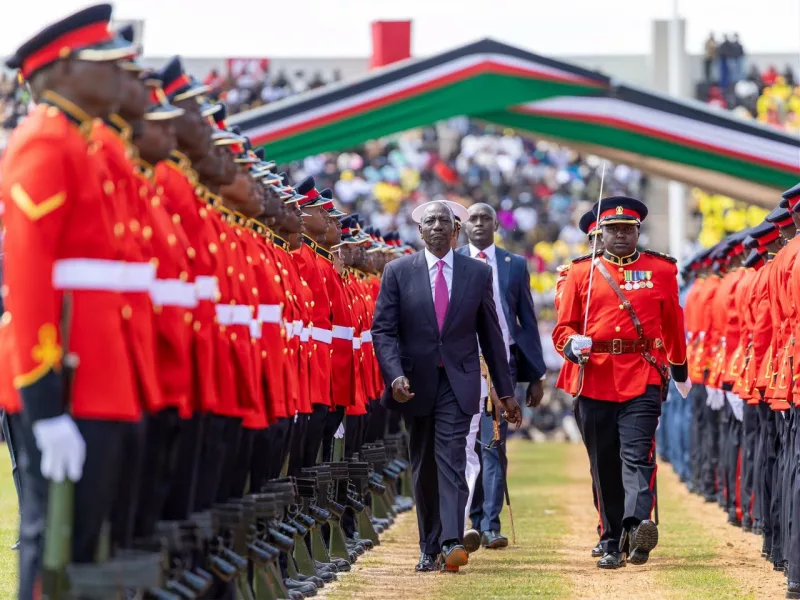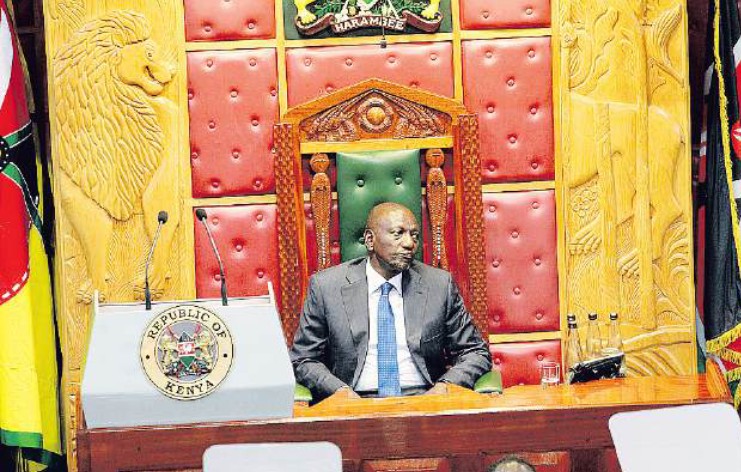
President William Ruto’s State of the Nation address was laden with tantalising promises, ambitious plans and magnificent numbers. New dams, a stronger shilling and healthy GDP were among the statistics cited.
The address on November 20, was a well-crafted script, not devoid of some solid and some unproven statistics, but well articulated all the same.But for many citizens listening and watching from their homes, places of employment, market stalls and farms, the speech felt like a presentation of an ideal nation they scarcely imagined.
The President spoke of making Kenya a "first-world" economy, a vision predicated on massive industrialisation, a digital-led transformation and the creation of millions of new jobs. He touted grandiose figures on affordable housing units, the number of young people enrolled in the digital jobs platform and the billions invested in industrial parks. The language was that of infrastructure, GDP growth and global competitiveness.
However, this ambition was shrouded in ambiguity—the "how" remained elusive. How will these industrial parks and other initiatives absorb the millions of unskilled and semi-skilled Kenyans who constitute the bulk of the unemployed?
The promise of a "first-world" status, while politically resonant, is a concept offering little tangible comfort to a family that cannot afford three meals a day. The metrics of success seemed to be cranes and concrete, rather than the lived experience of the common mwananchi.The President’s vision stands in stark contrast to the reality for a majority of Kenyans. The "real state of the nation" is not found in budget documents but in the shrinking household budgets of its people.
It is a reality defined by the high cost of living, where the price of unga, fuel and electricity continues to bite deeply into incomes while wages do not rise.
Reduced payslips are further assaulted and diminished by involuntary contributions. The pursuit of revenue to service the nation's crippling debt has led to a barrage of new levies, from the increased VAT on fuel to the controversial housing levy.
The President’s speech highlighted formalising the jua kali sector, but for the hustlers in this space, the government's presence is often felt not as support, but as harassment from county askaris and the relentless pressure of new taxes.
The goal and narrative to make Kenya a "first-world" nation is fundamentally misplaced in the current context, because it skips several crucial stages of development.A first-world economy is built on the foundation of a stable, prosperous and secure middle class. In Kenya, the middle class is not expanding but is being systematically eroded, sliding back into the precarious status of lower-middle and even lower class. You cannot build a first-world skyscraper on the foundation of a third-world economy without first reinforcing that foundation.
The focus on mega projects and top-down industrialisation, while visually impressive, fails to address the core structural issues: endemic corruption that siphons away billions, an agricultural sector in perpetual crisis and a healthcare system that burdens the citizens.
A nation where citizens still fund school buildings through harambees and buy their own medical supplies for public hospitals is not on the trajectory leading to first-world status and certainly not on its cusp.
The priorities seem inverted, focusing on outward development rather than first on need—the economic empowerment and welfare of the people.To be fair, the administration has recorded some notable successes. The rollout of the digital infrastructure for the Hustler Fund, despite its criticisms, represents a genuine attempt to provide financial inclusion and credit to those locked out of the formal banking system.
The aggressive push for the Affordable Housing Programme, while contentious, has initiated a much-needed conversation and action on urban development and has created some employment in the construction sector.
And, of course, there are houses. Furthermore, the government’s focus on the digital economy and the plan to equip youths with digital skills is a forward-looking initiative that aligns with global trends and eventually can result in jobs.But for the President’s actions to reflect a better, more prosperous reality, a recalibration is needed. The focus must shift. Instead of a few mega projects, the government should foster an environment for thousands of small businesses to thrive by reducing the cost of doing business and simplifying regulations.
Reducing the cost of living is the single biggest issue affecting Kenyans. Stabilising the prices of basic commodities would provide more immediate relief, not long-term infrastructure projects.
Additionally, the fight against corruption should reflect tangible results, not just rhetoric. The public’s cynicism stems from seeing grand theft go unpunished while they are taxed with new levies.
Restoring faith in public institutions is paramount.Policies should be tailored from the ground up, reflecting actual needs of the hustlers Ruto swore to uplift.
Expanded access to cheaper credit, protection from exploitation and greater market access for agriculture and other products should be the focus, rather than imposing top-down solutions.
Ultimately, the true state of the nation is not measured by kilometres of tarmac or the number of tall buildings, but by the pockets of its people. It is measured by their hope, their security and their ability to provide for their families.Until the government’s script aligns with that reality, the grand vision will remain just that — an alluring script, disconnected from the pressing drama of everyday Kenyan life.