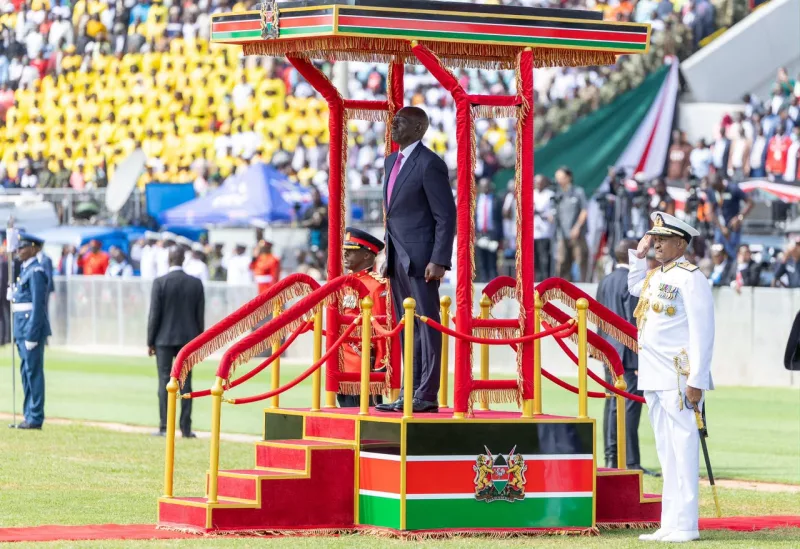
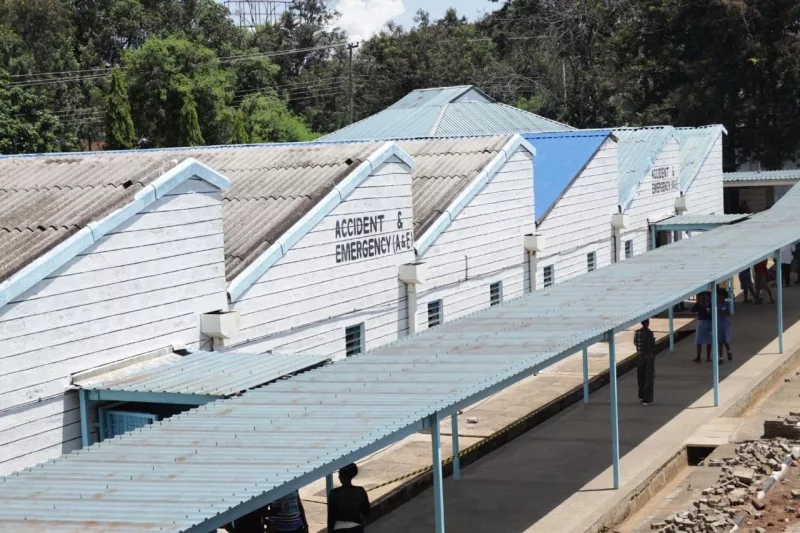
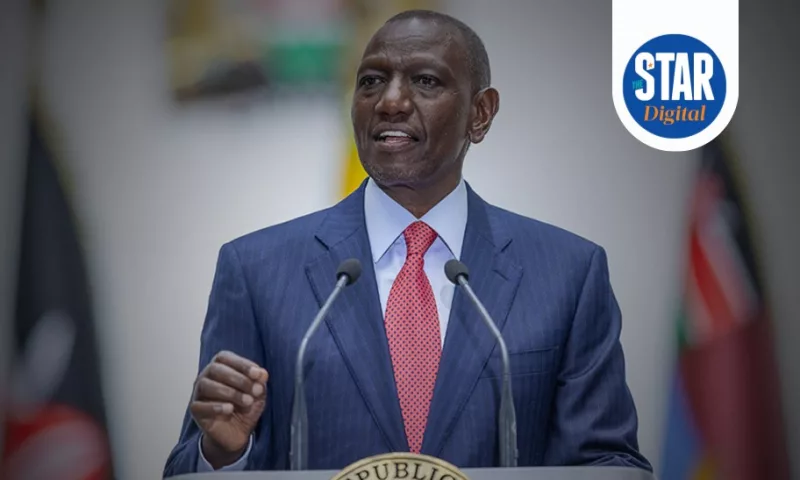
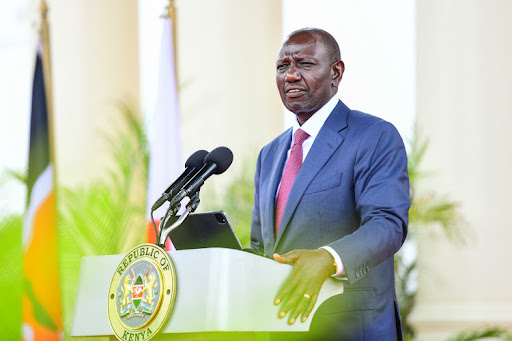
 President William Ruto/PCS
The National Police Service is facing a crisis of integrity amid a government report revealing a sharp increase in criminal offences committed by police officers.
This is even as the country battles a worrying surge in organised crimes and social unrest, which the report says has a nexus with politicians and political activities.
The 2025 Report on the National Security tabled by President William Ruto in Parliament shows that while most categories of general crime decreased, offences involving police officers spiked.
“Decrease in crime rates was recorded in most categories of offences except traffic offences, criminal cases, offences involving police officers and other penal code offences,” it shows.
After a 70.4 per cent surge the previous year, these offences remained elevated, recording a further three per cent increase in the 2024-25 review period.
The report states that there were 237 police-related cases, compared with 230 recorded in the 2024 reporting period, from 135 of the 2023 period.
It reveals there was a general decline in cases of break-ins, theft of stock, vehicle theft and possession of dangerous drugs.
Stealing went down by 1,490 cases, and so were economic crimes, which went down by 531 cases compared with the 2024 reporting period.
The security report depicts a police force under immense pressure, pointing out how officers are on the front lines against al-Shabaab, criminal gangs and civil unrest.
This is while they are also battling internal demons of corruption and criminality, which is a telling indicator of internal decay.
The report has further laid bare the nexus between organised gangs and political patronage in the country.
It states that unemployed youth are being weaponised by rogue politicians, the events fueling a cycle of political violence and insecurity.
The report details that while overall gang-related arrests decreased by 16.5 per cent, the data shows a deep entanglement with the political class.
“Intensified political contests in parts of the country fueled enlistment of vulnerable youths into criminal gangs and amorphous goons by some politicians to counter their rivals, thus compounding the situation,” the report reads in part.
The President revealed that organised crime networks are involved in extortion, robberies, muggings, illegal oathing, cattle rustling, robbery, burglary, fraudulent land dealings, murder and drug peddling.
“They are also engaged in transnational crimes ranging from human trafficking, drug trafficking, smuggling of counterfeit and illicit products,” the report reads.
The report highlights the emergence of new, youth-dominated gangs like 'Team Mbogi' in Nairobi's Umoja area, whose arrested members were aged between 13 and 22.
“This is signifying a trend of juvenile delinquency and involvement in criminal gangs.”
Simultaneously, some older, more established gangs have seen a dramatic decline in arrests.
Notorious groups like Mungiki saw a 94.6 per cent drop in arrests, while others, such as Gaza, Kata Hema and Usiku Sacco, disappeared from the arrest records entirely.
The report, however, cautions about the "re-emergence of criminal gangs under new identities and leadership structures," suggesting a rebranding and adaptation strategy.
According to the report, the political patronage provides gangs with protection, resources and a sense of impunity.
In return, politicians deploy these groups as enforcers during elections, to intimidate opponents and disrupt rallies.
It also cites the recent Gen-Z protests where criminal gangs were used to infiltrate and hijack legitimate demonstrations, turning them violent.
"The exploitation of social and mainstream media played a significant role in mobilising demonstrators, co-ordinating protests as well as propagating misinformation, propaganda, disinformation and hate speech," the report notes.
Kenya’s vast pool of unemployed and disenfranchised youth is cited as the primary feedstock for the gangs.
KNBS data shows that the national youth unemployment rate stands at 20.2 per cent, with 36.6 per cent of the population aged between 18 and 35.
"The obtaining situation heightened the susceptibility of youths to engage in anti-social activities such as recruitment into criminal gangs and terrorism,” President Ruto said.
In response, the government says it has employed intelligence-led operations, community policing and youth empowerment initiatives like Kazi Majuu, Climate WorX, and affordable housing programmes.
However, the report admits to significant hurdles, including inadequate rehabilitation and reintegration programmes for reformed gang members.
It also decries community fear of retaliation and limited alternative livelihood opportunities as the bane.
For the police sector, the government says ongoing security sector reforms, including an upcoming National Police Service Amendment Bill 2025, would improve the situation.
The report adds that an Independent Policing Oversight Authority (Amendment) Bill 2025 is also in the works.
A bill providing for the welfare of former members of the police service is also in the works to provide structural benefits for the officers.
The report, in providing context to the rise in police officers being caught in crime incidents, cites the chaos witnessed in demos.
According to the report, the protests resulted in 12 police stations being attacked or destroyed, six firearms being stolen from officers, four firearms being destroyed, and 142 police vehicles being damaged.
Beyond the protest violence, the report highlights corruption as a pervasive threat to national security, with the police service being a primary focus.
The Ethics and Anti-Corruption Commission received and processed 584 bribery reports in the year.
While the cases are not entirely involving police, enforcement has been cited as the most prone to bribery.
INSTANT ANALYSIS
The government acknowledges that these issues are exacerbated by systemic problems within the security sector. The report cites inadequate tooling, equipment and human resources across security agencies, limiting operational effectiveness, which can fuel frustration and create opportunities for corrupt practices.