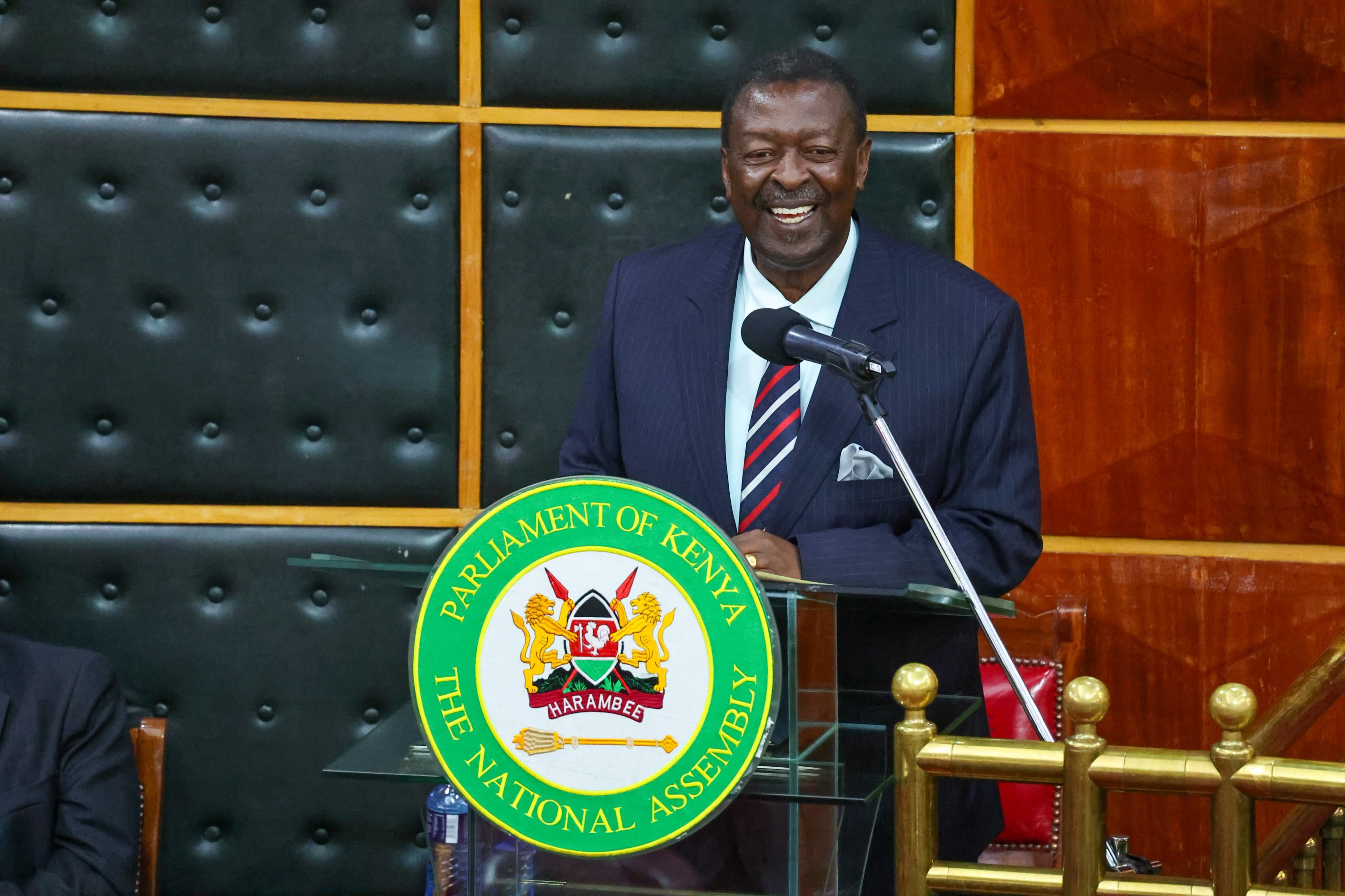
 Foreign and Diaspora Affairs CS Musalia Mudavadi before the National Assembly on November 19./HANDOUT
Appearing before the National Assembly, Mudavadi dismissed claims that the government had enabled or ignored exploitation, calling such allegations “misleading, careless and sensational”.
“The administration of President William Ruto has taken bold, deliberate and forward-looking steps to safeguard our people abroad,” he said.
“We have built clear, structured pathways that ensure Kenyans can pursue safe and dignified employment opportunities overseas, while confidently investing their hard-earned remittances back home.”
In a series of articles, The New York Times last week exposed how Kenyan politicians, including President William Ruto’s family, are profiting from agencies sending women to the Middle East.
The exposé also laid out harrowing accounts of Kenyan women facing physical abuse, sexual violence, unpaid wages and confinement in Saudi homes, sometimes with fatal consequences.
However, seeking to counter that narrative, Mudavadi outlined reforms undertaken since Ruto came into office, including the deregistration of more than 600 recruitment agencies implicated in malpractice.
“It is misleading and sensational for any media outlet to insinuate that the Government has participated in or tolerated slavery or exploitation,” the CS said.
He said only vetted agencies are allowed to operate, and all are now required to provide mandatory insurance to workers at no cost.
“This ensures Kenyans can pursue safe and dignified employment opportunities overseas, while confidently investing their hard-earned remittances back home,” he said.
Human rights organisations, while acknowledging the action, argue that recruitment loopholes persist and enforcement remains uneven, a criticism amplified by the NYT findings.
Mudavadi pointed to the rise in diaspora remittances from Sh490 billion in 2022 to Sh650 billion in 2024 and Sh1 trillion in November.
He credited this to institutional reforms, especially the creation of the State Department for Diaspora Affairs in 2023.
The new department, he said, has strengthened welfare mechanisms and created “clear, structured pathways” for overseas employment, with the government targeting Sh1 trillion in remittances by 2027.
The NYT investigation, however, questioned whether the drive for remittances has overshadowed the urgency of protecting vulnerable domestic workers.
The CS said a new comprehensive labour agreement with Saudi Arabia, covering both skilled and semi-skilled workers, is nearing completion. It will include better wages, stronger safeguards and clearer mechanisms for reporting workplace grievances.
While Mudavadi puts a case in defence of the government, civil society groups argue that protections on paper have not translated into safety on the ground, as survivors have narrated abuse and being trapped in houses despite existing contracts.