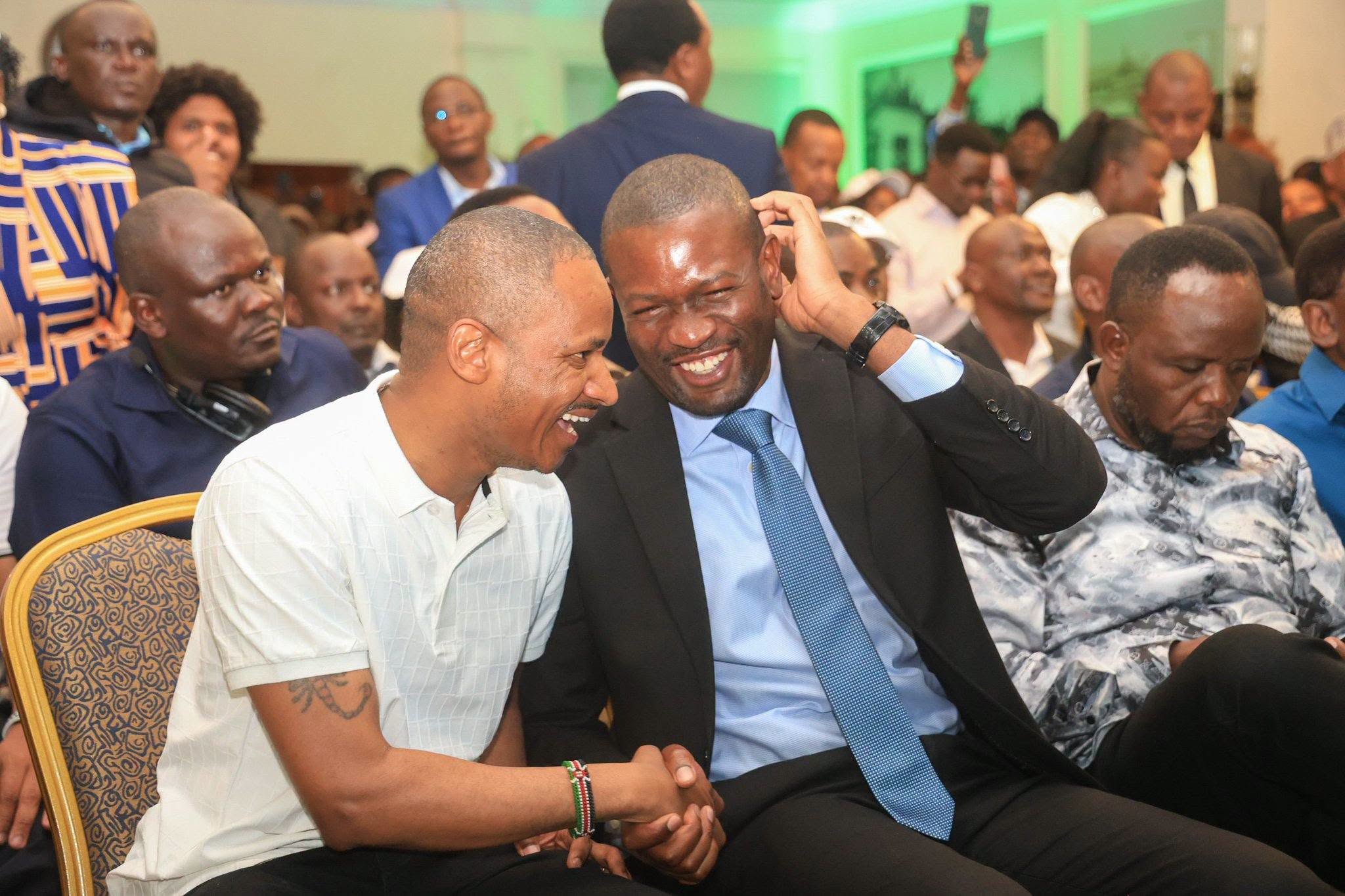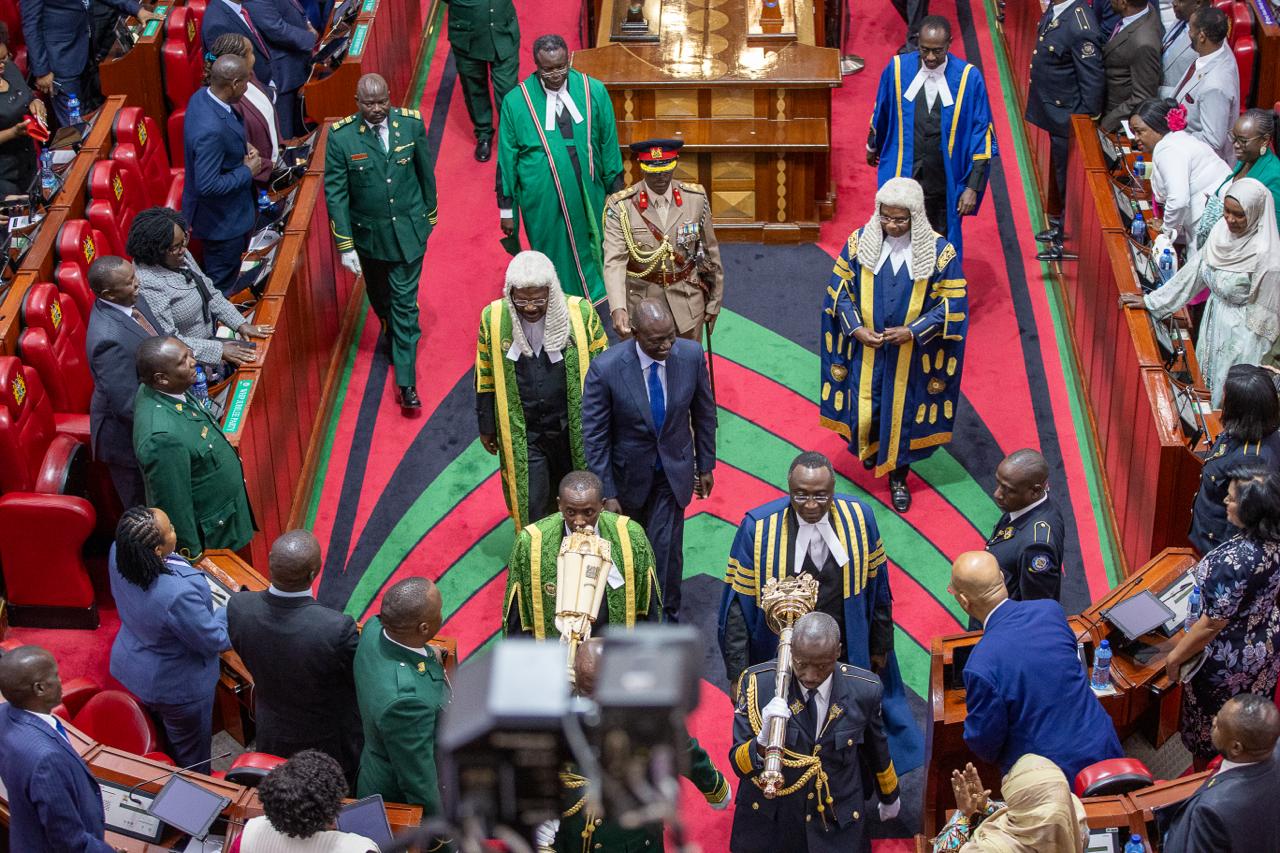
Members of Parliament were visibly divided over President William Ruto’s State of the Nation Address, one that comes midway through his first term.
Ruto made his address before a joint sitting of the National Assembly and Senate, in line with constitutional requirements.
The constitution stipulates that the head of state reports to the nation on the measures taken and progress achieved in realising national values, once a year, as set out in Article 10.
The address, loaded with Ruto’s major achievements across various sectors of the economy, has however drawn mixed reactions from parliamentarians.
While pro-government MPs lauded the President’s remarks on economic recovery, infrastructure expansion and public sector reforms, others claimed it failed to address important national concerns.
Ruto allies rallied behind the President, crediting his policies for stabilising the shilling and expanding the country's infrastructure.
Nominated senator Tabitha Mutinda lauded the speech as bold and forward-looking, saying it reflected a clear plan to steer the country through economic turbulence.
“The President has just mentioned some of the projects the government wants to implement. It doesn’t mean other regions have been left out,” Mutinda said.
“He has been big on development projects that are starting next year. He has highlighted agriculture, which is very critical.”
Seme MP James Nyikal welcomed the President’s speech—awaiting actualisation.
“My take away is that he means well. He has very many projects he wants to do, especially on infrastructure. The statement is good. What we will wait for is the action line,” Nyikal said.
Tigania East MP John Mutunga added: “Kenya is developing right now. You look at the records now, there is improvement in the GDP. Kenya has become the sixth-largest economy in the continent. There is need for us to look at things positively.”
But opposition MPs who attended offered contrasting reactions, with some dismissing the speech as long on promises and short on accountability.
ODM deputy leader Godfrey Osotsi said the address was underwhelming, as it ignored the ten-point agenda and the implementation of the Nadco report he signed with the late Prime Minister Raila Odinga.
“I am very disappointed in the speech because we expected he would address issues like historic injustice, Nadco—he never touched that. We thought he would tell Kenyans about the issues contained in the ten-point agenda,” Osotsi said.
“We also expected he would observe a minute’s silence in honour of the departed Raila Odinga.”
MPs, especially from the Northeastern region, claimed their area has been left out.
“Livestock is abandoned. When shall we be part of this country? This is not the Kenya we envisaged. Where is equality? Northern Kenya was largely missing from the President’s speech,” Mohamed Adow (Tarbaj) said.
Wajir East MP Adan Daudi said the speech focused entirely on other parts of the country, leaving out the Northeastern region.
“The state of the nation is what it used to be before. Northern Kenya has been ignored and has been ignored for 60 years. He talked about dualling roads. We don’t have the road,” he said.
Adding his voice, Raso Dido (Saku), said: “What we want the President to do is to put the resources to the ASALs.”
Those who snubbed the address said they did so in protest, over what they called the government’s failure to honour past commitments.
Murang’a Senator Joe Nyutu dismissed the address as “another formality for the President to push his own agenda”.
“The people whom I represent do not want to listen to Ruto and his lies. They have had enough of his lies and I would not be representing them with my presence there,” Nyutu said.
“Sometimes, you choose to have your peace. If you know you are coming to be lied to, why should I waste my time coming to listen to you? It will be another formality to say things he does not believe in and get cheers from his team of supporters.”
Yesterday, security was significantly heightened around Parliament ahead of the address.
A deployment of General Service Unit personnel and regular police officers had been strategically stationed in key areas along routes leading to the National Assembly, including Harambee Avenue and City Hall Way.
The measures are part of standard security protocols observed whenever the President delivers an address in Parliament.
Motorists and pedestrians were diverted, as certain roads around the Parliament precinct remained closed for the better part of the day.
Traffic marshals and officers on foot could be seen guiding vehicles to ease congestion and maintain smooth movement in surrounding areas.