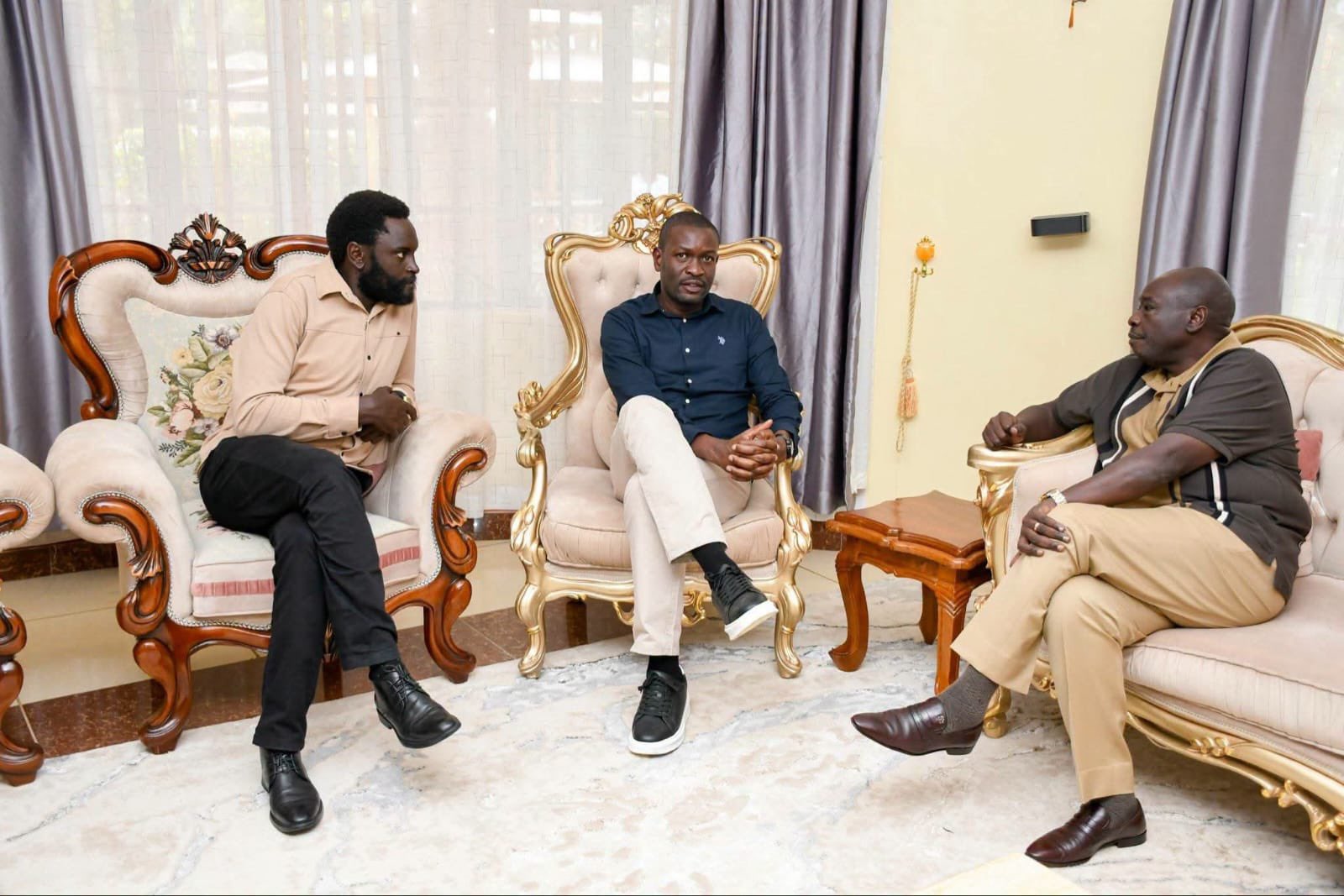
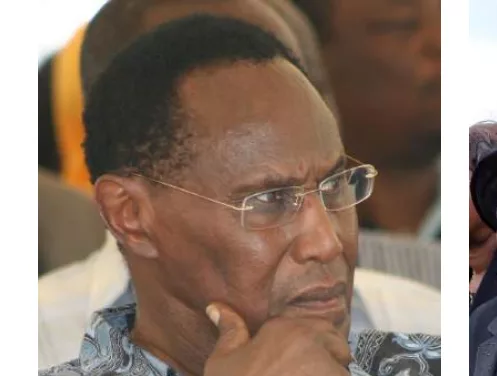
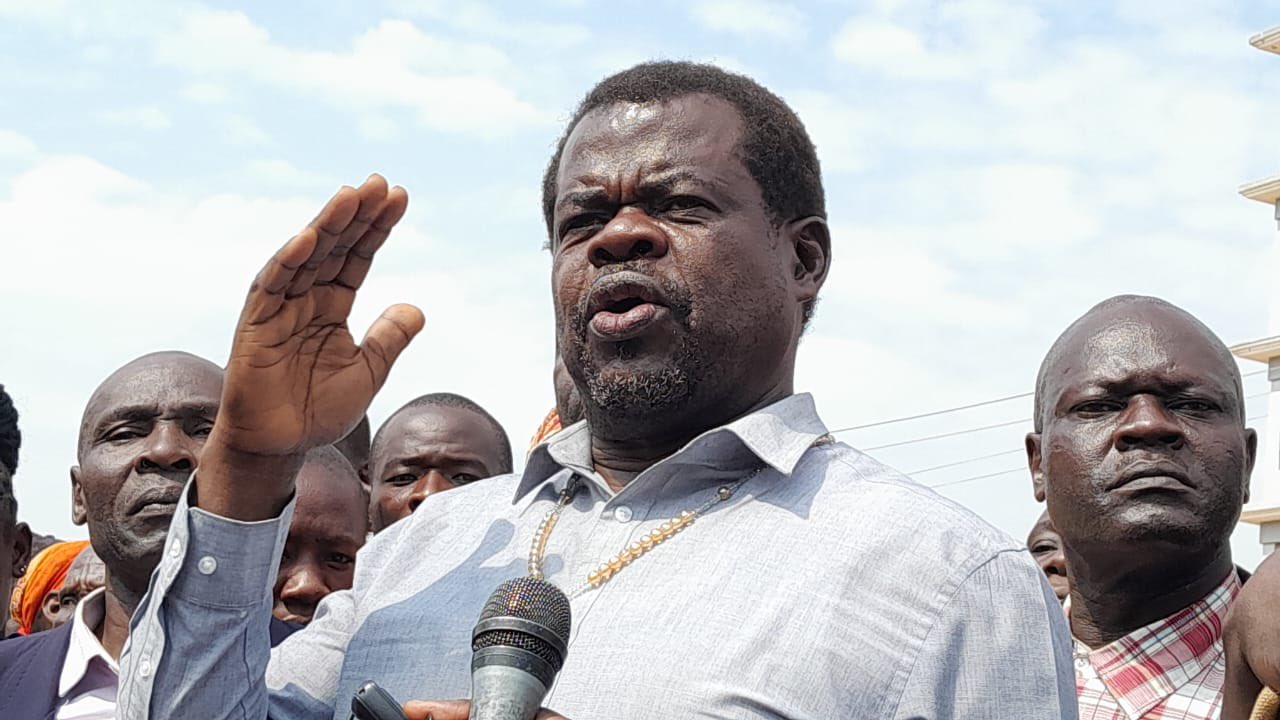
 Busia Senator Okiya Omtatah./FILE
Busia Senator Okiya Omtatah now wants the High Court to declare the traditional Bomas of Kenya National Tallying Centre (NTC) for presidential elections unconstitutional.
The outspoken public interest litigant and now senator says he wants the courts to stop the “Bomas manipulation” of presidential election results as well as allow the media to project a winner of presidential elections by relying on constituency results.
Omtatah seeks, among other things, to abolish the NTC for presidential elections and stop the Independent Electoral and Boundaries Commission (IEBC) from “verifying,” “re-tallying,” or changing the results announced at the constituency level.
The senator is challenging the constitutionality of the NTC, and of Section 39 of the Elections Act and Regulation 83(2) of the Elections (General) Regulations (Legal Notice 128 of 2012).
The core argument is that the national tallying and verification of presidential election results is unconstitutional as it undermines the finality of the results already declared.
He argues that Section 39 of the Act, Regulation 83(2), and current IEBC practice contradict the Constitution, especially regarding where presidential votes should be tallied, verified, and declared as final.
“The Constitution makes constituency results final and, therefore, any tallying or verification beyond this, such as at the county or national tallying centres, is unconstitutional.”
In Constitutional Petition No. E757 of 2025, Omtatah has listed the IEBC, the Attorney General, the National Assembly, the IEBC Chairperson, and the Senate as respondents, and the Katiba Institute as an interested party.
“The Petition raises complex and novel constitutional questions concerning the interpretation of Articles 81, 86, 138, and 249 of the Constitution regarding the conduct, tallying, transmission, and declaration of presidential election results.”
It adds: “The Petition seeks to rectify a dangerous and recurring constitutional crisis that has plagued the last three presidential elections in Kenya, creating a national imperative for its expeditious resolution.”
He argues that the role of the Chairperson of the IEBC under Article 138(10), in his belief, is purely ministerial, limited to collating the final results from the constituencies and announcing the outcome.
“In short, the petitioner is asking the court to return the presidential election to the exact system the 2010 Constitution created: 290 separate constituency declarations being the final national result, with no ‘Bomas drama,’ no week-long suspense, and no opportunity for anyone in Nairobi to change what constituency returning officers have already declared in public.”
The IEBC Chairperson’s only job (Article 138(10)) is to add up the 290 constituency results (a simple arithmetic exercise) and declare who has met the threshold of 50% + 1 and 25% in 24 counties. The Chairperson has no power to verify, re-tally, alter, or reject any constituency results, and has no discretion to alter or re-verify those results.
“The current system, which centralizes the final declaration at the National Tallying Centre, has been a persistent source of electoral disputes, public confusion, and mistrust in the integrity of our presidential elections, as witnessed in the past three electoral cycles.”
Section 39 of the Elections Act and Regulation 83(2) establish a National Tallying Centre, where presidential results are sent for a second round of “verification” and “tallying.”
The petitioner argues that this creates an unnecessary and illegal layer that enables alteration, manipulation, or delay of the results already final under the Constitution.
Omtatah challenges Section 39 of the Elections Act, which introduces verification at county and national levels, on the grounds that this contradicts the constitutional requirement that verification and declaration at the constituency level are final.
The petition argues that relying solely on the IEBC’s online portal for results is insufficient.
“It contends that for true transparency, final constituency results must be immediately published on public noticeboards and made available to the media as soon as they are declared, in line with the public’s right to information (Article 35). The media should be free to disseminate constituency results as soon as they are announced.”
Although the High Court in the Maina Kiai case (2017) touched on transparency and the handling of election results, Omtatah says it did not challenge the constitutionality of the NTC, the legal powers of the IEBC Chairperson and county returning officers, or the requirement of the immediate public dissemination of constituency results, which he wants determined with finality.