Sudan’s civil war has triggered one of the world’s largest humanitarian catastrophes, with new evidence indicating that Russia’s political and military involvement has helped prolong the conflict and worsen human suffering.
Fighting between the Sudanese Armed Forces (SAF) and the Rapid Support Forces (RSF) has raged since April 2023.
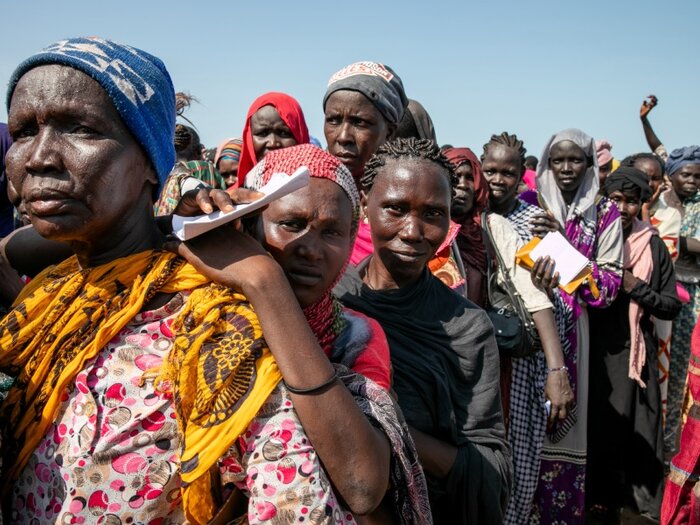
The conflict has displaced more than 14 million people — roughly a quarter of Sudan’s population — and pushed millions more to the brink of famine. Tens of thousands of others have also been killed.
A new report by Amnesty International identifies Russia as a key external actor bearing a significant share of responsibility for the continuation of the war. The report found evidence of weapons manufactured in Serbia, Russia, China, Turkey, Yemen and the UAE being used in Sudan.
According to a report by UN experts, published by The Guardian, the smuggling route often runs through the UAE, then into Chad, and finally into Darfur.
Further reports claim Moscow is using Sudan as part of a broader strategy to divert global attention from its own war in Ukraine while securing access to valuable natural resources.
In November 2024, the UN Security Council voted on a resolution drafted by the United Kingdom and Sierra Leone aimed at strengthening protection measures for civilians in Sudan.
The resolution also demanded that the RSF halt attacks on various Sudanese states and that both rival armed groups cease hostilities and engage, in good faith, in dialogue to de-escalate the conflict.
The Russian Federation vetoed the resolution, making it the only member of the 15-member Council to reject it.
Russia argued that border control and civilian protection were the sole responsibility of the Sudanese government, and that the resolution would undermine Sudan’s sovereignty.
Russia’s representative at the UN, Dmitry Polyanskiy, said Sudanese sovereignty was being ignored, adding that the UK-backed resolution was an attempt to give Western states an opportunity to interfere in Sudan’s internal affairs. “Shame on you, the UK, for trying to push through a resolution that pours gasoline into the Sudan crisis,” he said.
“You are leaving muddy waters for Western countries — which they love so much in former colonies — to push their agenda.”
Russia supported the regime of former president Omar al-Bashir until his ouster in 2019. It has since provided backing to forces accused of provoking and sustaining the current conflict, including the RSF, through mercenaries and weapons transfers that have enabled the group to continue its fight against the army.
Sudan has long been a hub for gold-smuggling networks linked to Russian entities and mercenary groups. Reports indicate that Russia aims to secure long-term access to Sudanese gold by backing armed actors who can protect illegal mining operations. The conflict, analysts say, provides cover for the extraction and smuggling of gold that is channelled to support Russia’s wartime economy.
Plans by Russia to establish a naval base in Port Sudan have further heightened geopolitical tensions. Analysts warn that such manoeuvres risk turning Sudan’s internal conflict into a proxy battleground for rival foreign powers, complicating efforts to reach a ceasefire.
Humanitarian conditions continue to deteriorate. Aid agencies report soaring displacement, collapsing health services and widespread hunger. Regional stability is also at risk, with more than 4.34 million Sudanese refugees having fled across borders, creating pressure on neighbouring countries and contributing to new waves of migration toward Europe.
Despite repeated international appeals, the war shows no signs of slowing. Analysts say the involvement of external actors — particularly Russia — has made Sudan’s conflict harder to resolve and left millions trapped in a cycle of violence, displacement and exploitation.