THE World Economic Forum (WEF) has engaged with Kenya on several fronts, primarily through initiatives focused on sustainable investment, digital economy and inclusive growth. According to WEF, expansion of digitally delivered services, platform technologies and Artificial Intelligence is transforming trade and labour markets.
During a meeting between President Wiliam Ruto and WEF president Børge Brendem, in Geneva in June 2023, WEF expressed interest in establishing a Silicon hub in Kenya as it endorsed the country as a “Silicon Valley of Africa”.
The WEF provides a platform for Kenya to discuss its economic, tech and social development with global leaders, corporations and stakeholders.
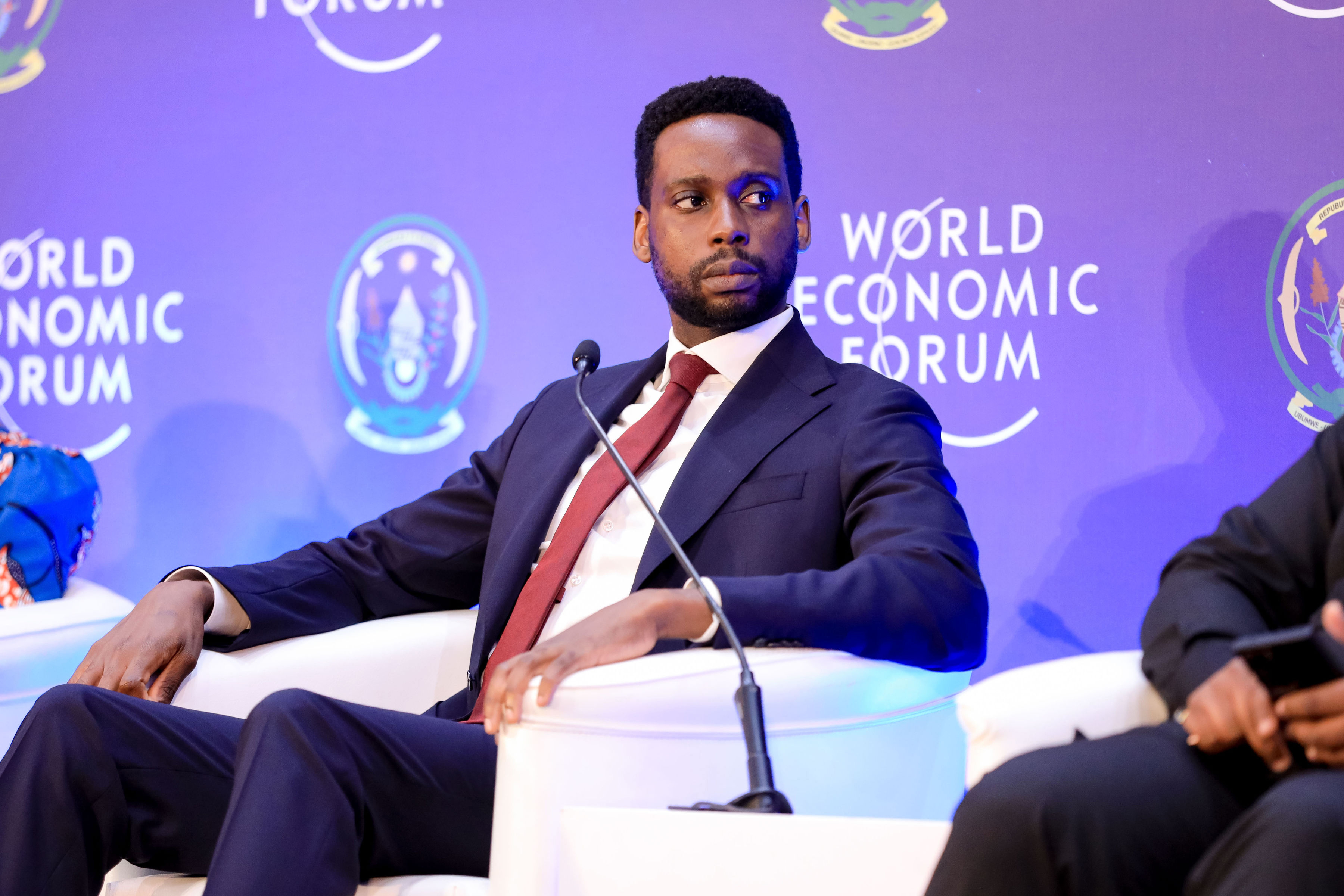
The Star spoke to World Economic ForumDirector of Africa and member of the executive committee, Chido Munyati, who reflected on how Kenya can best achieve prosperity, the challenges it faces and what the future holds not only for Kenya but for the African continent as a whole.
Munyati leads the forum’s regional agenda and partnershipsacross the continent. A former attorney admitted in New York’s 3rd Judicial District, Chidohas served at the United Nations International Criminal Tribunal for Rwanda and practicedlaw at the leading Swiss Law firm, Froriep LLP. He was selected as one of the forum’sGlobal Leadership Fellows in 2017 and was named among the “Top 100 Under 40 MostInfluential People of African Descent” (MIPAD) in 2023.
What initially drew you to your current role at the World Economic Forum and whatpersonal values or experiences align with the Forum’s mission in Africa?
I have always been motivated by the idea of impact at scale. The World Economic Forum’splatform brings together business, government and civil society to drive systemic changeand Africa needs exactly that level of collaboration. Doing this work for a continent as young,ambitious and fast-evolving as Africa is both a privilege and a responsibility.
You began your career in law and international tribunals before joining the WorldEconomic Forum. How has that background shaped your approach to advancingAfrica’s regional agenda?
That experience taught me the value of process and fairness. Whether in international law orpolicy reform, progress depends on rules everyone trusts. I try to apply that same mindset,combining evidence with empathywhen handling public and private sectors.
The World Economic Forum recently endorsed Kenya’s ambition to establish aregional Silicon hub. What informed that decisionand what is the broader plan?
Kenya already has the foundations of a digital powerhouse that is strong tech talent, a culture ofinnovation and world-leading mobile payment infrastructure. We are in discussions toestablish a World Economic Forum Affiliate Centre for the Fourth Industrial Revolution inNairobi, which would join the Forum’s global network of centres in countries such as India,the UAEand South Africa. These hubs collaborate on the governance of emergingtechnologies, from AI and data to digital trade, adapting global best practice to localneeds. A centre in Nairobi would link Kenya’s Silicon Savannah to this global network,fostering cross-learning and accelerating innovation across Africa.
With digital technologies, AI and platform economies transforming trade andlabour markets, how can countries like Kenya attract digital jobs and investment?
By creating certainty, in policy infrastructure and skills. That means predictable regulationon data and digital trade, competitive cloud and connectivityand large-scale digital-skillspipelines linked directly to employers. Kenya’s Digital Economy Blueprint is already a strongfoundation.
Kenya has emerged as a regional hub in trade, logistics, infrastructureand digitalinnovation. From the Forum’s perspective, what are Kenya’s strongest assets andwhat are its main constraints compared to peer countries?
Kenya’s strengths include a vibrant private sector, tech-savvy youthand strategic locationas East Africa’s logistics gateway. Its biggest challenges are the high cost of capital,regulatory inconsistency, and infrastructure gaps outside major urban areas. Addressingthese could unlock Kenya’s next wave of competitiveness.
Over the past five years, what do you see as the most significant shifts in Africa’seconomic and geopolitical role globally?
Africa has moved from being viewed as an aid recipient to being seen as a co-creator ofglobal solutions; especially in energy transition, digital trade and supply-chain diversification.The continent now has a more assertive voice in global governance, anchored by initiativeslike the AfCFTA and the African Union’s G20 membership. Crucially, Africa’s demographicdividend, the world’s youngest and fastest-growing workforce is becoming a centraldriver of its competitiveness and global relevance.
In the context of the African Continental Free Trade Area (AfCFTA), how can Kenyaleverage its geographic and institutional advantages to build competitive regionalvalue chains? What role can the WEF play in that process?
Kenya is well positioned to lead under the AfCFTA in services, digital trade, agro-processing,and green industry. Real progress will hinge on three thingswhich are clear rules of origin, paperlesstrade systems and mutual recognition of standards across borders. The World EconomicForum is advancing this agenda through the Forum Friends of the AfCFTA, a coalition ofbusiness leaders, governments and development institutions working to fast-track theagreement’s implementation. One example is the Mango Hub, developed with Coca-ColaAfrica and the Global Alliance for Trade Facilitation, which pilots cross-border trade inmango purée between Kenya, Tanzania and Uganda to identify and remove real-worldbarriers such as customs delays and inconsistent product standards. These lessons are nowshaping wider AfCFTA trade facilitation efforts.
You have written about youth employment and digital skills. Kenya’s “SiliconSavannah” is thriving, yet gaps persist. Where do you see the most urgent needs, inskills, infrastructureor policy?
The defining challenge is ensuring Africa’s workforce is future-ready. The continent will soonhost the world’s largest labour force, yet the skills demanded by digital and green industriesare evolving faster than education systems. The World Economic Forum’s Future of Jobsreport shows that two-fifths of all skills globally will change by 2030, and that skills gaps arenow the biggest barrier to business transformation. For Kenya, investing in digital skillsalongside reliable infrastructure and clear regulation could turn its youthful population into atrue engine of continental competitiveness.
Access to financing remains a major challenge across Africa. How can countriesmobilise more privatesector capital, both domestic and foreign and how can theWEF help catalyse that?
Africa does not lack ideas; it lacks risk-adjusted financing. One solution is blended finance, combining public guarantees with private investment, supported by a transparent pipelineof bankable projects. It is also critical to reform credit rating systems that misprice Africanrisk, which often inflates borrowing costs and deters investment. The World Economic Forumhelps by providing a neutral platform to bring together governments, investors anddevelopment partners to share best practices, align incentives and scale financing modelsthat work.
Africa’s youth are its greatest resource, yet millions enter the labour market eachyear with limited opportunities. What policies or partnerships have proven mosteffective in addressing youth unemployment and how could Kenya adapt or scalethem?
The most effective approaches combine skills development with market access. Training onits own is not enough, young people need clear pathways into jobs, entrepreneurship andregional value chains. Successful models link education reform to private-sector demandthrough public–private partnerships that create apprenticeships, digital-skills pipelines andwork-based learning opportunities.
Through initiatives like the World Economic Forum’s Reskilling Revolution, wehave seen howcollaboration between government, business and educators can close critical skills gapsand open access to decent work. Kenya can build on its innovation ecosystem by expandingdigital and green jobs programmes that align local talent with growth sectors such as cleanenergy, agri-tech and digital trade under the AfCFTA. With the right partnerships, Africa’syouth can become the continent’s most powerful driver of growth and inclusion.
Looking ahead to 2030 and beyond, what structural transformations do youforesee for East Africa if the region continues on a positive trajectory? What is your“best-case” scenario?
A connected East African market powered by integrated infrastructure, interoperable digitalsystemsand clean energy. In that scenario, goods, dataand services move freely; SMEsscale regionally and Africa’s youth drive innovation in areas like fintech, agri-tech andrenewable energy.
Conversely, what are the most serious risks that could derail progress in Kenyaand Sub-Saharan Africa over the next decade— debt, climate shocks, unemploymentor digital exclusion?
All of the above, but the biggest risk is fragmentation. If we don’t coordinate on climateresilience, debt sustainability and digital inclusion, the gains of the past decade could stall.Managing risk collectively is the only way to sustain momentum.
Drawing on the World Economic Forum’s work across the continent, what uniquelesson or innovation from another African country could Kenya learn from?
Rwanda’s “policy-prototyping” modelwhich is test, measure and refine, which allows governments toinnovate without fear of failure. Other governments could apply this to new areas like AIgovernance, health-data regulation and drone logistics.
In your view, what role should Kenya play in shaping Africa’s global positioning—whether in the G20, the global tech ecosystem or the green transition?
Kenya can be Africa’s proof-of-concept hub. Demonstrating how digital governance, greenenergyand entrepreneurial ecosystems can scale sustainably. By turning its innovationsinto regional exports, Kenya amplifies Africa’s collective influence globally.
What advice would you offer to young Africans who aspire to influence policy ordrive change on the continent?
Start local and stay data-driven. Understand how decisions are made, how budgets workand how to collaborate across sectors. And remember, influence does not always come fromtitles; it comes from delivering solutions that people can see and measure.