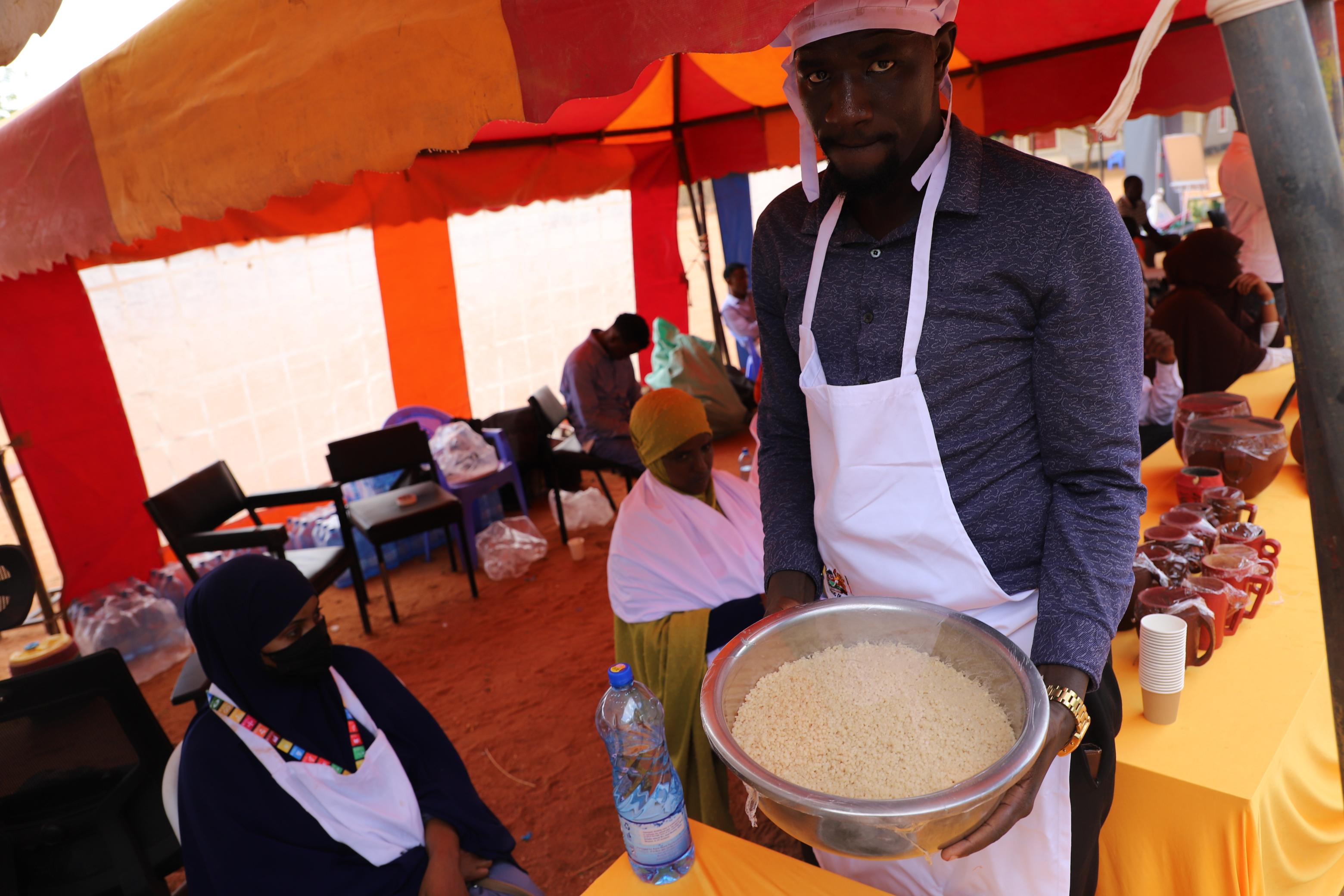
John Makuar shows the Kob dish from Nuer community of South Sudan/AGATHA NGOTHO.
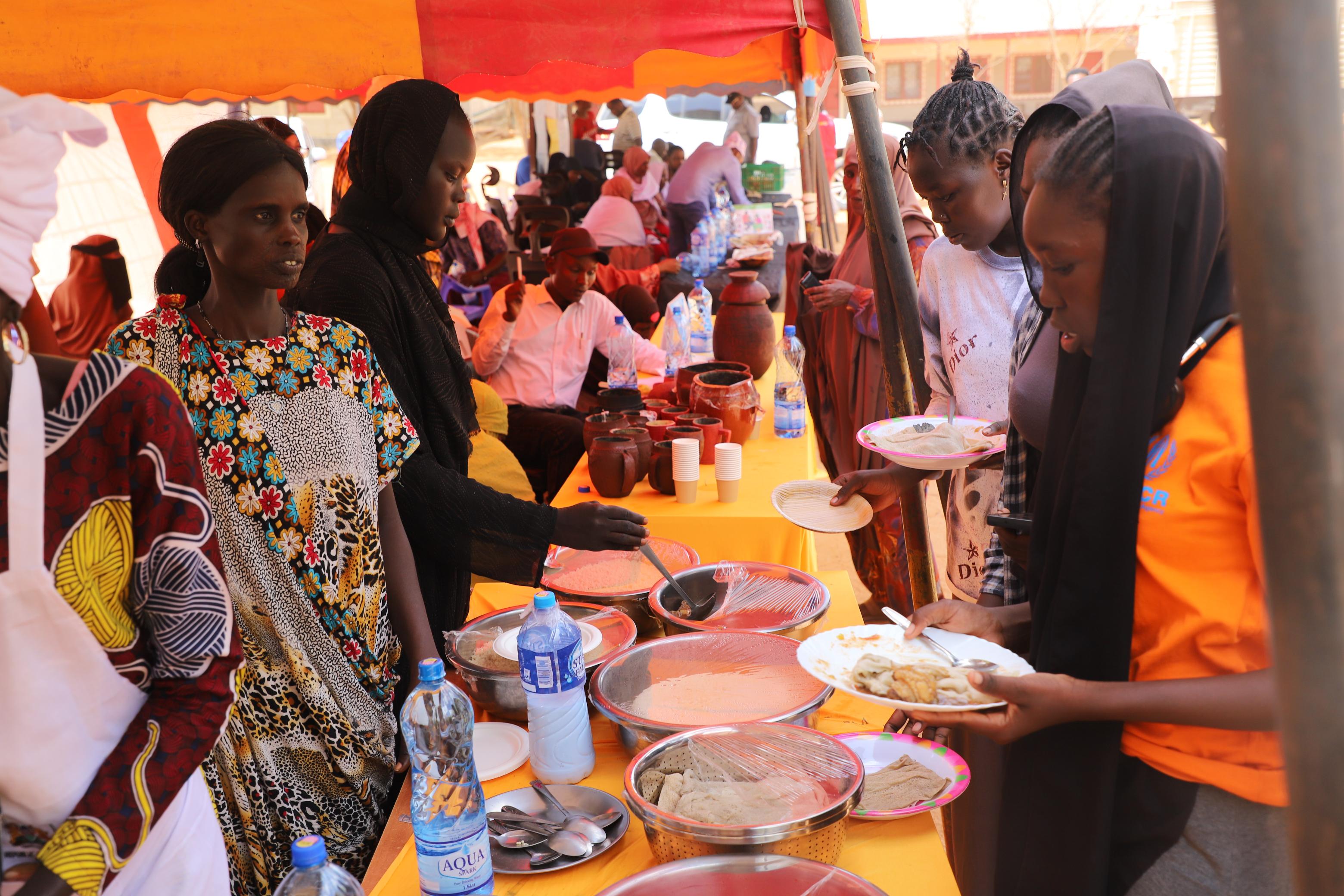
Participants queue to have a taste of dishes during a food fair in Dadaab /AGATHA NGOTHO
FOOD is more than nourishment; it carries memories, identity and connection. This was evident in Dadaab’s Ifo Youth Centre, where refugees and host communities gathered for a food fair that celebrated diverse cuisines, culture and shared learning.
From Sudanese Kop to Somali injera and traditional camel milk, the event provided a space for communities to showcase their culinary heritage while learning ways to improve nutrition and strengthen local food systems.
Refugees and host communities in Dadaab came together at the Ifo Youth Centre for the colourful fair showcasing the diverse culinary traditions carried across borders and nurtured over time. The event brought together participants from different nationalities to present traditional dishes, as well as the tools, utensils and cultural practices associated with preparing, serving and storing food.
Elizabeth Kamau, the Food and Agriculture Organisation manager for the Building Refugee Settlements project, said the food fair aimed to promote dietary diversity and strengthen nutrition among refugees and host communities.
“The goal is to create spaces where communities learn from each other and adopt diverse nutrition practices,” she said.
Among the featured cuisines was kop, showcased by John Makuar from South Sudan. Kop is a fermented mixture of wheat and maize flour served with fish or meat and is traditionally prepared for guests or people travelling long distances.
From northern Uganda, James Okema prepared fish cooked in peanut butter, typically
served with ugali.
Somali specialties on display included injera and susa, a traditionally processed camel milk.
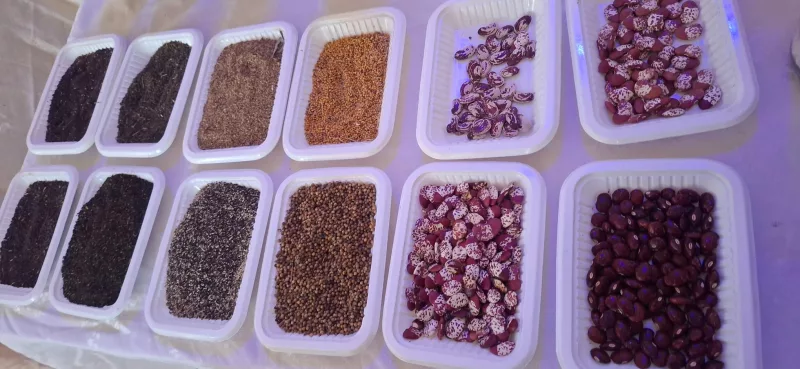
Garissa county’s stand highlighted the potential for local agricultural production, showcasing crops such as watermelon, bananas, lemon, Nyota beans and millet, crops that can thrive despite the harsh climate.
Garissa executive for agriculture and pastoral economies Milgo Abdi said Dadaab and surrounding host communities rely predominantly on livestock, mainly goats and sheep, with only limited crop farming due to hot, dry climatic conditions and minimal extension services.
According to the Integrated Food Security Phase Classification, Garissa is currently in IPC Phase 2 (stressed), meaning families are on the edge of food insecurity, with women and children particularly vulnerable.
Abdi pointed out that the Dadaab Refugee Complex hosts more than 430,000 refugees alongside local communities. He noted that while agriculture and livestock provide livelihoods for some, many households remain dependent on humanitarian assistance. Reduced aid, limited income opportunities and high food prices continue to affect food access and dietary diversity.
Kamau said to address this, FAO in collaboration with the county government and local partners is supporting households to diversify their diets through kitchen gardens, poultry and goat rearing.
“Nutrition is critical. The adoption of kitchen gardens has been encouraging, and families are now able to access fresh vegetables, improving diet and reducing food costs,” Kamau said.
“We are looking to scale up this initiative to reach more households.”
This year’s food fair featured 25 dishes from three communities, along with exhibitions from farmer field schools demonstrating poultry, goat and vegetable production. The fair was held under the theme 'Nourishing communities, building self-reliance'.
Through the Building Refugee Settlements in Kenya project, funded by the EU and implemented by FAO, refugees and host communities receive training through the farmer field school model.
“This is a peer-led, hands-on learning approach that equips households with practical skills in small-scale food production,” she said.
“The food fair provided a platform to celebrate cultural food traditions and preparation methods, promote dietary diversity and nutrition education, showcase local food production and small enterprise opportunities, and strengthen collaboration between communities, government and development partners."
This is in addition to food exhibitions, demonstrations included nutrition talks, food tasting, showcases of handcrafted products from camel bones, and model kitchen gardens.