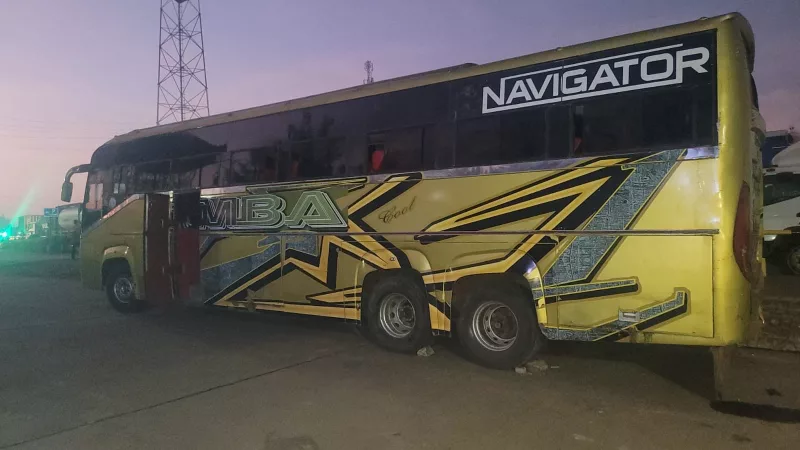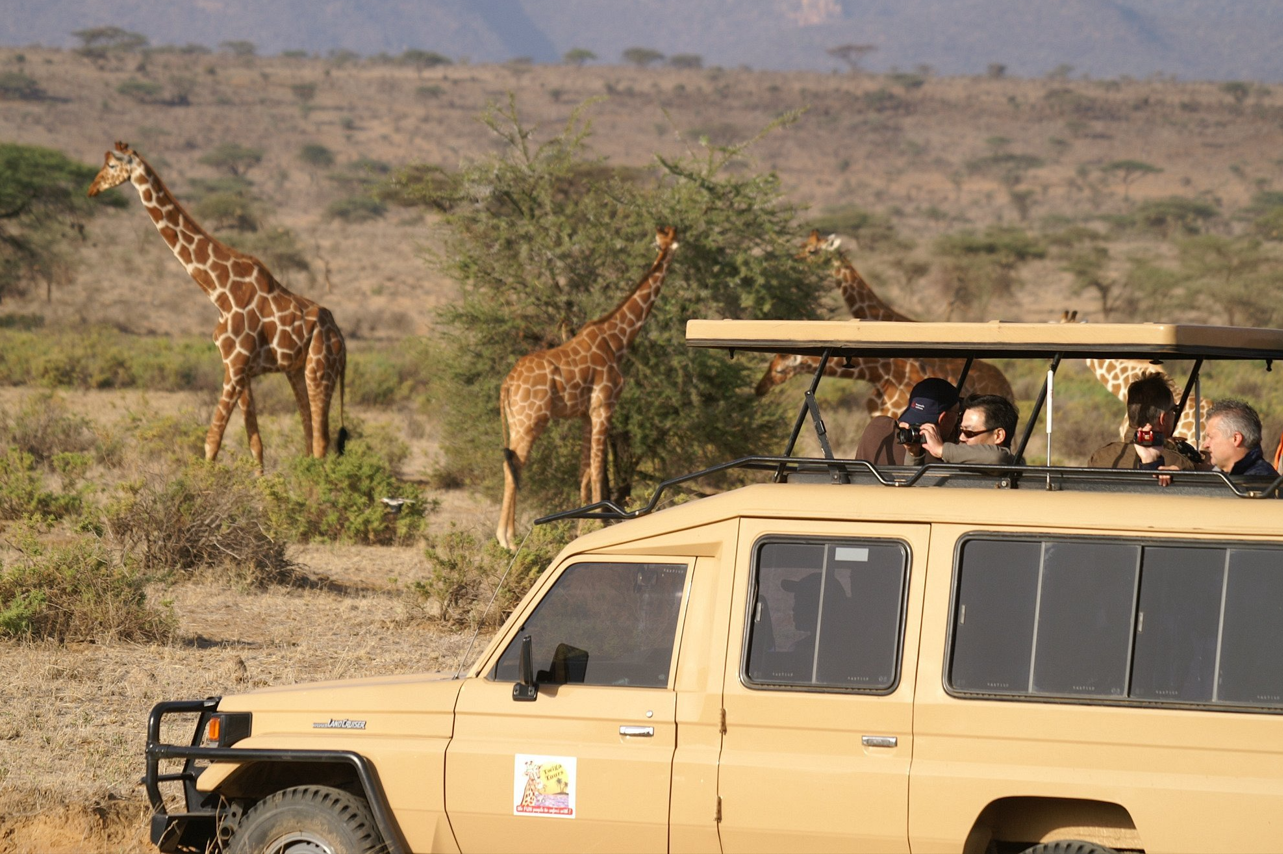
Increased game park entry fees and changes in payment systems have thrown Kenya’s tourism and travel industry into disarray and sector players fear losing to more affordable competing markets.
Higher costs will translate to job losses if tour operators, hotels along safari circuits and inside parks, suppliers and related businesses reduce operations due to fewer international tourists shunning Kenya for cheaper African destinations.
The country’s main competitors are Tanzania, South Africa, Zimbabwe, Botswana, Zambia and Namibia.
The tourism sector accounts for 10.4 per cent of the country's GDP, 5.5 per cent of Kenya's formal employment and contributes to 4.2 per cent of National Gross Fixed Capital Formation. Last year, it recorded the highest figures in the country’s history, welcoming over 2.4 million international tourists, earning Kenya over Sh452 billion in revenue.
The government is capitalising on this momentum with ambitious targets, with Tourism CS Rebecca Miano saying diversity is at the cornerstone of the national strategy to attract three million international visitors and generate Sh560 billion in tourism revenue by the end of 2025.
The changes have introduced higher park entry fees and extra costs on transactions, amid questions over the beneficiaries of the new system, where the Kenya Wildlife Service has migrated from the original eCitizen account to KWSPAY.
The upgraded payment system, which restricted the mode of payment to credit, debit cards, or Mpesa payment options, with the bank transfer option affected, has introduced a five per cent (five per cent of entry fees) “gateway fee” that remains hidden and is only revealed at the point of payment.
These gateway fees are both inequitable and discriminatory, tour operators have said, as they charge different operators higher fees for the same service—purchase of park entry fees.
Industry practice has always been to give discounts to higher volumes and not the other way round, the Kenya Tourism Federation (KTF) has argued.
KTF, which represents the interests of the mainstream private sector associations in Kenya’s tourism industry, notes that the new system was rolled out without prior consultation with key industry stakeholders, a move that has introduced new financial and operational challenges for tour operators, travel agents and park visitors.
This has exposed players to adverse financial impact as the government seeks to raise more revenues, a move they say will make Kenya an expensive destination, hence lead to international travellers settling for cheaper markets.
According to the Tourism and Wildlife Ministry’s Regulatory Impact Statement on the Wildlife Conservation and Management (Access and Conservation) (Fees) Regulations, 2025, published in April 2025, the projected total park fee revenue for KWS is expected to grow from Sh7.41 billion in 2024 to Sh16.58 billion by 2028.
Taking the 2024 figure as a baseline, industry players stand to lose more than five per cent of the 7.4 billion in 2026.
This presents a direct loss of at least Sh370 million in extra payments extracted from the industry stakeholders as unbudgeted “gateway fees”.
“The rollout of the new KWS park payment system has created unnecessary financial strain and uncertainty for operators who had already priced and contracted tours under the previous arrangements. The additional fees and limited payment options translate to unbudgeted losses and threaten existing contracts with our international partners,” KTF chairman Fred Odek said.
The new payment system adds an 8.5 per cent processing fee for all card payments—a rate that is high compared to other government platforms. All extra charges are on top of the perk entry fee and are not gazetted.
The dollar exchange rate applied by KWS has also been high at Sh135 per dollar, compared to the Central Bank of Kenya’s prevailing rate of Sh129, raising questions over beneficiaries.
In a statement on the transition from the old eCitizen platform to KWSPAY, Kenya Wildlife director general Erustus Kanga and his eCitizen Services counterpart Isaac Ochieng, said the additional five per cent gateway fee will be charged per transaction in line with the CBK approval, to support system maintenance and operation costs.
“All payments through bank cards attract additional charges depending on the card service provider, which range up to 3.5 per cent,” the statement reads in part, “Kenya Wildlife Service acknowledges concerns raised by the tourism stakeholders and the public following the transition to a new and upgraded payment system.”
According to the authorities, the transition from the old eCitizen platform to the upgraded new eCitizen payment system, branded as "KWSPay", introduces a more seamless, enhanced and flexible process for booking and making payments for conservation fees and other KWS services.
The new upgraded system includes multiple payment options, including Mpesa, bank cards, bank transfers and an eWallet option, they said, all of which were to be available from November 1.
Inquiries by the Star, however, noted that the industry players were still struggling to access the bank transfer option as of Friday.
KWS has also indicated that all transactions will apply a monthly dollar exchange rate in line with Central Bank of Kenya (CBK) rates in addition to facilitation charges, to cushion the service provider against inflation, currency fluctuations and interbank charges.
The exchange rate will be reviewed and communicated monthly on the KWS website and KWSPAY portal.
This means industry players will remain exposed in case daily exchange rates go down.
“Previously, the gateway fees were pegged at $1, which was acceptable to us. However, these new fees and the introduction of a new system appear to allow someone, somewhere, to earn nearly 10 per cent on every transaction. Who makes that kind of ROI (Return on Investment)? This situation is entirely unacceptable,” Pollmans Tours & Safaris Director of Operations Mohammed Hersi, said in a post.
“In my 25+ years in the tourism industry, I have never witnessed anything like this. The situation is exhausting. Perhaps a boycott of KWS parks is warranted.”
KTF chairman Odek said, “KWS has gone through a procurement that was not sanctioned. Someone somewhere clever has come up with a system and transferred the costs to the public. These people are collecting fees without a receipt. E-Citizen used to give us a receipt for the convenience fee.”
Tourism industry players, who are now seeking intervention by Parliament, say KWS transferred the upgraded system at a time when there is an existing court order, issued on October 1, 2025, barring the implementation of the new rates.
“Seeing that KWS had time to upgrade the system, they should have also obeyed the court order and reverted to the old rates during this process,” Odek said.
The new fee schedule classifies charges by visitor categories: East African citizens, Kenyan residents, non-residents (international tourists) and African citizens from other countries, with prices varying depending on the park, with key facilities charging way above the competition.
Four out of seven of Africa’s top Safari destinations offer beach and safari packages, which have been Kenya’s top-selling products for decades. Main competitors are Tanzania, South Africa, Zimbabwe, Botswana, Zambia and Namibia.
Park entry fees, for instance, at the Maasai Mara National Reserve, Kenya’s top-selling Safari destination, are between $100 (Sh12,920) and up to $200 (Sh25,850) per non-resident adult.
The park fees are for 12 hours (6 am-6 pm), with guests who arrive in the Mara as late as 4 pm paying the full amount, despite having barely two hours for Safari.
Amboseli and Lake Nakuru National Parks are $90 (Sh11,628) for non-residents and $50 (Sh6,460) for African citizens, under the revised rate, while Nairobi National Park has a price of up to $80 (Sh10,336) for non-residents and $40 (Sh5,168) for African citizens.
Neighbouring Tanzania is charging an average $82 (Sh10,594) inclusive of VAT at the Serengeti National Park, Kilimanjaro and Nyerere National Parks, making it cheaper compared to Kenya.
South Africa, Zimbabwe and Zambia range between Sh3,900 to Sh4,100 per day for adults.
For instance, Kruger National Park is charging Rands 535 (Sh3,995) per adult and R267 (Sh1,194) per child for international visitors.
The Narok County government also recently increased bed-night levies among other charges, which players say has made the Maasai Mara “too expensive” to most travellers.
During an industry protest last Thursday, Wildlife PS Silvia Museiya acknowledged sector concerns.
“I agree that there are issues that are genuine,” she said, noting that there was “quite a bit” of public participation before the park entry fees were raised, but the government is ready to address industry concerns.
Both the PS and KWS director general, however, did not respond to the Star's inquiry on the new system's service provider and questions around the hidden charges and it beneficiaries.
The Auditor General has previously flagged spending, financial management and adherence to government regulations, including the use of funds for projects and daily operations at KWS.
In her audit for the year ended June 30, 2024, Auditor General Nancy Gathungu noted the non-reconciliation of revenue collection through the e-Citizen platform.
KWS’s statement of profit or loss and other comprehensive income reflected a total turnover of Sh7.1 billion, which related to collections from park entry fees and accommodation. The service collected revenue amounted to Sh5.6 billion through the e-citizen payment platform.
“However, review of the revenue documents revealed that there is no reconciliation of all the invoices generated through the e-citizen payment platform with the paid and settled invoices since transfers from the e-citizen platform could not be matched with the invoices generated,” Gathungu notes in her report.
Further, turnover amounting to Sh1.48 billion from park entry fees and accommodation was not collected through the e-citizen payment platform, but through the outdated Safaricard System and paper tickets for July, 2023 and August, 2023.
She also noted manual invoicing of other incomes and unsupported bank and cash balances.
“The statement of financial assets reflects bank and cash balance of Sh7,616,303,000 as disclosed in Note 15 to the financial statements. The balance includes 10 bank accounts that remained inactive throughout the year. No explanation has been provided for failure to close the inactive bank accounts,” Gathungu noted.
Further, included in the balance was M-Pesa paybill balances amounting to Sh1,816,187 that were not supported by certificates of balance confirmation during the audit.
In addition, the Mpesa accounts were not closed after the introduction of e-citizen platform for payment of park entry fee.
Even so, KWS is seeking more revenues to help sustainably manage the country’s wildlife and run its operations including compensations for victims of human-wildlife conflict, among other costs.
The hike in park fees is on the back of inflationary pressure and low budgetary allocation from the exchequer, which has left KWS with no option but seek more revenue generation avenues.
It needs over Sh1.2 billion to compensate families whose loved ones were killed by wild animals and a separate Sh3.5 billion backlog in unpaid claims dating back to 2014.
Treasury CS John Mbadi, in his 2025-26 budget, proposed an allocation of Sh13.2 billion for wildlife security, conservation and management, Sh953 million for wildlife research and development and Sh1.1 billion for human-wildlife conflict compensation; and Sh950 million for wildlife insurance.
The decision by KWS to raise park fees to bridge budget gaps, however, puts businesses and jobs at risk, in case of low tourist numbers, which will also affect the country's earnings and revenue to the government.
Overall, the tourism sector, which is largely driven by wildlife tourism, accounts for 9.3 per cent of total formal employment in Kenya and is estimated to sustain 1.7 million jobs in total as of this year.
It is estimated that last year, 20 to 30 per cent of travel into East Africa shifted to other countries offering cheaper Safari and beach products.
Losing to other African destinations means Kenya could suffer a blow to its international arrivals targets, set at least three million this year, with earnings projected at Sh560 billion. This is up from Sh452.2 billion last year when arrivals hit a record 2.4 million.
The country targets to hit at least five million international arrivals by 2027, which, according to the Tourism Research Institute (TRI), will translate to earnings of about Sh800 billion.
“We are not against park fees increase, but doubling park fees will certainly outprice ourselves,” Hersi told the Star during a recent interview, even as he acknowledged the costs that come with conservation.
He said for the wildebeest migration in the Mara, Kenya, could lose to the Serengeti in Tanzania, hence the need for KWS to carefully make a good decision on how it chooses to hike rates.
The Kenya Association of Hotelkeepers and Caterers termed the plan a “wrong move and wrong timing.”
This is on the back of reduced disposable incomes in the wake of tough economic times, which have made it difficult to spend on leisure.
“This move will suffocate tourism earnings in the long run. Post Covid, the government should have allocated more for conservation and only consider reviewing rates after significant recovery is attained,” KAHC told the Star.