It is Saturday night and the famous Marikiti market in Nairobi is almost deserted, with little activity. Just two trucks offloading cabbages.
The usual bustle is missing, a stark contrast to the dozens of trucks that typically arrive every evening loaded with fresh produce.
"You can see today there are only two lorries here. It was the same yesterday, lorries delivering fruits like oranges are no longer coming," says Michael Macharia, a casual labourer at the market.
The tense political situation in Tanzania has disrupted food supply chains and slowed down business at key Kenyan markets that depend on imports from the southern neighbour. This is mainly Nairobi and Mombasa.
Traders say the slowdown began mid-last week after reports of unrest and roadblocks in parts of northern Tanzania following the country’s disputed general election.
With transporters avoiding major highways due to insecurity, supplies of fruits and vegetables to Kenya’s markets have sharply declined.
Kenyan importers, particularly those dealing in oranges, mangoes and onions sourced from Tanzania’s Tanga and Arusha regions have been hit hardest.
“We rely heavily on Tanzanian produce this time of year. Prices are already rising,” said Mary Wanjiru, a trader at Marikiti.
Kenyan households are staring at a possible increase in prices of key food items after the Tanzania election protests disrupted cross-border movement, cutting off both exports and imports.
This has impacted the imports of food items such as maize, rice and vegetablesincluding onions and tomatoes.
Kenyan traders import tomatoesfrom Tanzania to capitalise on lower prices, which can be attributed to Tanzania's cheaper farm inputs and absence of value-added tax on seeds, making their production costs lower.
For instance, a kilogramme of tomatoes in Tanzania can range between Sh54 and Sh187 compared to Sh60 and Sh350 in Kenya, depending on the quality, typeand where you are buying.
Other food products like spices, fruits and agricultural products such as legumes are also imported to meet consumer demand.
Incumbent President Samia Suluhu was on Saturday declared the winner of the disputed elections amid continued tension through the weekend, as the government took a number of actions including shutting down the internet and imposing nation-wide curfews.
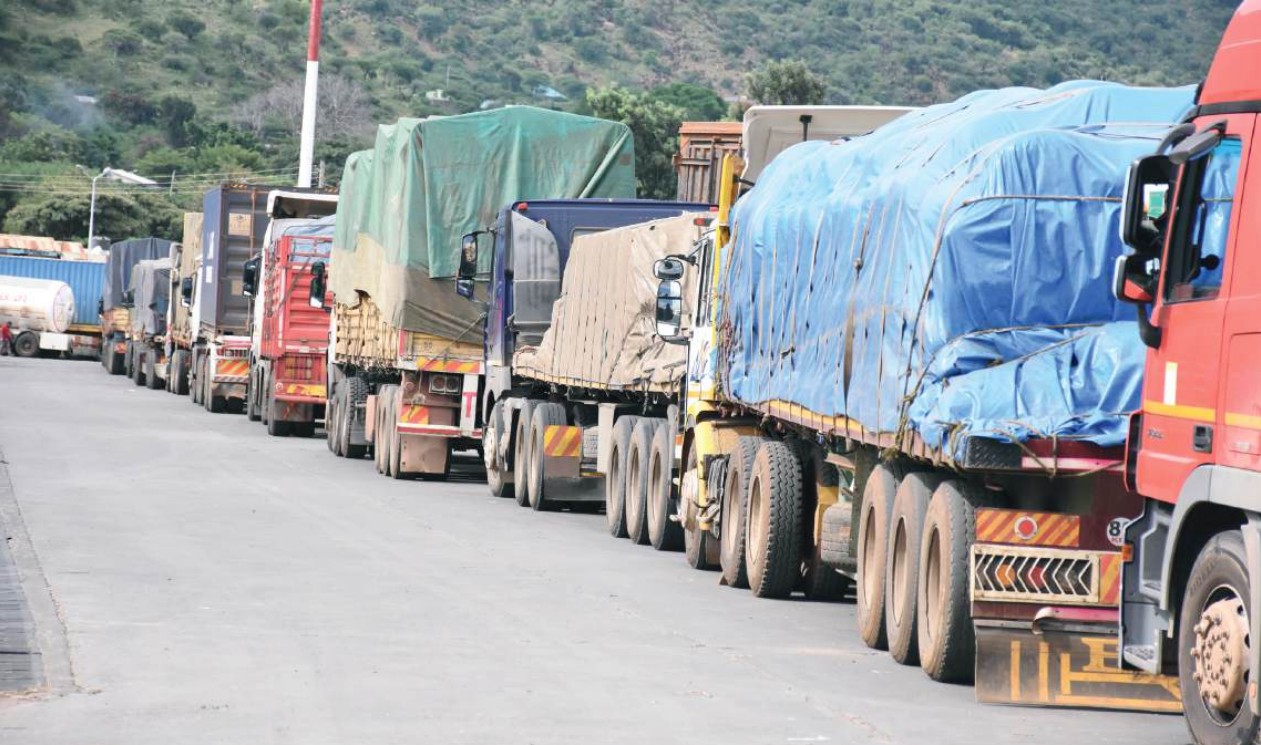
The protests slowed down economic activities, with trade taking a major hit. Cargo movement at the key Kenya-Tanzania border towns of Namanga, Lunga Lunga, Taveta-Holili and Isebania was disrupted, with the internet shutdown also affecting cargo clearance.
Kenya exports were also not moving as of the weekend with the manufacturing sector also feeling the pinch.
“We cannot move our products in and out of Tanzania at the moment due to the unrest,” Kenya Association of Manufacturers CEO Tobias Alando told the Star.
Most affected products include cereals, timber, sanitary products and cooking oil, Alando said.
The Long-Distance Truck Drivers Associationsaid trucks ferrying onions, potatoes, rice and other food commodities were not moving.
“A lot of food commodities come from Tanzania but the trucks cannot move. It is a problem which could lead to a spike in food prices," secretary general Nicholas Mbugua told the Star.
The delays come with extra transport and logistics costs, which are likely to be passed to traders and ultimately consumers.
Kenya Transporters Association chairman Newton Wang'oosaid while no major impact has been reported so far among their members, majority who ply the Northern Corridor that runs from the port of Mombasa to Uganda, South Sudan, Rwanda, DRC and Burundi, there is a likelihood of major problems if the situation persists.
“We are watching the situation,” he said.
The Shippers Council of Eastern Africa, which represents the interests of importers, exporters and stakeholders in the logistics and shipping industries across Eastern Africa, has raised concern.
“It is a difficult and unfortunate situation for the citizens and leadership of Tanzania. I hope normality is restored as soon as possible for the good of the country,” SCEA chief executive Agayo Ogambi said.
“The closure of the Dar es Salaam port and border posts will definitely impact the region's supply chains, with delayed deliveries and vessels waiting to berth and discharge. The ripple effects will be felt far and wide.”
The crisis has the potential to increase pressure on other ports including the port of Mombasa, leading to congestion.
“It must be appreciated that Dar port, like Mombasa port, is an important logistics provider that is critical to the region's economic activities linking land-locked countries to the ports . The two ports complement and augment each other,” he said. “The priority should be to restore order, safety and security of the citizens.”
The situation in Tanzania, he added, has the potential to disrupt vessels routing, leading to longer routes and massive losses to shipping lines, transporters and shippers.
Cross-border disruptions could negatively impact Kenya’s food basket leading to higher commodity prices, while also hurting the manufacturing sector.
This could trigger inflationary pressure, where over the twelve months until October 2025, the food and non-alcoholic beverages division index rose by eight per cent.
Kenya imports staple grains such as maize and rice when local supplies are low or to bridge deficits in production.
It also imports a variety of vegetables including onions, garlic and tomatoes to meet high demand and a range of fruits such as avocados, mangoes, papayas and pineapples. The Kenyan markets also import spices from Tanzania.
KNBS data shows that while the price of commodities such asmaize flour (sifted) and fortified maize flour, eggs (exotic/kienyenji), kale (sukuma wiki), beansand sugar dropped between September and October, there was a notable increase in some items.
These include prices of potatoes (Irish), beef (with bones), tomatoesand oranges, which increased by 1.6 per cent, 0.5 per cent, 1.2 per cent and 4.2 per cent, respectively. The notable increase in the price of oranges was the highest among the items monitored during the period.
The cost of onions also rose from Sh109.37 to Sh110.37 per kilogramme, while cabbages price increased from Sh62.91 to Sh63.79 per kilogramme.
The price of spirits also rose by 0.1 per cent, while cigarettes recorded a 0.4 per cent increase.
“Between September and October 2025, prices of cleaning products showed slight variations. The price of detergents declined by 0.3 per cent, while laundry soap (bar soap) recorded a modest increase of 0.2 per cent during the month,” KNBS director general MacDonald Obudho said.
Between September and October 2025, prices of prepared food from cafés and take-aways rose by 0.2 per cent, while food from canteens and kiosks increased marginally by 0.1 per cent.
Hotel and restaurant prepared foods registered a relatively higher rise of 0.5 per cent during the same period.
Meanwhile, small traders operating across the borders have also been impacted.
“I buy mitumba (second-hand clothes) in Tanzania, where they are cheaper because of the exchange rate, for sale in Kenya. However, I have not been able to do any business for the last three days,” Nyambura, a resident of Isebania, told the Star.
Kenyans who have traditionally crossed into Tanzania for cheaper products, both food and non-food items, have also been affected.
“There is no movement at all. We are stuck with costly products in Kenya,” Mathias Mogaya, a resident of Kuria West which borders Tanzania, said.
The backlog at the border also means even if normalcy returns, it will take time to clear trucks with some perishables failing to make it to the markets.
The trend puts trade between the two countries at risk of a drop this year after a fall in the value of Kenyan exports to Tanzania last year.
The value of Kenya’s exports to the East African Community reached Sh321.4 billion last year, up from Sh305.9 billion in 2023, the Economic Survey 2025 indicates.
Tanzania was the second biggest export destination after Uganda with Sh67.2 billion worth of exports, with the latter accounting for the biggest value at Sh125.9 billion.
The exports to Tanzania were however a drop compared to Sh69.3 billion worth of goods exported the previous year, partly resulting from decreased domestic exports of medicaments and soap in 2024, Kenya National Bureau of Statistics notes in its survey.
The value of imports from Tanzania grew to Sh58.7 billion up from Sh43.7 billion.
“The growth was largely occasioned by increased imports of rice, coal, chemical fertilisers, mosquito nets, flat glass and oilseed meals from this source,” the Economic Survey 2025 reads.
International bodies including the UN have expressed concern with embassies, including the US, issuing travel alerts to citizens.
“The US Embassy advises US citizens to shelter-in-place. Internet access is blocked, making all communication difficult. Many international flights have been canceled; confirm your flight via telephone prior to traveling to the airport,” the embassy in Tanzania said on Friday.
This could come as a blessing in disguise for Kenya’s tourism industry, albeit short-term, where Tanzania has been a major competitor mainly on beach and Safari products.
Tanzania has positioned itself as a cheaper destination compared to Kenya mainly on park entry fees and hotel packages, which has made it more attractive, with Kenya’s recent move to increase park fees seen as a disadvantage.
The Commonwealth in a statement on post-election violence in Tanzaniaover the weekend called on Tanzanian authorities to ensure conditions for peaceful and orderly demonstrations, while encouraging all to exercise maximum restraint and respect for law and order.
“Authorities need to initiate a thorough and impartial investigation into allegations of excessive use of force by security forces. Political parties and other stakeholders should also immediately engage in dialogue to address the causes for the post-election unrest and to strengthen democracy in the country,” secretary general Shirley Botchwey said.
Suluhu in her Saturday victory speech said the election was "free and democratic", accusing protesters of being unpatriotic.
Opposition parties rejected the results, terming the elections a mockery of the democratic process as the main challengers were barred from running, with the main opposition leader, Tundu Lissu of Chadema, in prison.
International observers have expressed concern over the lack of transparency and violence which has left scores injured amid unconfirmed reports of many deaths. The government has however played down the violence.
Tanzania’s Minister for Foreign Affairs and East African Cooperation, Mahmoud Kombo,on Saturday said the general elections held on October 29, were“conducted with utmost transparency and adherence to democratic principles”, with international observers involved.
“In the most unfortunate event, at the end of the voting process, isolated incidents of breaching of law and order occurred in some parts of the country. In maintaining order, our security agencies acted swiftly, professionally and decisively to address these situations, ensuring that the isolated incidents did not escalate and disrupt the broader electoral process,” Kombo said in a statement.
He said Tanzania’s peace and stability will “always remain the foremost priority of the government.”