A new report by the US government has exposed deep-rooted complicity by Kenyan state officials in human trafficking networks.
The US Department of State’s 2025 Trafficking in Persons Report reveals a pattern of corruption, impunity and government inaction that continues to fuel slave-like exploitation at home and abroad.
In particular, the report exposes how police, magistrates, court officials, immigration officials and diplomats collude to facilitate trafficking and or take advantage of trafficked women sexually.
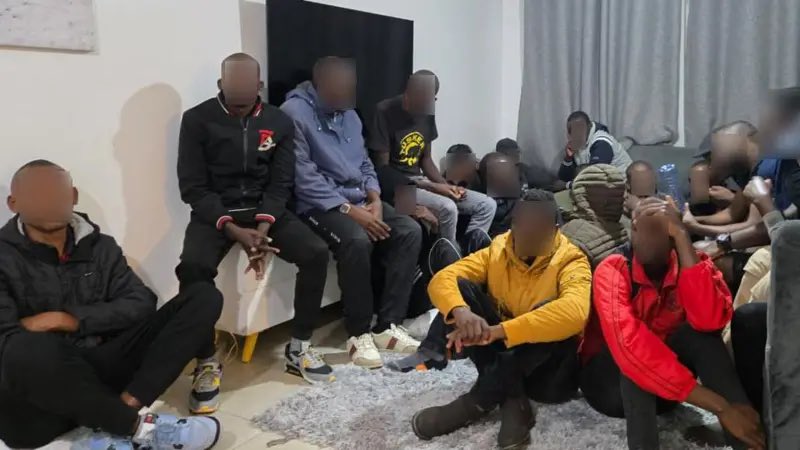
“An interagency law enforcement team previously arrested four police officers allegedly complicit in a case involving 37 potential Ethiopian victims, but the government did not report updates related to this case. Observers previously reported police officers accepted bribes to warn traffickers of impending operations and investigations, particularly along the Coast,” the report shows.
Further, some government officials, including parliamentarians, advisers and county-level officials, were found to have ownership interests in private employment agencies, including staffing firms that send Kenyan migrant workers to Saudi Arabia.
Such arrangements create “potential conflicts of interest,” since those charged with regulating recruitment often have financial interests in the very agencies accused of exploitation.
The report further alleges that Kenyan embassy officials in Saudi Arabia demanded sex or cash payments from distressed women seeking government help to escape abusive employers back to Kenya.
Additionally, perpetrators of trafficking are reported to escape conviction by bribing magistrates and court officials or intimidating or paying witnesses to make false statements.
“Observers alleged criminal syndicates colluded with various law enforcement and immigration departments, including those at border checkpoints and airports, to transport trafficking victims into and within Kenya. Traffickers continued to easily obtain fraudulent identity documents used to facilitate trafficking crimes from complicit officials,” the report shows.
The finding reflects a September 2023 case in which the Directorate of Criminal Investigations accused some staff at Jomo Kenyatta International Airport (JKIA) of aiding human trafficking.
The DCI, through the officer commanding Anti-Terrorism Unit issued a memo on September 6, 2025 to the station manager of Qatar Airways at JKIA warning that staff attached to various agencies at the airport were being involved in human trafficking.
The report comes at a time young Kenyans are reported to have been trafficked to work in Russia, only to find themselves in the frontline in the war against Ukraine.
For instance, Robert Njogu's mother, Wangari, on Tuesday told the Star that her son was recruited by an agent to go work as a security guard in Russia, only to end up in the frontline.
The report also notes that some Russian officials and illicit recruiters have fraudulently recruited women aged 18-22 from Africa — including Kenya — for vocational training programmes and subsequently placed them in military drone production sites.
Recent reports have also flagged trafficking to Southeast Asia, where traffickers use social media and fraudulent job postings with false promises of high-paying jobs in Thailand.
However, upon arrival, victims are taken to Myanmar/ Burma and Laos and exploited in online scam operations.
The US State Department regrets that the Kenyan government did not report any prosecutions or convictions of government employees complicit in human trafficking crimes.
This is despite corruption and official complicity in trafficking crimes remaining a significant concern, inhibiting law enforcement action.
However, it noted that the government reported investigating 42 cases — 17 for sex trafficking, seven for labour trafficking and 18 for unspecified forms of trafficking in 2024 — compared with 22 cases in 2023.
It reported 83 ongoing investigations, 18 for sex trafficking, eight for forced labour and 57 for unspecified forms of trafficking.
The government also reported prosecuting 44 trafficking cases including an unknown number of suspects — 38 sex trafficking cases, three labour trafficking cases and three cases of unspecified forms of trafficking in 2024. This compared with prosecuting 19 trafficking cases including an unknown number of suspects in 2023.
It also reported ongoing prosecutions of 139 cases. At least 21 traffickers were convicted under the 2010 Anti-Trafficking law, three for sex trafficking and 18 for forced labour, compared with three traffickers in 2023.
Employment agencies, both legal and fraudulent, are placed at the centre of recruitment of Kenyans, especially women, to the Middle East and Southeast Asia, where majority end up in servitude.
Among the top destinations for the domestic workers include Saudi Arabia, Lebanon, Kuwait, Qatar, UAE, Bahrain, Iran, Iraq and Oman, Central and Southeast Asia, Europe, Northern Africa and North America.
In most of these countries, traffickers exploit the women in massage parlours, brothels, domestic servitude, or manual labour.
Kenyans who voluntarily migrate in search of employment opportunities are also not safe either as they are often vulnerable to exploitative conditions.
“Observers report foreign employers often hold migrant workers’ salaries until the completion of their contract period to coerce them to stay longer and in some cases, employers sell or “trade” migrant workers to another employer without a legal change in the employment contract, increasing their vulnerability to trafficking,” it adds.
Saudi Arabia remains a primary destination for economic migrants, with government estimates indicating more than 200,000 Kenyans are currently working there, of which more than half are domestic workers.
The visa sponsorship Kafala system, which is common in Bahrain, Jordan, Kuwait, Lebanon, Saudi Arabia and the UAE, has been criticised as being a facilitator of the exploitation. The system is where the worker's passport is held by the employer for the period of the contract, binding domestic workers to one employer and prevents their freedom of movement.
Reports continue to document traffickers in the Middle East, especially Saudi Arabia and Lebanon, exploiting Kenyan women working in domestic servitude, often subjecting them to severe physical and emotional abuse.
In one research study, the Global Fund to End Modern Slavery estimated that more than 98 per cent of Kenyans returning from work in the Middle East reported conditions indicative of forced labour, including non-payment of wages, physical abuse, passport confiscation and excessive working hours.
For years, Kenyan domestic workers in Saudi Arabia and other Gulf states have reported horrific abuse—from beatings and sexual violence to denial of pay and confiscation of passports. Some have returned home in a coffin such as Judith Adhiambo in 2023. Yet despite mounting evidence, regulation of recruitment agencies remains lax.
The report paints a grim picture of Kenya’s anti-trafficking record, accusing the government of failing to prosecute or convict any officials involved in the trade, even as evidence of collusion between traffickers and state agents remains evident.
It adds that efforts to protect Kenyan trafficking victims abroad, particularly migrant workers in Gulf countries, and hold fraudulent labour recruitment agencies accountable are inadequate.
The report mirrors long-standing allegations that Kenya’s porous borders, combined with corruption in its immigration systems, have turned the country into both a transit and destination hub for trafficking victims, particularly from Ethiopia, Somalia and Uganda.
Kenya Human Rights Commission senior communications officer Ernest Cornel termed the report as factual, noting the collusion by the police, for instance, is for monetary gain.
Identifying money as the key driver, Cornel noted that the issue reflects the need to implement the police reforms recommendations, particularly proper remuneration.
"In absence of good pay, police are bound to engage in such activities to earn extra. And since they work in a cartel like system, they will also influence such cases when they go to court so that they can continue benefiting. So this reflects the systemic failures within the police and the criminal justice system," Cornel said.