
From the arid lands of Turkana to the border regions inhabited by ethnic Somalis, leaders have decried what they term "deliberate neglect" in resource allocation, infrastructure development and political representation.
Kwale minorities, who include Makonde, Washirazi, Wapemba and inhabit Msambweni and Lunga Lunga constituencies, were the latest to put their case on Thursday.
"We are still being perceived as outsiders despite having transitioned from statelessness to full citizenship. We want the government to ensure full integration of minorities into society and public service," Makonde community spokesman Thomas Nguli said.
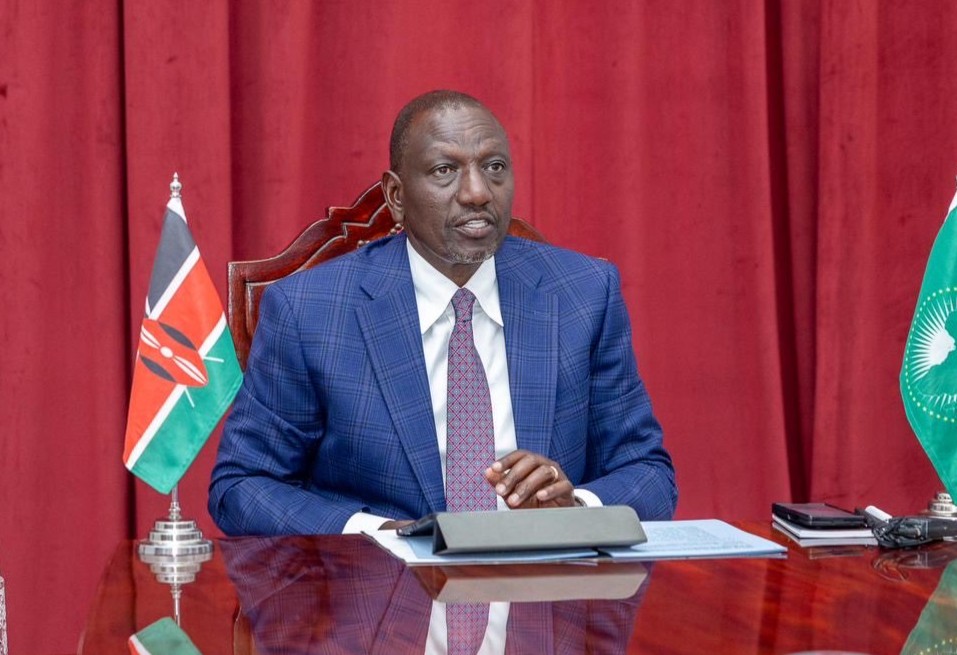
Today, President William Ruto’s administration has initiated steps it says are aimed at turning that page, not only for the Makonde, but for the whole lot of marginalised communities.
A sweeping new approach to address these historical grievances has been drawn through the first-ever National Policy on Ethnic Minorities and Marginalised Communities.
The draft policy seen by the Star outlines a multi-pronged strategy featuring concrete interventions.
To bridge the huge wealth gap, the plan involves enforcing affirmative action in public service employment, expanding access to microfinance and investing in vocational training tailored to pastoralist and hunter-gatherer economies.
The policy commits to fast-tracking community land titles and providing legal redress for historical land grievances, directly addressing long-standing cases like those of the Ogiek and Endorois communities.
Among the key pillars is enforcing mandatory Free, Prior, and Informed Consent (FPIC) for all projects affecting community lands and resources.
In the political sphere, the government pledges to enact long-overdue legislation under Article 100 of the Constitution to promote the representation of marginalised groups in Parliament.
It promises to reform electoral boundary delimitation to prevent dilution of minority votes and amend the Elections and Political Parties Acts to ensure transparent, inclusive nomination processes.
The plan also seeks to institutionalise ethnic minorities’ participation in county planning and budgeting.
The infrastructure component of the plan represents one of the most critical aspects, targeting what marginalised communities have long identified as fundamental barriers to development.
The Rural Electrification and Renewable Energy Corporation (REREC) will intensify efforts to bring power to underserved regions, emphasising solar mini-grids and off-grid systems where grid extension remains challenging.
The policy commits to a significant expansion of road infrastructure in marginalised regions using the Equalisation Fund.
To close the digital divide, the government will instal public Wi-Fi hotspots and enhanced broadband infrastructure, complemented by digital literacy programmes.
On social protection, the policy emphasises expanding cash transfer programmes targeting older persons, persons with disabilities and vulnerable children in ASAL regions.
It commits to accelerating registration of minority households into national schemes like SHA, NSSF, and SHIF, while digitising payment systems to minimise leakage and delays.
In a significant shift, the administration has begun implementing citizenship reforms, with President Ruto signing a decree ending a six-decade-old vetting procedure that predominantly affected ethnic Somalis in northeastern Kenya.
This policy change acknowledges that while vetting was intended to protect national security, it "inadvertently marginalised legitimate citizens," creating situations where ethnic Somalis waited years for IDs while other Kenyans obtained them within days.
To bolster access to justice, the state will deploy mobile courts and legal aid centres in remote areas, institutionalise paralegal training, and eliminate statelessness that has blocked communities like the Nubians and Makonde from accessing rights.
Implementation will be coordinated through a dedicated Minorities and Marginalised Communities (MMC) Agency within the Executive Office of the President.
The draft policy mandates regular monitoring and evaluation using indicators disaggregated by ethnicity, gender, disability and location, with annual performance reports submitted to Parliament.
Despite the comprehensive framework, significant challenges remain. Previous initiatives have been hampered by limited funding, bureaucratic delays, and inadequate coordination.
The policy's success will thus depend on sustained political will, adequate resource allocation, and meaningful community engagement throughout implementation.
As the government itself acknowledges in the draft, "The absence of a central policy anchor or statutory coordination body has resulted in inconsistent policy implementation, limited accountability, and the persistent failure to integrate EMMC concerns into core areas such as national development, land and resource governance, political participation, and access to public services."
During consultative meetings with marginalised communities, including the Turkana community in Nakuru, government officials pledged that the new policy would be ready by December 2025.
It is aimed at providing both national and county governments with a clear framework for engaging with and planning for the affected communities.
The installation of public Wi-Fi hotspots and enhanced broadband infrastructure will address the pronounced "digital divide" that has prevented marginalised communities from participating in the modern economy.
Complementary digital literacy programmes are also lined up to ensure communities can leverage new connectivity for education, business and access to government services.
The draft policy emphasises social protection as a critical component of addressing historical marginalisation, with particular focus on expanding and enhancing cash transfer programmes.
The social protection expansion will particularly target arid and semi-arid regions, where poverty rates consistently exceed national averages.
The policy commits to accelerating the registration of minority and pastoralist households into national schemes such as the Social Health Authority (SHA), National Social Security Fund (NSSF) and Social Health Insurance Fund (SHIF).
Additionally, the government plans to digitise payment systems and beneficiary registries to improve targeting, minimise leakage and reduce delays that have previously plagued social protection programs in remote areas.
In what represents a significant policy shift, the administration has already begun implementing reforms to address historical documentation challenges that have left thousands in border communities without national identity cards.
In February, President Ruto signed a decree ending a six-decade-old vetting procedure that predominantly affected ethnic Somalis in northeastern Kenya.
The vetting process, initially introduced in 1989 through a screening exercise to distinguish between Kenyan Somalis and Somali nationals, had created significant barriers to obtaining national identity documents.
The policy change acknowledges that while vetting was intended to protect national security, it "inadvertently marginalised legitimate citizens," creating a situation where "regular Kenyans" could obtain IDs within days while ethnic Somalis often waited years.
Without identification documents, communities faced restricted access to education, healthcare, formal employment, and the ability to participate in civic affairs, including elections.
INSTANT ANALYSIS
For marginalised communities who have heard similar promises before, the proof will be in tangible improvements in their daily lives, lights that stay on, roads that are passable year-round, timely cash transfers that cushion them from drought, and identity documents that finally recognise them as equal citizens. The document itself identifies "limited political will" and "financial constraints" as key risks to its realisation.







