MPs have questioned the status and sustainability of 1,721 public Wi-Fi hotspots rolled out under the National Optic Fibre Backbone Infrastructure (Nofbi).
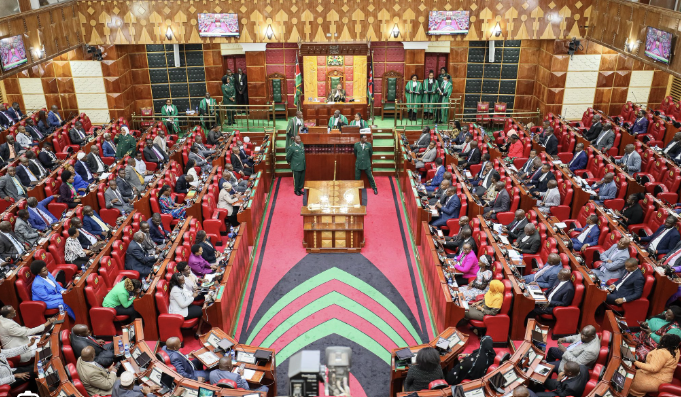
During a session of the National Assembly ICT Committee yesterday, lawmakers expressed concern that many of the hotspots, established to boost internet access in markets, schools and public spaces, may have stalled or gone offline.
The MPs in the committee chaired by Dagoretti South MP John Kiarie heard that so far the project funded through China Exim Bank has consumed Sh34.3 billion in the last three years.
Kiarie said the government must explain how many sites are still functional and what measures are in place to ensure long-term sustainability.
Some MPs described the project as poorly coordinated and lacking a sustainability framework, warning that without proper maintenance and local ownership, the initiative risks collapse.
They also demanded copies of contract on maintenance and rehabilitation of the fibre optic networks after it emerged that at least Sh500 million is being paid to eight firms yearly for maintenance.
The MPs are concerned with the slow installation of Wi-Fi hotspots across the country, with Nofbi saying it has onboarded 1,729 Wi-Fi sites out of 25,000 sites projected to be installed by 2027.
ICT Authority CEO Zilpher Owiti, who appeared before the committee, said Telkom Kenya originally maintained and operated Nofbi on behalf of government until 2020.
This, she said, changed and the system is currently managed and operated by the agency.
“The ICT Authority entered into a framework contractual agreement with eight firms through an open tender process procured in 2023,” she added.
Owiti told the Kiarie-led team that the firms are segmented into regions, with Nairobi and Central covering Nairobi, Kiambu, Kirinyaga, Murang’a, Nyeri and Nyandarua under the Adrian Limited.
At the Coast is Nextgen Technologies Ltd covering Mombasa, Taita Taveta, Lamu, Tana River, Kilifi and Kwale.
Techminds Ltd was contracted to cover Eastern region covering Meru, Tharaka Nithi, Embu, Kitui, Machakos and Makueni.
For Northeastern covering Isiolo, Marsabit, Garissa, Mandera and Wajir, Owiti said Soliton Telmec Ltd was contracted.
Baran Telcoms Ltd is in charge of North Rift covering Turkana, West Pokot, Trans Nzoia, Uasin Gishu, Elgeyo Marakwet, Baringo.
According to the CEO, Nightigale Ltd covers South Rift region including Samburu, Bomet, Kericho, Nakuru, Narok, Laikipia and Kajiado counties.
The sixth firm contracted was Prime Telcoms Ltd for Nyanza region, covering Homa Bay, Kisii, Kisumu, Migori, Nyamira and Siaya while Tilil Technologies covers Western for Bungoma, Busia, Kakamega and Vihiga counties.
“A summary of the supplier unit prices per region falls between a low of Sh3.55 per meter/ month for the Central region and Nairobi with the highest being Sh5.7 per metre/month for the Coast region. These prices are based on the lowest prices,” she told MPs.
Owiti further explained that the contract renewal is subject to a performance review based on the inspection and acceptance reports.
MPs however were reluctant to accept the explanation, demanding why majority of Wi-Fi spots remain abandoned and not working.
“You have said that there are 1,729 sites on boarded to date across the country, how many are active, how many are doing the jobs that they are supposed to be doing, you need to allay concerns raised that you have been installing Wi-Fi but it stopped working as soon as you leave the sites,” Kiarie said.
Keiyo South MP Gideon Kimaiyo, while expressing dissatisfaction with the slow pace, demanded answers when ICT Authority will finish the remaining work.
“When are you going to do complete the 25,000 as promised? I also have an issue with the cost of maintenance. For instance, in South Rift the maintenance unit cost is Sh5 per metre/month,” Kimaiyo said.
“It might look like a small amount but it is not. We would also like to know details of the people doing these things. Is there value for money?”
Instant analysis:
The National Optic Fibre Backbone Infrastructure project is a pivotal initiative by the government to enhance digital connectivity across the country. Launched to bridge the digital divide, NOFBI plays a crucial role in supporting Kenya's socioeconomic development.