Kenya is looking to draw lessons from Australia’s world-renowned mining sector as it eyes new partnerships to unlock the potential of its underdeveloped mineral industry and drive economic diversification.
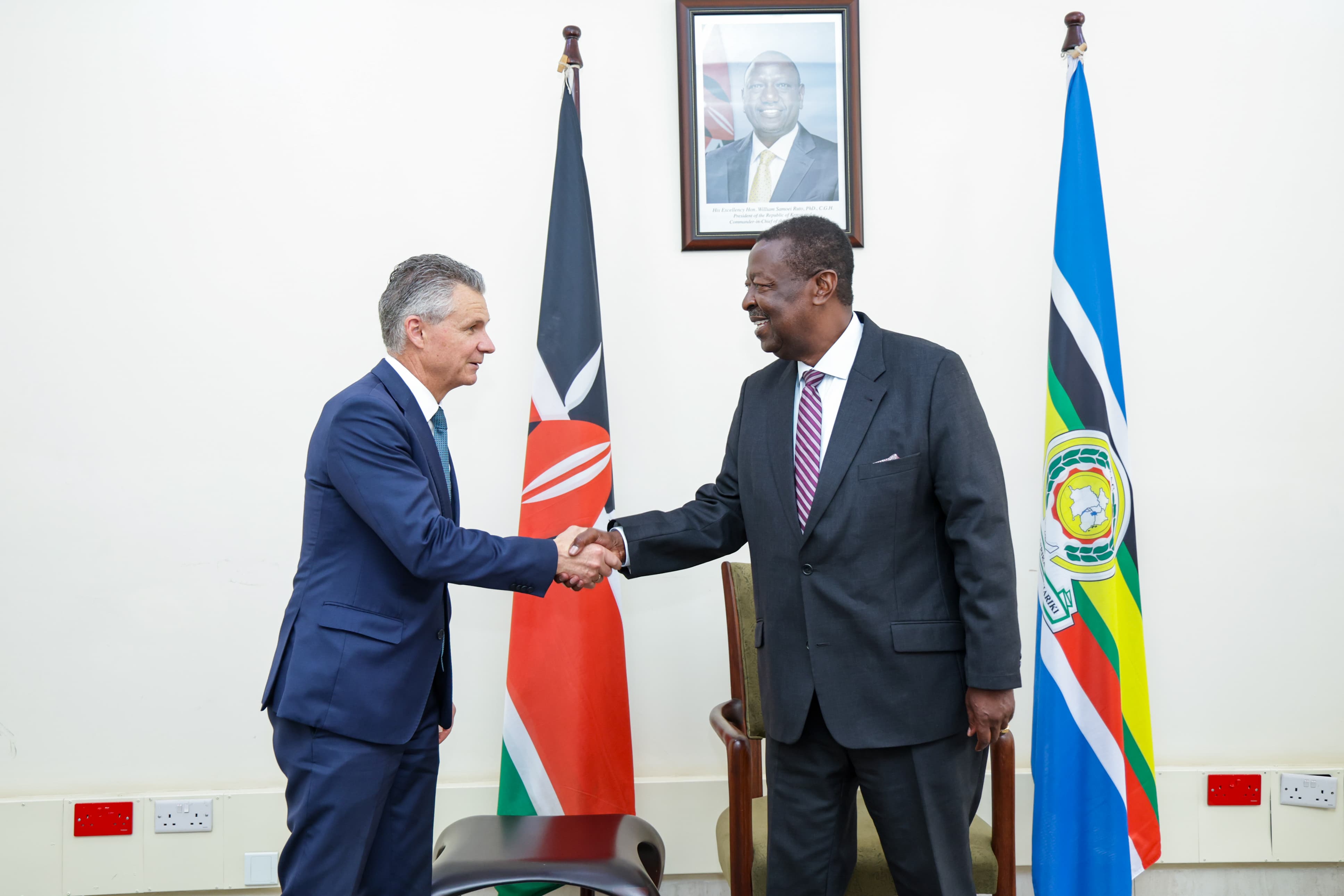
Prime Cabinet Secretary and Foreign Affairs Minister Musalia Mudavadi on Monday said Kenya plans to deepen cooperation with Australia in the extractives sector as part of a broader agenda to boost investment, technology transfer, and sustainable resource management.
In a statement after hosting Australia’s Assistant Minister for Foreign Affairs and Trade Matt Thistlethwaite in Nairobi, Mudavadi said the two countries were exploring practical areas of collaboration that could transform Kenya’s mining landscape while creating jobs and exports.
Base Titanium, which operates the Kwale Mineral Sands Project, is among the top Australian mining companies in Kenya.
Other Australian companies like RareX and Iluka Resources have recently entered the Kenyan market to prospect for rare earth elements at the Mrima Hill Project in Kwale.
Another company, Avira Resources, has also discovered copper and gold deposits in Meru county.
The announcement of the potential partnership follows the Africa Governance Report 2025, which listed Kenya, alongside the DRC, Zambia, and Tanzania, among states faces growing challenges in equitably sharing mining revenues and engaging local communities affected by extractive projects.
The report also highlighted inequitable benefit-sharing, weak governance, and limited transparency in the sector, a situation the study warned could fuel social unrest, if not addressed.
“Many African countries face challenges in ensuring that African taxpayers receive fair benefits from mining activities,” the APRM said inn the report.
“This is particularly evident in countries like the DRC, Kenya, Zambia and Tanzania, where mining operations often fail to adequately compensate or engage African taxpayers, which could lead to social unrest and conflict.”
Australia is a global leader in mining governance, technology, and sustainability, and would help Kenya to modernise and reform its extractive industries. Mudavadi said Kenya wants to “significantly benefit” from Australia’s experience in mining sector.
“We affirmed our commitment to continue the partnership in mining where Kenya can significantly benefit from a robust mining sector in Australia,” Mudavadi said.
Kenya has proven deposits of titanium, gold, coal, niobium, and manganese, and has recently attracted investment interest in rare earth elements and fluorspar. However, the APRM report says many communities in mineral-rich regions — including Kwale, Turkana, and Taita Taveta — continue to feel excluded from the benefits of mining, often citing environmental degradation and opaque benefit-sharing frameworks.
The APRM also estimates that 10 to 60 per cent of potential mining revenues are lost across Africa due to weak tax systems, governance inefficiencies, and lack of transparency, urging governments to review fiscal regimes to ensure that both states and citizens benefit from extractive industries.
The findings corroborated the Auditor General’s 2023-24 report, which flagged lack of a revenue sharing framework in the State Department for Mining.
Nancy Gathungu said the statement of receipts and disbursements reflected property income amounting to Sh3.3 billion, including Sh2.1 billion in royalties. However, no evidence was provided to show the royalties were distributed among the county governments and local communities, she said.
This, AG noted, was in contravention of Section 183(5) of the Mining Act, 2016.
The Act provides that the royalties shall be shared between the national government, respective county governments and the local community at a ratio of 70 per cent, 20 per cent and 10 per cent respectively.
The auditor also raised issue with the unprocedural export of gold samples by a gold mining company licensed by the State Department of Mining.
“A review of records at the department revealed that the company exported 65kg of gold, for which Nil royalties were remitted,” the report said.
“Management explained that the consignment comprised of rock samples shipped for analysis. However, results of the analysis were not provided for review and were not filed with the State Department as required by Regulation 26(3) the Mining (Dealings in Minerals) Regulations, 2017.”