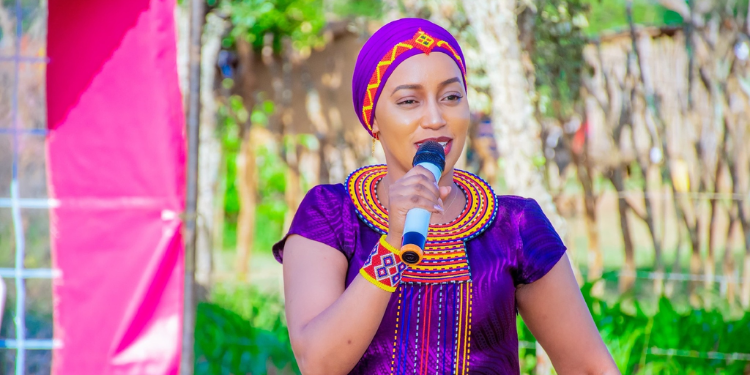
 Kewosa vice chairperson and nominated Senator Hezena Lemaletian./FILE
Men who impregnate underage girls and those guilty of sexual and gender-based violence will face stiffer penalties under a new law being crafted by women senators.
The proposed legislation, spearheaded by the Kenya Women Senators Association, seeks to introduce double punishment—including compensation to victims—in an effort to curb the rising cases of teenage pregnancies and sexual violence across the country.
The omnibus Bill, currently being drafted, aims to amend several laws, including the Children Act (2022), the Sexual Offences Act (2006), the Basic Education Act (2013), the Marriage Act (2014) and the Counter-Trafficking in Persons Act (2010) to close loopholes exploited by sexual predators.
At the heart of the amendments is a provision requiring offenders to compensate victims in addition to serving jail terms.
“Victims of these heinous crimes must also receive adequate support and compensation,” said Kewosa vice chairperson and nominated Senator Hezena Lemaletian.
“The proposed law will also establish a compensation and reparation framework, requiring offenders to make restitution to their victims.”
Kewosa also wants the state to establish and adequately fund safe spaces and shelters to protect survivors, particularly in cases where perpetrators are family members.
Other proposals include ensuring proper collection and preservation of forensic evidence by police to strengthen prosecutions and introducing video link and recorded testimonies to protect victims and witnesses from intimidation.
The Bill further seeks to outlaw informal or “kangaroo” courts handling SGBV and early pregnancy cases, to ensure due process and fair justice.
It also calls for the government to negotiate bilateral agreements with neighbouring countries to repatriate cross-border offenders for trial.
The initiative follows a recent Senate visit to Busia county, where Kewosa uncovered alarming cases of teenage pregnancies and gender-based violence.
Kewosa, chaired by Senator Veronica Maina (nominated), cited statistics from the National Syndemic Diseases Control Council showing that between 2016 and 2024, Busia county alone recorded 65,540 teenage pregnancies.
“Teenage pregnancies remain one of the biggest barriers to girls’ education and empowerment. It denies young girls the opportunity to complete their basic education and achieve economic independence,” Maina said.
Last year, the county had 4,542 cases reported, with Samia subcounty registering the highest rate nationally.
Countrywide, 47,632 teenage pregnancies were recorded in the same year.
Kewosa warned that many young mothers face serious health complications, including maternal morbidity, mortality and increased vulnerability to HIV/Aids and other sexually transmitted infections.
“Socially and economically, early pregnancy leads to school dropouts, loss of self-esteem and intergenerational cycles of poverty,” the lawmakers said.
Alongside teenage pregnancies, SGBV continues to devastate adolescents across Kenya. Between 2016 and 2024, Busia had 2,884 SGBV cases reported among adolescents, with a sharp increase from 66 cases in 2016 to 480 cases in 2024. Adolescents now account for 23 per cent of all reported SGBV cases.
Moreover, 171 girls became pregnant as a result of defilement between 2017 and 2024. Nationally, the number of SGBV cases reported in 2024 stood at 47,632.
“These statistics underscore the urgent need for collective action to protect young girls from the intersecting threats of sexual violence and early pregnancy,” Lemaletian added.
The senators acknowledged that while Kenya’s legal framework against sexual offenses is robust, enforcement gaps and weak implementation have hindered justice.
Existing laws—including Article 53 of the constitution, the Children Act (2022) and the Sexual Offences Act (2006)—already prescribe harsh penalties such as life imprisonment for defiling children aged 11 and below, a minimum of 20 years for those aged 12–15; 15 years for those aged 16–18; and at least 10 years for attempted defilement.
“Despite these laws and penalties, enforcement remains slow and inconsistent,” the senators said.
“The Judiciary must be more expeditious and resolute in applying these provisions. Justice delayed only emboldens perpetrators and further victimises survivors.”
INSTANT ANALYSIS
Teenage pregnancies remain one of the biggest barriers to girls' education and empowerment. It denies young girls the opportunity to complete their basic education and achieve economic independence. Many of these girls suffer serious health complications, including maternal morbidity and mortality, and face increased risk of contracting HIV/Aids and other sexually transmitted infections. Socially and economically, early pregnancy leads to school dropouts, loss of self-esteem and intergenerational cycles of poverty. Alongside teenage pregnancies, the scourge of sexual and gender-based violence continues to devastate adolescents across Kenya.