MPs now want President William Ruto to engage his Ugandan counterpart, Yoweri Museveni, to resolve persistent bureaucratic hurdles and inefficiencies that continue to delay cargo clearance at the Kenya–Uganda border.
The lawmakers say the bottlenecks—particularly on the Ugandan side—have frustrated traders, transporters and Kenya Revenue Authority officials, costing businesses and the country millions of shillings in lost revenue.
Partners cite poor infrastructure, outdated technology, porous borders and strained relations between border officials as the main causes of congestion.
They said strained working relations between Kenyan and Ugandan border officials have resulted in significant revenue losses.
“We need to escalate this issue to the President so that he can engage with his counterpart to resolve this problem at the highest level,” Busia Senator Okiya Omtatah said.
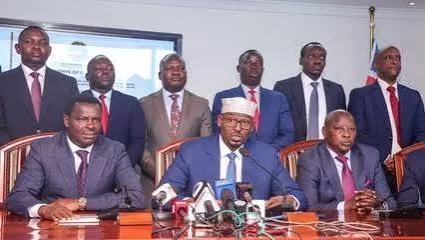
The concerns emerged during a visit by senators to the Busia and Malaba One-Stop Border Posts as part of the Senate Mashinani sittings in Busia county.
KRA officials, transporters and traders complained that Uganda has introduced several non-tariff barriers that have slowed the clearance process, leading to long queues of trucks ferrying goods.
They said outdated scanners on the Ugandan side take several minutes to process a single truck and that multiple non-tariff barriers have been introduced.
“From the bridge here, every 200 metres there is a police roadblock, weighbridge or URA checkpoint,” Simon Omondi, the Kenya Transporters Association representative at the Malaba border, said.
“Sometimes, a truck takes up to 30 minutes to be cleared at a weighbridge because of non-functional scanners, especially when it rains.
Omondi accused Ugandan officials of flouting Kenya’s weighbridge rules, claiming they penalise transporters for minimal excess weights—sometimes as little as 200 grammes.
“They’ll tell you that you’re overweight by 200 grammes or 300kg after driving all the way from Mombasa, yet they don’t even disclose the amount you’re supposed to pay, unlike in Kenya,” he said.
Omondi said whenever there is an internet breakdown on the Ugandan side, outbound trucks are forced to wait for hours as operations come to a standstill.
“We’re urging our government to engage the Ugandan authorities, especially the Uganda Revenue Authority to address these restrictions that are causing unnecessary jams,” he said.
KRA Western Regional Head Dominic Kingara echoed the concerns, saying URA’s slow turnaround time often causes traffic snarl-ups stretching up to 20km.
“On our side, the queue rarely exceeds four kilometers, but the outbound side in Uganda stretches between 10 and 15 kilometers,” Kingara said.
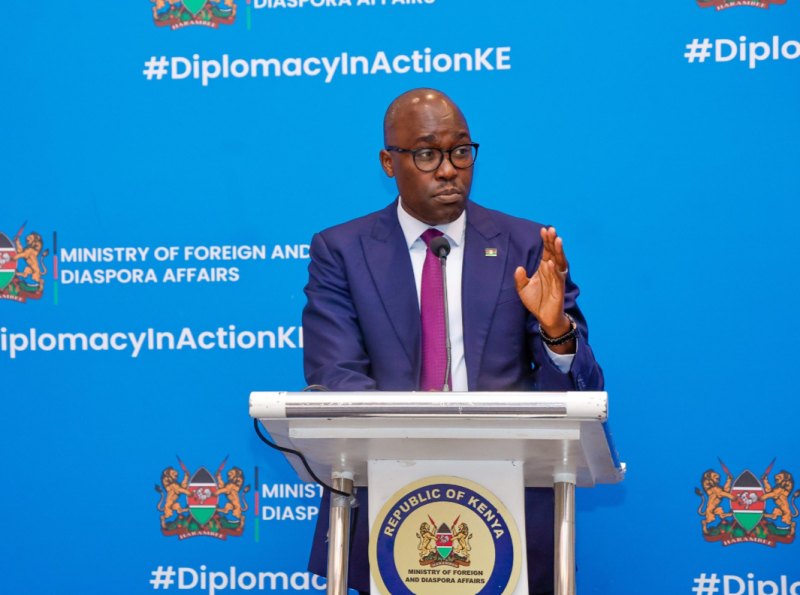
Senate Trade Committee chairperson Issa Boy, who led the delegation to Malaba OSBP, described the revelations as “worrying” and vowed to summon Foreign Affairs Cabinet Secretary Musalia Mudavadi.
“The trailer owners have confirmed that most of the challenges are on the Ugandan side. As a committee, we will ask the Prime Cabinet Secretary to engage his Ugandan counterpart to resolve the problem,” he said.
“We don’t want vehicles grounded here for five or 10 days because of avoidable issues.”
KRA officials also admitted that congestion at the border has made Kenya less competitive compared to neighbouring Tanzania.
They further expressed concern over porous border points that have made smuggling easier, leading to significant revenue losses.
“We cannot downplay the problem—it’s serious,” Kingara said, citing a recent case where KRA intercepted a truck carrying contraband tobacco that would have cost the country over Sh70 million in lost revenue.
Despite the challenges, Malaba OSBP collected Sh8.1 billion against a target of Sh5.7 billion in the last financial year. The authority is now targeting Sh10.6 billion in the current fiscal year.
However, traders and transporters also faulted KRA for inefficiencies on the Kenyan side, pointing to poor infrastructure and unreliable systems.
They said the KRA scanners take up to five minutes to power on after blackouts and accused some officers of mishandling the Rex security seal used for cargo tracking.
“We’re having issues with KRA. They are supposed to monitor the Rex seal, but when it gets lost, they charge transporters $2,500. How can goods disappear when KRA is monitoring the system?” Omondi posed.
Uasin Gishu Senator Jackson Mandago questioned whether KRA officers were colluding with unscrupulous individuals to tamper with the seals and steal goods, and why a single company monopolised the procurement of the seals.
Kingara, however, denied any collusion, saying the penalties imposed are statutory.
KRA officials further cited inadequate infrastructure, poor road networks, frequent power outages and understaffing at some border agencies as key challenges.
“The station processes an average of 2,000 trucks daily. With limited resources, inadequate parking, and an incomplete outbound cargo loop, clearance remains a major challenge,” KRA said.
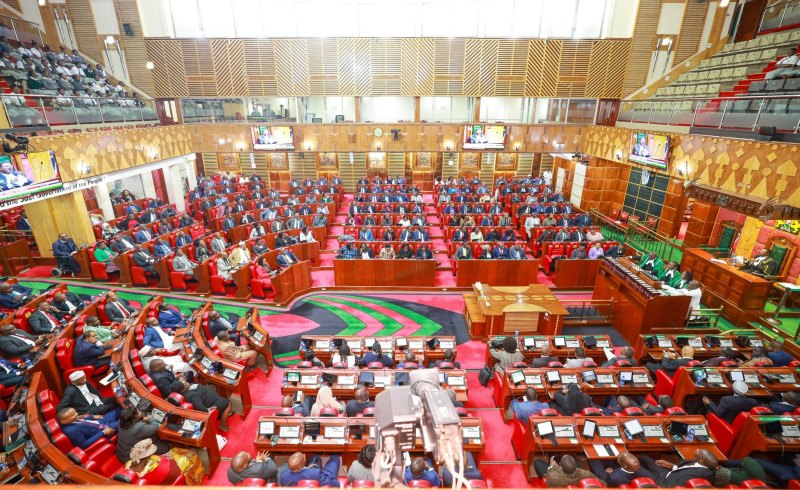
In the Senate, Majority Leader Aaron Cheruiyot tabled a motion seeking to address systemic challenges at the Busia and Malaba border posts to enhance Kenya’s competitiveness and regional integration.
The motion calls on the National Treasury, the Ministry of Trade, Industry and Cooperatives, and the Ministry of East African Community Affairs, in collaboration with KRA and KeNHA, to develop a comprehensive 90-day action plan to address infrastructural and operational bottlenecks.
“The Senate resolved that Kenha and KRA fast-track the expansion of access roads, increase the number of functional cargo scanners, and establish dedicated clearance lanes for perishable goods and transit cargo to decongest the border points,” reads part of the motion.
It also seeks to compel the EAC Ministry to intensify bilateral and regional engagements to fully harmonize operations under the One-Stop Border Post framework.
Lawmakers further want the Ministry of Transport and KeNHa to prioritise the completion of supporting road and rail infrastructure, including the dualling of the Malaba–Eldoret–Nairobi highway, to ensure that gains at the border are not eroded by domestic logistical bottlenecks.