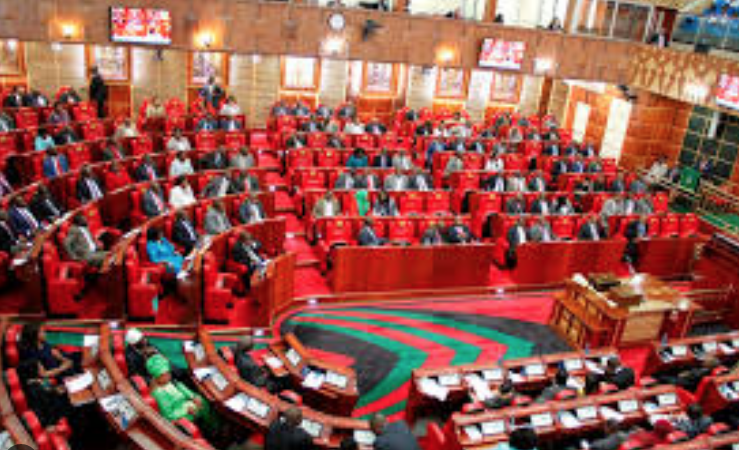
MPs have endorsed government's move to tighten Kenya’s digital space through a far-reaching law targeting cybercrime, online child exploitation, extremist content, fake news, identity theft, and SIM card misuse.
The Computer Misuse and Cybercrimes (Amendment) Bill, 2024, now in its final stages, proposes sweeping new powers to shut down websites, delete harmful content, punish digital fraudsters, and protect minors online.
If passed, the law will give courts and investigative agencies the legal authority to block websites hosting illegal content, order their closure, and compel offenders to remove harmful material.
Section 46A of the bill grants courts broad authority to order the deletion of content from digital devices or websites, shut down offending platforms, and approve urgent intervention in suspected cases.
Crucially, investigators would no longer need to wait for harm to occur and could proactively seek court orders before illegal content spreads.
The Bill empowers authorities to seek court orders to block access to websites, apps, or digital platforms hosting illegal content, including child sexual material, extremist ideology, cult activity, and online criminal networks.
Those found culpable could be compelled to remove content, deactivate accounts, or shut down devices.
The government could also apply for pre-emptive shutdowns if an online platform is suspected of facilitating criminal activity.
The only major point of contention centred on including “terrorism” among the offences justifying website shutdowns. Some MPs warned this could be open to abuse.
Dagoretti South MP John Kiarie pushed amendments to protect Kenyans from online scams.
The Bill expands the definition of identity theft to include passwords and explicitly criminalises digital impersonation, data harvesting, and phishing.
“What we are observing is that phishing is becoming the order of the day,” Kiarie warned. “We seek to avert these increasing incidences of phishing which can be executed by use of hyperlinks... stealing identities, money and private information.”
SIM card misuse, a major plank in online fraud, has also been flagged for tighter control. MPs aim to stop unauthorised SIM swaps and restrict individuals from owning multiple unregistered lines.
Lawmakers stated that child exploitation has gone unchecked in Kenya’s online space for too long. The Bill introduces clauses to block websites and content involving minors in explicit material.
Dagoretti North MP Beatrice Elachi said the changes would address mounting international pressure, particularly from the EU, which has criticised Kenya for failing to police digital child abuse.
“This comes to cure the challenge they have been telling us we have,” she said.
Elachi also raised the alarm over foreign embassies withholding Kenyan passports for prolonged periods during visa processing, noting they now scrutinise applicants' social media.
She cautioned that young Kenyans seeking to study abroad may jeopardise their chances due to their online footprints. “This Bill will be a cure,” she added.
Kenya has one of the world's highest rates of online misinformation, at 83 per cent compared to a global average of 53 per cent, according to MPs.
Kiarie noted Kenyans spend up to 4 hours and 12 minutes online daily, making the country vulnerable to fake news, cyberbullying, and AI-generated disinformation.
“With more than eight out of every ten posts likely to be fake or toxic, we are simply fortifying our laws,” he said.
Some MPs cautioned that applying anti-terror laws to online activity could be abused.
Funyula MP Wilberforce Oundo warned that inserting “terrorism” into the Bill was “preparing a rope that will hang them sooner rather than later.”
He noted that even citizens sharing photos of protests could be unfairly targeted.
“I have always told young people that if you do not have a thick skin... then do not join public life,” Oundo said.
“However, I completely agree that there must be decorum and respect... but we should not be overly restrictive.”
Others argued that extremist recruitment now happens almost entirely online and cannot be ignored.
Several MPs said the law would restore dignity to public life by cracking down on digital smear campaigns and character assassinations.
Tigania West MP John Mutunga argued the law would protect the dignity of MPs and innocent Kenyans routinely attacked on social media.
“If this amendment gives us that cushion, it will safeguard many people in this country,” he said.
Eldas MP Adan Keynan defended the proposed law, calling it a safeguard, not censorship, meant to protect Kenya’s sovereignty, security, and social fabric.
“This is not punitive. It is guidance. Follow procedure, respect due process, and do not be abusive,” Keynan said. He urged young people to view the law as a protection, not a restriction, noting that guardrails could prevent future regret.
With the House endorsing most proposals, the Bill heads to the reporting stage and then to the President.
INSTANT ANALYSIS
Supporters insist it is not about censorship, but responsibility, reflecting global trends where governments are tightening oversight of digital speech, cyber fraud, and online extremism. If enacted, the law will significantly enhance the fight against digital crime, strengthen the policing of cyber offences, and make password-based identity theft a punishable crime. Implementation will fall to the Ministry of Interior, the Directorate of Criminal Investigations, the Communications Authority, and the National Computer and Cybercrimes Coordination Committee, working with the Judiciary.