The findings reveal how unscrupulous officers and well-connected individuals may have transformed the vital public process into a multibillion-shilling cash cow.
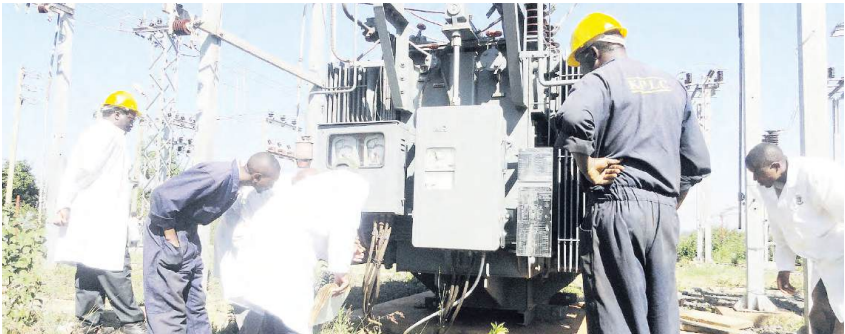
Auditor General Nancy Gathungu’s September 2025 report scrutinises seven donor-funded electricity transmission line projects implemented by the Kenya Electricity Transmission Company (Ketraco).
The report has uncovered a web of irregularities, where at least Sh4 billion in compensation remains unpaid to landowners, while millions more were squandered through over-payments, fictitious claims, and blatant violations of procurement and financial laws.
The seven projects, including the high-profile Ethiopia-Kenya and Kenya-Tanzania power lines, were intended to boost regional power trade and stabilise the country’s mains grid.
Instead, the audit tells a sad tale of how the very people meant to benefit from development, the project affected persons (PAPs), were left in limbo, while public funds vanished in dubious transactions.
The exploitation plays out across all the projects, putting on the spot the National Land Commission, the implementing agency Ketraco and the Energy department, as well as the consultancy firms they worked with in the ventures.
In the Ethiopia-Kenya line, Ketraco paid Sh8.3 million to seven landowners for parcels of land that were no longer affected by the final transmission route.
The line had been rerouted, yet the compensation, once paid, was never recovered. There is no evidence of any effort to reclaim the public funds.
At the same time, dozens of landowners along the Ethiopia-Kenya line received unexplained second payments, dubbed ‘top-ups’, totalling Sh24 million.
Gathungu stated that the Resettlement Policy Framework, the document meant to guide the process, has no provision for such payments.
The audit could find no justification for the bonus payments.
“lt was therefore not clear why Ketraco made the top-up payments amounting to Sh24,023,227. In addition, no documentary evidence was provided on any efforts made by the company to recover the amount.”
In the Nairobi Ring (Suswa-Isinya) line, a 20 per cent top-up amounting to Sh660 million was added to the initial compensation without supporting documentary evidence.
Perhaps the most outstanding flaw was that no proper valuation was conducted on some of the parcels that were compensated.
The audit found that Ketraco and its consultants valued a tiny, arbitrary sample of land, sometimes as low as five per cent of all affected parcels, and used these figures to compute compensation for everyone.
In the Ethiopia-Kenya line, only 157 out of 2,638 parcels were physically valued.
The criteria for selecting the samples and the methodology for extrapolating the values were never provided, opening the door for massive and untraceable manipulation of figures.
The audit findings on the wayleave compensation irregularities are part of a broader pattern of infractions in government land acquisition.
This is exemplified in the legal woes of former NLC Chairman Muhammad Swazuri and his team, who were embroiled in multiple, multibillion-shilling corruption cases arising from the SGR compensations.
This followed claims of their alleged roles in presiding over a commission where due process was bypassed, valuations were questionable, and public funds were paid out irregularly.
Similar concerns have been raised in other key infrastructure projects, including roads and superhighways.
The sampling fraud in the Ketraco cases had direct consequences on some of the projects. In the Kenya-Tanzania project, 58 parcels of land were overvalued by a staggering Sh133 million.
Of the amount, Sh116 million was already paid out to landowners before the audit uncovered the discrepancy.
In the Olkaria-Lessos-Kisumu line, 19 parcels saw their compensation irregularly inflated by Sh13.8 million.
In the Kenya-Uganda line, there was an over-payment of Sh7.7 million to 20 landowners because the actual affected area was less than the area used for compensation.
The report reveals that the plunder was enabled by a near-total collapse of oversight, amid reports that the Ketraco board of directors was often missing in action.
The audit could not find board approval for a Sh105 million payout for community projects in Marsabit county, a sum approved unilaterally by the managing director.
Crucial documents, among them land scoping reports, surveyor contracts, valuer agreements, and even title deeds for purchased land, were consistently “not provided for audit.”
Gathungu says the lack of documentation made it impossible to verify how land was identified, why certain prices were negotiated, or whether the billions spent were justified.
“The audit establishes that project conceptualisation and feasibility assessments were not sufficiently robust to provide reliable estimates of compensation requirements,” the report states.
The auditor further noted that governance structures “did not consistently comply with statutory mandates, resulting in weak oversight.”
In another case, payments were made without acceptance or agreement. Some Sh17.8 million was paid to 65 PAPs who had rejected offer letters.
Payment was made without their acceptance and without executed agreements, contrary to the law. In the Olkaria-Lessos line, Sh314 million was paid without approved valuations.
Another Sh105 million was approved for community projects in Marsabit county by the managing director without providing board approval, contrary to corporate governance rules.
Behind the huge numbers are real Kenyans whose lives have been seriously affected by the compensation delays.
The audit team, during physical verification, met landowners who spoke of health complications from transmission lines built too close to their homes, with one individual claiming the electromagnetic interference affected a pacemaker.
In other findings, many PAPs signed crop damage reports without knowing the compensation amount, and were denied any chance to agree or dispute the valuation.
In the Olkaria-Lessos-Kisumu corridor, trees that were cut down and paid for have since regrown, now posing a risk of contacting the live cables.
In what could worsen the situation for the affected families, funds were co-mingled in Ketraco’s general accounts instead of being held in protected project accounts.
Some projects, like the Kenya-Tanzania project, four years behind schedule, is still under construction, with its compensation process mired in over-payments and underfunding.
The Auditor General wants sanctions against the concerned individuals, including immediate recovery of all irregular payments.
She has also asked Ketraco to open escrow accounts for outstanding claims and for disciplinary action against responsible officers.
Gathungu wants Ketraco to “clarify governance roles and strengthen oversight” and “develop and enforce approved policies, guidelines, and procedure manuals for wayleave acquisition.”
INSTANT ANALYSIS
As the report lands before the Public Accounts Committee, it presents a critical test for the country’s institutions. Will there be consequences for what the audit clearly portrays as grand-scale abuse of public trust and funds? Or will this be another detailed report that gathers dust, while the same cash cow is milked in the next mega-project? For the thousands of Kenyans still waiting for compensation, and for taxpayers footing the bill, the demand for answers and accountability has never been more urgent.