As the world battles conflict, climate shocks, and deepening economic strain, cities are reaching a breaking point. World Habitat Day 2025, marked today under the theme “Addressing multiple crises affecting urban areas,” calls for urgent, inclusive action to turn urban pressure into opportunity and to ensure that every person has a place to call home.
Observed annually on the first Monday of October, the day serves as a global reminder of the state of human settlements and the universal right to adequate shelter.
This year’s commemoration takes on renewed urgency as urban centres bear the brunt of overlapping crises that continue to reshape lives and cities worldwide.
A record 122 million people have been forcibly displaced, with more than 60 per cent seeking refuge in urban areas.
The influx of displaced populations into already strained cities is accelerating urban growth, transforming territories, and pushing critical systems to the brink.
In his message to mark the day, UN Secretary-General António Guterres emphasised the scale and complexity of today’s urban crises.
“Conflict, political instability, and the climate emergency have forced 123 million people from their homes, most seeking safety in cities and towns already under pressure,” he said.
“About one in eight people live in informal settlements, and more than 300 million have no home at all. Health services, water systems, and transport networks are stretched, while the risks of new disasters loom.”
Yet amid these challenges, cities also represent hope and opportunity, if planned and supported properly.
“When we plan for inclusion, newcomers help to drive economies, strengthen communities, and enrich culture,” Guterres added.
“On this World Habitat Day, we shine a light on solutions, from better housing to land rights, to water and sanitation. We recognise the vital leadership of mayors and local governments, and the resilience of urban communities, especially women and youth.”
“A city is more than bricks and mortar. It is the promise of home.”
In an increasingly urbanised world, displacement has become a predominantly urban phenomenon. The urban poor, both displaced and host communities, struggle with limited access to adequate housing, essential services, and economic opportunities.
The global housing crisis, with nearly three billion people living in inadequate conditions, further exacerbates the situation, particularly as growing numbers of displaced people settle in informal settlements and slums, where over 1.1 billion people currently reside.
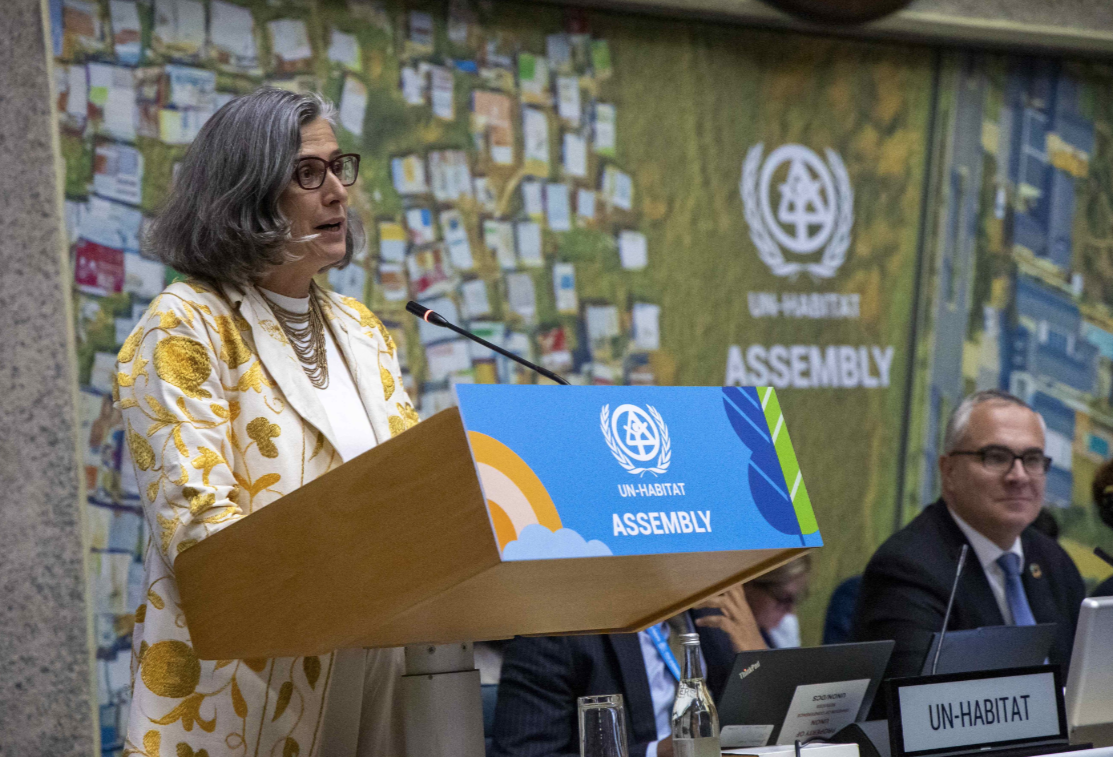
Against this backdrop, UN-Habitat Executive Director Anacláudia Rossbach highlighted the need for sustainable, development-driven crisis responses.
“Conflict, instability, and climate change are pushing millions into displacement,” she said. “But crisis does not have to mean despair. At UN-Habitat, we have seen communities rise again when housing, land, and basic services are prioritised.”
She pointed to real-world examples of transformation and recovery. “In Iraq, displaced families have regained homes and stability. In Somalia, improved access to land has brought hope to the marginalised. In Lebanon, inclusive upgrading has turned divided neighbourhoods into united communities.”
Rossbach called on governments and partners to act with urgency.
“Let us put housing at the heart of crisis response globally. Let us invest in cities as places of safety, opportunity, and resilience for all.”
She also looked ahead to the World Urban Forum in May 2026, which will be held in Baku, Azerbaijan, under the theme “Housing the world: Safe and resilient cities and communities.”
This year’s World Habitat Day highlights three strategic approaches aimed at ensuring that urban responses to displacement move beyond short-term humanitarian aid to become development-oriented and sustainable solutions.
The first approach calls for inclusive urban and territorial development that addresses the needs of both displaced populations and host communities. Central to this is the promotion of social cohesion and inclusive governance. In line with Sustainable Development Goal 11 and the New Urban Agenda, urban planning must be participatory and responsive, with decision-making processes that include all affected groups.
The second approach focuses on securing access to housing, land, and basic services. Displaced persons and urban poor communities frequently face acute barriers to obtaining safe, affordable housing, clean water, healthcare, and economic opportunities. These challenges not only deepen inequality but also threaten the social and economic fabric of urban life.
The third key approach is the empowerment of local governments, which play a pivotal role in managing displacement and fostering inclusive urban growth. As frontline responders, mayors and municipal authorities are uniquely positioned to understand local needs and drive effective, community-based solutions.
Aligned with UN-Habitat’s Strategic Plan 2026–2029, this year’s World Habitat Day aims to share urban development strategies for durable solutions, spotlight successful urban practices, and reaffirm the essential role of local leadership in managing urban displacement.
UN-Habitat’s Strategic Plan for 2026–2029 focuses on addressing the global housing crisis and sustainable urbanisation. It prioritises adequate housing, land, and basic services, particularly in informal settlements and slums.
The plan has three main impact areas: equitable and inclusive prosperity for poverty eradication, environment and climate action, and preparedness, response, recovery, and reconstruction in crisis settings.
The framework aims to support Member States in achieving the Sustainable Development Goals, fostering resilience, and creating inclusive cities.
The plan was adopted by a strong majority vote at the United Nations Habitat Assembly in Nairobi on May 30, 2025. It serves as a strategic guide for UN-Habitat for the next four years.
The plan builds on UN-Habitat’s experience and lessons learned from previous strategic plans, addressing gaps identified by the UN’s Office of Internal Oversight Services.