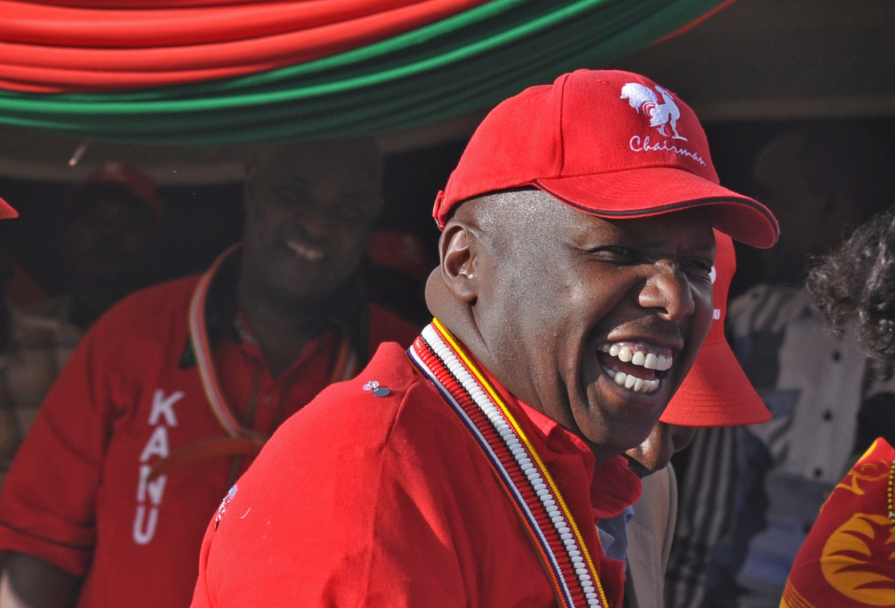
 Kanu national chairman Gideon Moi. /FILE
The announcement by Kanu national chairman Gideon Moi that he will contest the upcoming Baringo senatorial by-election has stirred fresh debate in Kenya’s political circles.
For some, it is a surprise move from a man who seemed resigned to the shadows after his humiliating defeat in 2022.
For others, it is the clearest sign yet that Moi is plotting a political resurrection, one that could breathe new life into the independence party once synonymous with power since Kenya's independence to the dawn of the new millennium.
For decades, the Kenya African National Union (Kanu) towered over national politics, first under founding Father Mzee Jomo Kenyatta, then his vice, the late President Daniel arap Moi, Gideon's father.
Yet in recent years, the party has all but vanished from relevance, swept aside by the United Democratic Alliance (UDA) juggernaut that now dominates the Rift Valley and national politics.
The depth of Kanu’s decline was laid bare in 2022.
Despite once enjoying overwhelming popularity in Baringo, Gideon Moi, an Azimio principal, was trounced in the senatorial race by William Cheptumo of UDA, who secured 141,177 votes (65.35 per cent) against Moi’s 71,480 (33.11 per cent).
The defeat was not just personal — it symbolised the crumbling of the Moi dynasty, whose political student, William Ruto, left nothing to chance as he put skills learnt from the professor of politics to vanquish opponents on his way to the presidency.
Another of Moi's sons, Raymond, also fell victim to the 'yellow fever' and lost the Rongai parliamentary seat to UDA’s Paul Chebor, cementing the image of a family and party on the brink of extinction - politically.
As if that wasn't enough humiliation already, the UDA wave was onto something equally devastating.
The independence party, once revered as "Chama ya Baba na Mama", and touted by President Moi and allies to rule for 100 years, also suffered a blow after its secretary general, Nick Salat, lost the Bomet East parliamentary seat.
Salat managed a paltry 13,425 votes behind Richard Yegon, who garnered 35,431.
Kanu managed to win only six seats in the National Assembly in that election - Tana River, North Horr, Tiaty, Samburu East, Samburu West, and Kilgoris - a far cry from UDA's 145, ODM's 86, and Jubilee Party's 28.
Now, fate has handed Gideon a second chance. The Baringo seat fell vacant in February following Senator Cheptumo’s death after a long illness.
The Independent Electoral and Boundaries Commission (IEBC) has set November 27 as the date for a by-election, offering Moi a political lifeline after nearly three years in the cold.
For Gideon, who had retreated from the limelight amid the realignments of the opposition and the dominance of UDA, the by-election offers more than just a seat.
It could be the springboard for re-establishing himself as a central player in Kenyan politics ahead of 2027.
His absence from the coalition-building efforts of figures such as Kalonzo Musyoka, Martha Karua, Eugene Wamalwa, and Rigathi Gachagua for a united opposition keen on unseating Ruto was seen as a quiet acknowledgement of his diminished influence.
Yet the Baringo race now presents him with a chance to reassert relevance, especially as his long-standing rivalry with President William Ruto rules out any easy alliances with the ruling camp.
It is therefore no surprise that Kanu has thrown its weight behind his candidacy.
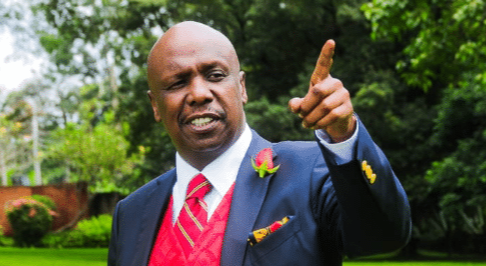 Kanu national chairman Gideon Moi. /FILE
On October 2, the party confirmed that Moi had been nominated after what it described as “extensive consultations, deliberations, and consensus” both within the party and among the people of Baringo.
“This decision underscores the party’s unwavering commitment to offering experienced, visionary, and people-centred leadership at a critical juncture for Baringo county and the nation at large,” said Manasseh Nyainda, Kanu’s director of communications.
He added that Moi had embraced the nomination, promising to run a campaign anchored on inclusivity, accountability, and service.
“In accepting this call to serve, Moi has expressed profound gratitude to Kanu members, supporters, and the people of Baringo for their patience, confidence, and steadfast support,” Nyainda said.
The symbolism of Moi’s candidacy is not lost on observers. Kanu, once written off as a relic, now has the chance to test whether it still resonates with voters.
The party urged supporters to rally behind Moi, describing him as the most formidable and recognisable heir to his father’s political legacy.
For Gideon himself, victory would amount to vindication — proof that both he and his party are not yet consigned to history.
But the battle will be anything but easy.
UDA, the ruling party, is determined to hold onto the seat and has nominated Kiprono Cheburet, who emerged victorious from a hotly contested primary that attracted nine aspirants.
Cheburet won with 48,791 votes, ahead of Tobole Kipsang Kibor Wycliffe (30,897) and Daniel Kiptoo Korir (23,613).
The crowded race underscored the importance UDA attaches to the contest, as well as the sheer political muscle it continues to wield in the Rift Valley.
With the battlelines now drawn, the stakes are clear. While UDA wants to reaffirm its dominance in its heartland, Kanu hopes to show that it may be down, but it is far from finished.
For Moi, this is more than just a Senate seat — it is about reclaiming dignity, reviving legacy, and perhaps laying the groundwork for a larger comeback.
His earlier presidential ambitions may have faltered, but a return to Parliament could keep those hopes alive in the medium term.
The political context has also shifted since 2022. Disillusionment with established parties, frustration over the economy, and the assertiveness of a younger, restless generation of voters — the so-called Gen Z bloc — are reshaping the country’s politics.
Whether Moi can tap into these sentiments, or whether his appeal remains tied to a fading dynasty, will be the real test.
For now, the by-election offers him a stage to prove his mettle. Should he emerge victorious, Moi would serve a third term in the Senate, having previously defended the seat in 2017.
More importantly, he would demonstrate that even in an era dominated by UDA, there is still room for political comebacks — and that Kanu, despite its decline, can still make noise where it matters most.
As the campaign gathers momentum, all eyes will be on Baringo. Will Gideon Moi ride the wave of nostalgia and loyalty to the Moi name, or will the UDA machinery prove too entrenched to dislodge?
Whichever way the vote swings, one thing is certain: November 27 will not just be about filling a vacancy. It will be a verdict on legacies, dynasties, and the ever-shifting sands of Kenya’s political landscape as a seemingly angry Gen Z lot hungers for change.