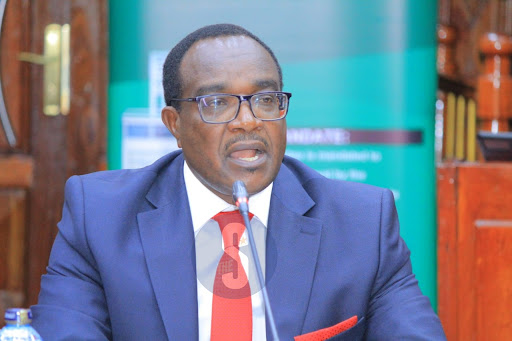
 Education Cabinet Secretary Julius Ogamba/FILE
Graduate Junior Secondary School teachers will continue working under primary school heads, despite growing pressure from the tutors and unions for independence.
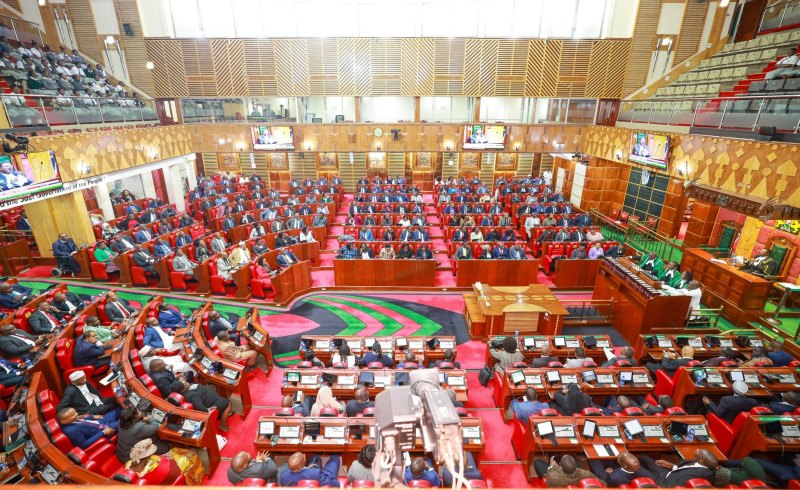
Education Cabinet Secretary Julius Ogamba told senators on Wednesday the arrangement was based on recommendations of the Presidential Working Party on Education Reforms.
The revelation is a major setback for JSS teachers, most of whom are university graduates and had expected to operate independently from primary school heads.
Most primary heads are not graduates, fuelling tension that graduates are now being managed by people with lower qualifications.
“The task force proposed a comprehensive school system that brings together both primary and junior secondary under one body,” Ogamba said when he appeared before the Senate plenary.
“We are therefore working on the basis of the Presidential Working Party’s recommendation.”
He was responding to Nandi Senator Samson Cherargei, who sought a clarification on the governance of JSS.
“I would like to ask the CS what his position is on the independence and governance structure of managing Junior Secondary Schools, noting that it is distinct from both lower primary and upper primary schools,” Cherargei said.
Under the defunct 8-4-4 system, JSS teachers would have been deployed to secondary schools.
Ogamba, however, said reforms are still ongoing and future adjustments remain possible.
“Amendments to the laws and policies are being drafted. Once approved by Cabinet, they will be presented to Parliament. At that point, analysis can be done to see what can be changed,” he said.
For months, the Kenya Union of Post-Primary Education Teachers has been lobbying for JSS to be delinked from primary management, citing strained relations in many schools.
Kuppet says the integration of JSS into primary schools has fueled hostility and bad blood between the JSS teachers and the management of primary schools.
“In a number of institutions, the relationship between JSS teachers and primary heads is frosty, often linked to an inferiority complex on the part of non-graduate head teachers,” Kuppet argued.
One JSS teacher, who spoke to the Star, said: “Many of us are a frustrated lot. We strongly feel that heads with P1 qualifications look down on us because of their insecurity.”
The JSS tutors said autonomy is critical to safeguarding their careers, restoring their professional dignity, and securing the Competency-Based Curriculum.
“The merger of pre-primary, primary, and junior secondary under one administration undermines the 2-6-3-3-3 design, which was built on the principle that each stage of learning should stand on its own,” Embu county JSS interim chairman David Ngari said last week.
The ministry’s stance could set the stage for more clashes with teachers and unions as the debate over the future of JSS management intensifies.
The development comes even as the senators pressed the CS to explain why some JSS teachers were being coerced to teach subjects they were not trained in.
“Why are JSS teachers being assigned subjects outside their areas of specialisation, considering the impact this has on instructional quality, content accuracy, and learners’ preparedness for senior secondary pathways?" Murang’a Senator Joe Nyutu posed.
Still, others are forced to teach primary school learners.“What measures has the ministry put in place to ensure clear role definition and manageable workloads for JSS teachers, who are currently compelled to also teach in the primary section, despite the already high demands at the JSS level?” Nyutu asked.
In response, Ogamba maintained that the Teachers Service Commission had put in place administrative structures to ensure teachers are deployed according to their training and job descriptions.
He said that all teachers deployed have well-defined job descriptions outlining their teaching and co-curricular activities.
“Due to the reduction in the number of classes in primary schools, the staffing position in the primary section is optimal, and there are no cases of teachers in junior school being compelled to teach in the primary section,” he said.
The standoff sets the stage for further clashes between the ministry and unions as the country navigates teething challenges in the Competency-Based Curriculum reforms.
INSTANT ANALYSIS
The call for autonomy in the management of Junior Secondary Schools is rapidly gaining ground, with teachers across several counties demanding that the government implements reforms to streamline education management. Educators argue that granting JSS independence will not only ease administration but also strengthen the 2-6-3-3-3 Competency-Based Curriculum structure envisioned under the current education system. What began as isolated concerns over the management of JSS has now escalated into a nationwide movement, with teachers increasingly vocal about the need to separate JSS administration from primary school.