A new report has revealed the serious extent to which
individuals holding fake academic credentials have continued to infiltrate the
public service despite increased surveillance by authorities.
The report details how the silent fraud is being perpetrated
in the corridors of power, including within the country’s most critical
institutions. The schemes uncovered are varied.
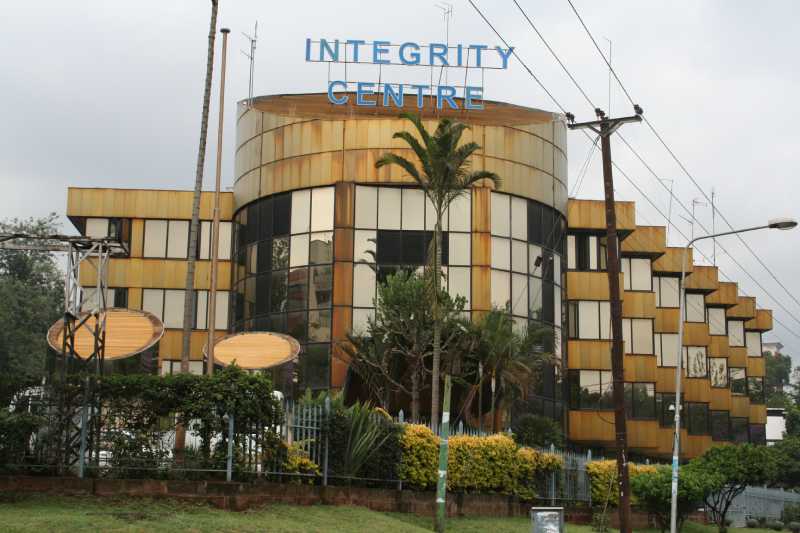
A recent quarterly report from the Ethics and
Anti-Corruption Commission (EACC), covering April to June 2025 and published in
the Kenya Gazette, exposes the alarming scale and brazenness of the practice.
The document reveals a litany of cases where individuals
used fabricated certificates to secure jobs, promotions, allowing them to climb
career ladders, and fraudulently earn millions from taxpayers.
In one case, a former driver at the Office of the Auditor
General allegedly secured his position with a forged KCSE certificate.
According to the EACC, the man submitted a certificate from
a school called Scholar Secondary, claiming a grade of C Plain.
Investigations, however, found that he never even registered
for the national exam.
For years, he drew a salary, ultimately pocketing Sh4
million for a job he was fundamentally unqualified to hold before resigning
during disciplinary proceedings.
EACC report shows that the fraud is not confined to
secondary school certificates.
A regional HIV Coordinator at the National Syndemic Diseases
Control Council has been accused of double forgery.
The EACC alleges that the official not only altered his KCE
exam result from a Division III to a Division II but also presented a
fabricated Bachelor's degree certificate from Egerton University.
“Investigations also established that the Bachelor’s degree
certificate purportedly issued by Egerton University was forged and therefore
did not originate from the said university,” the report reads.
Of the 30 investigation files forwarded to the Director of
Public Prosecutions (DPP) in this quarter, a significant portion related to
academic fraud.
While the DPP has concurred with prosecution in several
cases, many others remain awaiting a final decision, highlighting the legal
backlog this epidemic creates.
The water sector has also been cited as vulnerable and an
easy target of the suspected academic cheats.
An employee at the Nairobi City Water and Sewerage Company allegedly
used a forged diploma in Business Management to secure employment.
Over her tenure, she earned Sh18.77 million, amounts EACC
says were fraudulently obtained from public coffers.
“Investigations revealed that the certificate submitted by
the suspect was not genuine and that she had never been a student in the said
college,” the report adds.
The official reportedly forged a certificate of a telephone
operator purporting it to be from the said college, papers she used to secure a
permanent and pensionable job.
Institutions responsible for the nation’s democratic and
oversight functions, like the IEBC, Parliament and Office of the Auditor
General, have not been spared either.
A Constituency Office Clerk at the Independent Electoral and
Boundaries Commission (IEBC) was dismissed after it was discovered he used a
forged KCSE certificate from Malava Boys High School to secure his job, earning
Sh11.59 million over 12 years.
At the Office of the Auditor General, the state's top
financial watchdog, a Secretarial Assistant was dismissed for presenting a
forged KCSE certificate where her name and English grade had been altered.
“Investigation established that the suspect did not register
nor did she sit for the 2008 KCSE examination.”
“It was further established that the examination centre she
stated did not exist during the year 2008 KCSE examination, and the said code
belonged to another secondary school.
At the University of Nairobi, an investigation into the irregular
appointment of an Acting chief operations officer revealed that the Bachelor of
Philosophy degree from Pontifical Urbaniana University he used for his initial
appointment is not recognised in Kenya.
The EACC is now seeking to recover over Sh50 million in
illicit earnings and has recommended charges against him and University Council
members for abuse of office.
EACC has recommended criminal prosecution for the suspects,
and is also mulling civil suits for the recovery of every shilling irregularly
earned.
For observers, the never-ending menace points to a systemic
failure in pre-employment verification and a lack of serious follow-ups where
issues are flagged.
“If we could only have the time to do background checks,
we’d have made progress, but we have very little to show in terms of
enforcement, especially among prominent individuals,” Chris Owala, CEO of
Community Initiative Action Group-Kenya, said.
One of the concerns of the players is the low conviction
rates from the flagged cases.
A recent audit by the Public Service Commission revealed
that despite the glaring irregularity, only eight people have been prosecuted.
Concerns are abounding that no action has been taken on most
of the perpetrators since the PSC ordered the review in 2022.
For PSC, more than 1,000 civil servants had fake academic
papers in the period to December 30, 2024.
Most of the forged certificates reported were from state corporations
and Semi-Autonomous Government Agencies
at 76.3 per cent, and ministries and state departments at 17.9 per cent.
The 2023 review also unearthed 2,000 cases, lifting the lid
on how thousands of qualified Kenyans have been denied jobs unfairly.
INSTANT ANALYSIS
The forgery of academic credentials is deemed a deception that undermines the very foundation of merit and integrity in public service. As long as a forged certificate can easily open doors to secure, pensionable jobs, the incentive for the deception permeating the civil service will remain, continually eroding public trust and rewarding dishonesty over genuine qualification.