
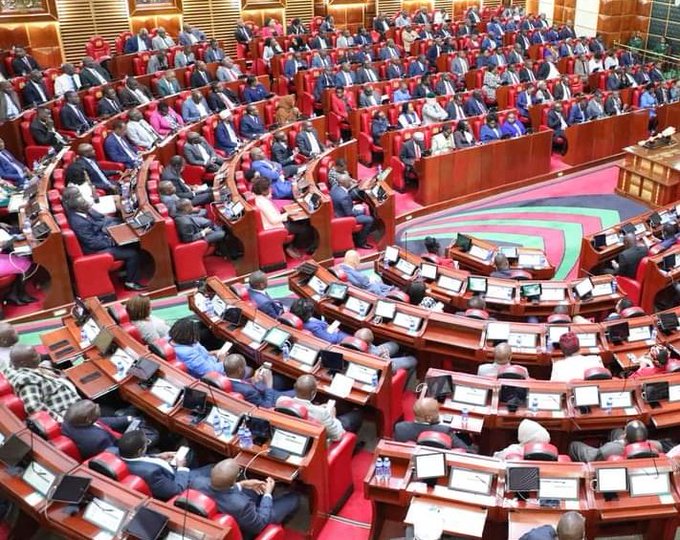
MPs have thwarted an effort to explicitly criminalise
‘sextortion’ – the form of blackmail where someone threatens to share a nude or
sexual image unless you meet their demands.
A parliamentary committee has concluded that existing laws
are sufficient to combat the practice, which also includes the demand for
sexual favours in exchange for services or benefits.
The proposal, pushed by Nairobi Woman Representative Esther
Passaris on behalf of survivors and concerned citizens, sought to amend the
Penal Code and the Sexual Offences Act to create a distinct offence of
sextortion.
The amendments were aimed at setting clear penalties and support mechanisms for those who fall victim of the practice.It followed in the wake of the alleged high prevalence of extortion targeting MPs, either by their jilted lovers or persons raring to take advantage of their vulnerabilities.
The National Assembly’s Public Petitions Committee, after
months of consultations, has, however, rejected the petition, arguing that
enacting a new law would be redundant.
In its report tabled in the House recently, the committee,
chaired by Runyenjes MP Muchangi Karemba, stated that the “abuse of power to
coerce individuals into providing sexual favours” is already covered.
The House team held that Sections 23, 24 and 43 of the
Sexual Offences Act adequately address cases of sexual harassment, abuse of authority
and coercive circumstances, respectively.
“The enactment of the bill would duplicate existing laws…the
aspects are adequately provided for in Section 43 of the Sexual Offences Act,”
the committee observed.
“Therefore, the committee rejects the proposal to amend the
Sexual Offences Act (Cap 63A) and other relevant criminal laws to explicitly
define sextortion as an offence, make clear provisions on penalties, support
for victims and for connected purposes,” the report reads in part.
The petitioners had painted a grim picture of a “silent
corruption” epidemic, detailing how vulnerable Kenyans, particularly women and
girls in informal settlements, are forced to trade sex for essential services
like water, fish, jobs, grades and even police protection.
They cited studies showing that 41 per cent of women in some
informal settlements had experienced sextortion.
To deter perpetrators, the petitioners proposed a stiff
penalty of 15 years imprisonment, a fine of Sh5 million, or both for those
convicted of sextortion.
Kenya Law Reform Commission (KLRC) and the Ethics and
Anti-Corruption Commission (EACC) supported the push for legal reform to
criminalise the practice, which has become prevalent in the advent of social
media.
The KLRC described sextortion as a “psychological coercion”
that disproportionately affects women seeking IDs, sanitary pads, education and
jobs.
“Female politicians have been vulnerable to image-based
disinformation campaigns that manipulate media to sexualise them…these cases
set out the need for urgent legislative intervention to include the offence of
sextortion in the statute books,” the commission said.
The EACC pointed to a ‘gap in the criminal law,’ arguing
that expressly defining sextortion would strengthen the fight against
exploitation.
However, the Office of the Attorney General presented a
contrasting view, which ultimately swayed the committee.
The AG’s office contended that the core elements of sextortion,
abuse of power, coercion and demanding sexual acts are already criminalised
under existing provisions related to sexual harassment and abuse of authority.
“The proposed offence had similar elements to the offence of
sexual harassment and sexual offences relating to the position of authority and
persons in positions of trust,” the AG said.
The committee agreed, concluding that the petitioners “did
not disclose the specific aspects of sextortion that the Sexual Offences Act…
did not cover.”
It found no legislative gap warranting a new, standalone offence. “The committee did not identify a gap in the existing law to necessitate the enactment of the proposed bill,” the report reads.
The petitioners had argued that the very term “sextortion”
is absent from the law, creating a hurdle that hinders prosecution.
They further held that the gap has blurred “the unique blend
of corruption and sexual violence that victims endure.”
INSTANT ANALYSIS
For now, efforts to combat sextortion must be channelled
through the interpretation of existing laws on sexual harassment and coercion,
leaving the specific term and the proposed harsh penalties out of the country’s
legal framework.






