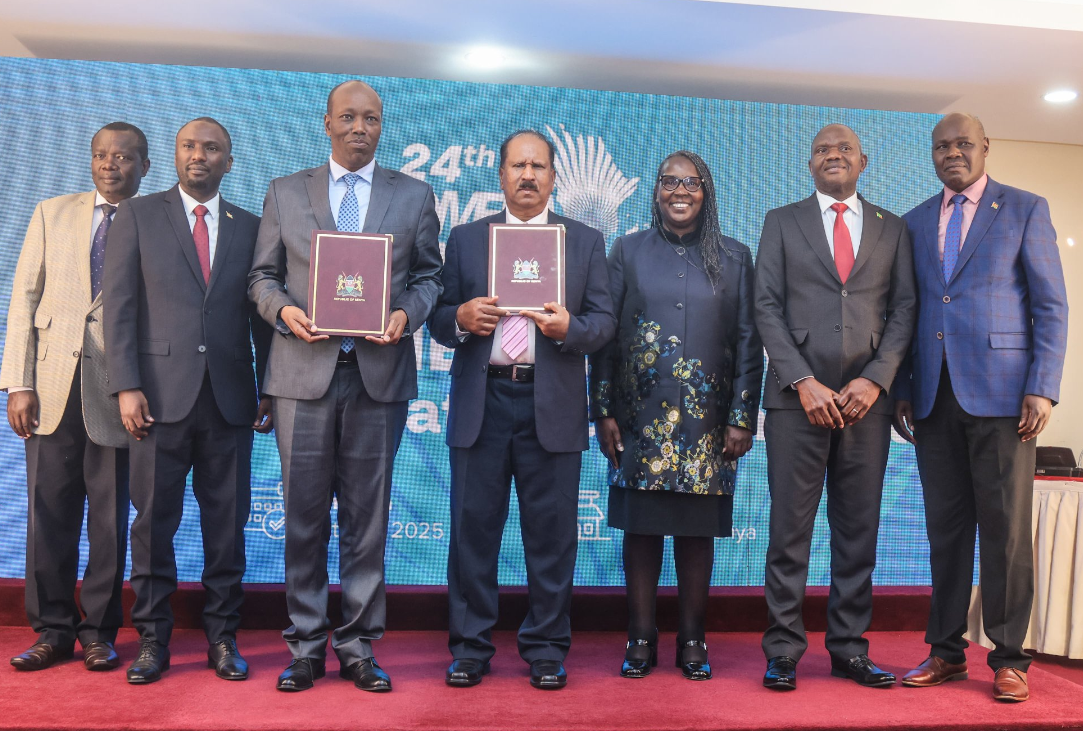
On October 9, 2025, Kenya will host the 24th Common Market for Eastern and Southern Africa (COMESA) Summit of Heads of State and Government at the Kenyatta International Convention Centre (KICC) in Nairobi.
The event signals a pivotal moment in Kenya’s regional diplomacy, economic strategy, and integration leadership.
As the host nation, Kenya will assume the rotating chairmanship of COMESA from Burundi for the 2025–2026 period.
This leadership role is not only symbolic of Kenya’s growing stature in continental affairs but also substantive in terms of the policy influence it affords.
Chairing COMESA places Kenya at the forefront of shaping the bloc’s trade agenda, integration policies, and development priorities.
For Kenya, a country that has long been a key player in East and Southern Africa, the meeting comes at a time when regional cooperation and intra-African trade are more critical than ever.
COMESA, established in 1994, comprises 21 member states and serves as one of Africa’s most influential Regional Economic Communities (RECs).
Its mandate is to promote regional integration through trade and investment, while also facilitating cooperation on infrastructure, security, climate action, and digital development.
While the bloc has achieved measurable progress in expanding intra-regional trade and policy harmonisation, it continues to face hurdles, including infrastructure gaps, non-tariff barriers, and over-dependence on trade with external markets.
Kenya’s assumption of the chairmanship thus comes at a critical juncture, offering an opportunity to lead the bloc in tackling these long-standing issues.
The 2025 summit, themed "Leveraging Digitalisation to Deepen Regional Value Chains for Sustainable and Inclusive Growth," aligns strongly with Kenya’s digital economy ambitions and positions the country as a thought leader in regional innovation.
"As a region, we have made significant strides, including the recent entry into force of the COMESA-EAC-SADC Tripartite Free Trade Area, which creates Africa’s largest integrated market,” said Ministry of Investments, Trade and Industry Cabinet Secretary Lee Kinyajui when he announced the meeting.
“The work ahead is not for one nation alone. It requires the sustained political will and concerted effort of all our member states to ensure that the resolutions we adopt translate into tangible benefits for our people.”
Kenya has consistently recorded a trade surplus within the bloc, exporting a range of manufactured goods, including cement, steel, edible oils, processed foods, textiles, plastics, and chemicals.
Key export markets within COMESA include Uganda, the Democratic Republic of Congo (DRC), South Sudan, Rwanda, and Zambia.
On the import side, Kenya sources raw materials and semi-finished goods such as sugar, maize, wheat, edible oils, iron and steel, and packaging materials from COMESA states.
With the summit focusing on deepening regional value chains, Kenya has the platform to push for policies that support its manufacturing and export sectors.
By encouraging trade facilitation, reducing non-tariff barriers, and promoting regional industrialisation, Kenya can ensure that its firms, especially small and medium-sized enterprises (SMEs), gain better access to regional markets.
As COMESA chair, Kenya has outlined clear regional priorities. Among them is the expansion of market access through the elimination of non-tariff barriers, long a stumbling block in the free movement of goods within Africa.
Kenya also plans to advocate for enhanced infrastructure investment to improve connectivity among member states.
Efficient transport corridors, energy grids, and communication networks are essential to unlocking regional trade and enabling more integrated production systems.
Another key focus is sustainability. Kenya has signalled its intention to lead in climate-responsive growth by promoting green industrial policies and renewable energy initiatives across the bloc.
This aligns with global climate commitments and supports the country's own green transition goals under Vision 2030 and the Bottom-Up Economic Transformation Agenda (BETA).
The summit’s digitalisation theme is a strategic fit for Kenya, which has long been considered a continental leader in ICT innovation. Home to successful platforms such as M-Pesa and a growing ecosystem of tech startups, Kenya is well-positioned to lead digital transformation efforts within COMESA.
The summit will provide an opportunity to showcase how digital platforms can reduce transaction costs, improve customs efficiency, promote e-commerce, and enable real-time tracking of goods across borders.
By integrating digital technologies into trade logistics, customs procedures, and payments, COMESA can address many of the inefficiencies that currently hamper intra-African trade.
Kenya, as chair, can spearhead these reforms and leverage its digital expertise to help build a more competitive and inclusive regional economy.
Hosting the summit also presents a unique diplomatic and economic opportunity for Kenya.
Over 2,000 delegates—including Heads of State, cabinet ministers, senior officials, and business leaders—will gather in Nairobi.
The Summit is also expected to attract a diverse mix of stakeholders from government, business, civil society, and international partners, all working collectively to advance COMESA’s mission of deeper integration and shared prosperity.
The associated events, such as the COMESA-EU Horticulture Connect (October 6–8), the COMESA Business Forum (October 7), and the 20th Meeting of Foreign Affairs Ministers (October 8), will provide platforms for bilateral and multilateral engagements.
Kenya is expected to use the summit to attract foreign direct investment, deepen business-to-business linkages, and showcase its economic potential to the wider region.
This is not the first time Kenya has played host. Nairobi last welcomed the COMESA Summit in 2007, and before that in 1999.
Side events and exhibitions will give Kenyan firms visibility and open doors to new markets and partnerships.
Beyond economic gains, the summit allows Kenya to exercise its soft power by
The benefits of hosting the COMESA Summit will also be felt on the ground. Hotels, transport services, event organisers, caterers, and other businesses in Nairobi are expected to receive a significant boost from the influx of delegates and international visitors.