
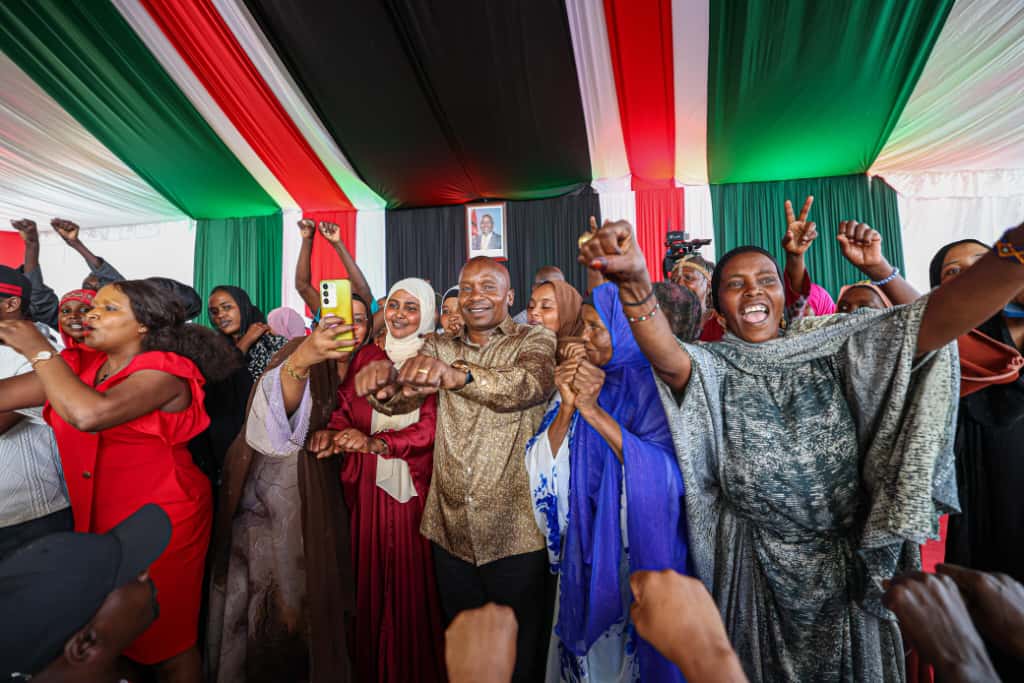
 Deputy President in a past event/FILE
For the past year, the political waters surrounding Deputy President Kithure Kindiki have been tranquil.
That calm was shattered recently when leaders from Western Kenya assertively demanded the DP post for the 2027 polls.
A team of influential figures, including National Assembly Speaker Moses Wetang’ula and Cooperatives CS Wycliffe Oparanya, argue that it is the Luhya community’s turn to occupy the second most-powerful seat.
This declaration sets the stage for a complex battle over the role currently held by Kindiki, pitting what his backers see as his demonstrated competence against the ethnic calculus of Kenya’s power dynamics.
It forces a critical examination of whether President William Ruto will prioritise a proven, cohesive working relationship or yield to regional political pressures in his re-election bid.
The demand for the DP slot is not a spontaneous outburst but a calculated political strategy, as the leaders say it positions them for the presidency in 2032.
The Luhya community is among the largest in the country, with 2.1 million registered voters in the last general election and an average turnout of 63 per cent.
The leaders base their claim on this numerical strength, asserting that it qualifies a Luhya for the DP position.
They are not alone. Political leaders in Nyanza have also been laying claim to the number two position, touting Homa Bay Governor Gladys Wanga and Treasury CS John Mbadi as lead candidates.
A critical look at the demands presents two hurdles for the leaders: Kindiki’s status as Ruto’s premium asset and the community’s own unity challenges.
A war of words between top leaders from the region has continued to threaten the quest for Luhya unity, a dynamic already playing out ahead of the 2027 poll battle.
Furthermore, some analysts question the logic of competing for the number two position.
Political analyst Charles Munyui expressed surprise, noting that Western Kenya leaders "should compete for number one so that you are invited to the negotiating table".
He also pointed out that the community already holds a powerful position in government through Prime Cabinet Secretary Musalia Mudavadi.
“Western has had Deputy Presidents before – the late Kijana Wamalwa, Musalia Mudavadi and Moody Awori. I am surprised that Western leaders are pursuing the DP post, yet they are among the largest communities in the country. It is absurd,” Munyui said.
Nyanza’s situation, for observers, could be clouded by Raila Odinga’s insistence that he is not done yet with the presidential run. Some banter has suggested he take the top ticket, with Ruto as his deputy.
But for Kindiki’s backers, the man facing the political manoeuvring has, over time, shown he's no pushover.
Laikipia East MP Mwangi Kiunjuri, who led a team of 48 MPs to endorse the DP as Mt Kenya’s ambassador in government even before Rigathi Gachagua’s impeachment, said, “We had a challenge for two years, but for the past one year, Kindiki has put the office above an individual.”
He noted that the DP’s performance has provided ‘the backing and backup’ that Ruto lacked in his political machinery and legacy plan.
Kindiki’s allies hold that the President was missing “a clear, sober, loyal, cohesive, articulate and hands-on principal assistant”.
“He now has someone with a proper understanding of the government agenda of development. It would be difficult to trade such attributes for politics,” they argue.
Ruto has not been shy in his praise for Kindiki, describing him as "calm, composed, supportive, understanding and a better performer" than his predecessor, Gachagua.
The President has publicly boasted of having "a deputy who understands government and what we are doing in infrastructure, education and agriculture and is supportive of the ministers and me to make sure Kenya is going forward".
This commendation suggests that Kindiki possesses the very attributes—loyalty, competence and a non-combative demeanour—that Ruto values.
Insiders say the DP oversees Cabinet business with finesse and a great grasp of local, regional and global perspectives, perfectly complementing Ruto’s style of politics and delivery—energetic, persistent and strategic.
“DP Kindiki is ruthlessly efficient,” a government source who did not want to be named told this writer when asked about what has changed since the DP took over.
“When President William Ruto needs someone to do the heavy lifting, DP Kindiki is the person. He is extremely persuasive, thrives in the art of reaching out; his non-combative and consultative attributes make him easy to trust.”
Kindiki is also viewed as having a proper understanding of the transformative development projects and programmes being implemented countrywide.
It is argued that it is to his credit that the President has been able to unlock major labour-related stalemates.
The DP brokered a deal between intern doctors and the government over CBA and pay perks, ending a major standoff that threatened to paralyse health services.
On the political side, some observers see the DP as a master political chess player. Silent. Polite. Persistent.
“MPs like engaging him. He has opened the Karen residence to the political class and returned its glory to what it was during President Ruto’s tenure as Deputy President,” Tigania East MP Mpuru Aburi stated.
Ruto now finds himself at a political crossroads, facing a dilemma that pits performance against patronage.
Retaining Kindiki offers stability and continuity. Moreover, the DP is said to be helping Ruto consolidate support in the Mount Kenya East region, a crucial voting bloc.
In just under a month, the DP has hosted more than 30,000 people in delegations from Meru, Embu, Tharaka Nithi, Isiolo, Kirinyaga and Laikipia at his Irunduni home in Tharaka Nithi.
Public Service CS Geoffrey Ruku said, "For us in Mt Kenya East, we are for maintaining the status quo...we have our son whom we want to push in 2032 to be President...Prof Kithure Kindiki."
Conversely, acceding to the Luhya leaders' demand could be a strategic move to secure a large voting bloc.
However, this path is risky. It would mean sacrificing a proven and effective deputy, potentially disrupting the government's momentum.
As analyst Abraham Kitur noted, the stability of Kindiki's position is tied to the support Ruto can expect from the Kikuyu community.
"Since Kikuyus are no longer guaranteeing support for Ruto... what does the future hold for Kindiki?" Kitur asked.
The implication is that if Ruto believes he needs Western Kenya's votes more than Mount Kenya's, Kindiki's job becomes less secure.
For now, the DP continues to execute his duties with a focus on the government agenda, overseeing development projects.
INSTANT ANALYSIS
The battle lines are drawn and President Ruto's eventual choice will reveal his priorities for both the upcoming election and his legacy. The brewing confrontation will undoubtedly be a central political narrative as the country marches toward the 2027 elections. The outcome will not only determine the country's second-in-command but also signal whether performance can truly triumph over patronage or if the perennial calculus of ethnic alliances will once again prevail.







