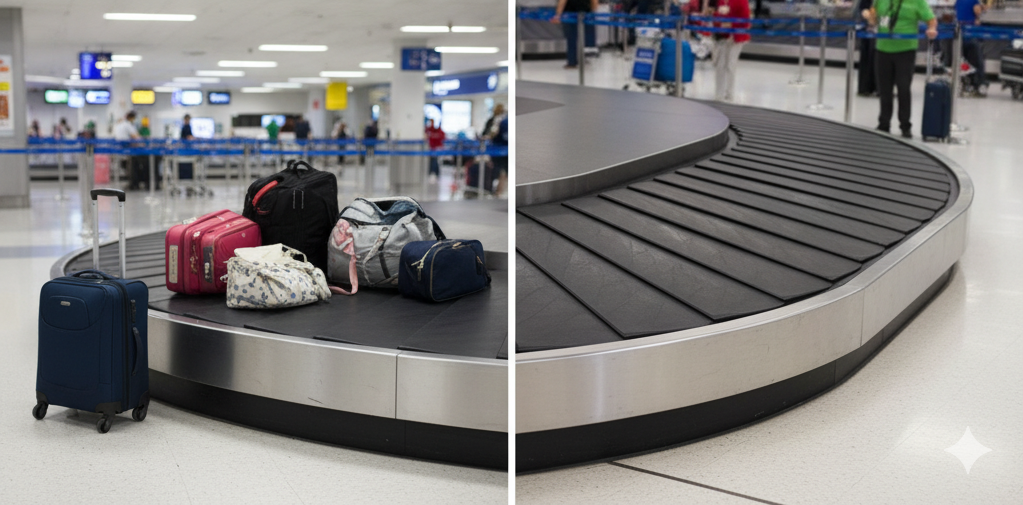
 AI illustration
Airports are unique ecosystems governed by strict regulations.
For millions of travelers each year, the journey through security checkpoints and baggage claims can sometimes lead to unforeseen detours for their belongings.
The most immediate and visible form of property seizure at an airport occurs at security checkpoints.
Prohibited items, ranging from liquids exceeding the 100ml limit to sharp objects or dangerous goods, are routinely confiscated by security personnel.
The primary aim is, of course, public safety and compliance with aviation security regulations set by bodies like the Transportation Security Administration (TSA) in the United States, or the European Union Aviation Safety Agency (EASA).
What exactly happens to that forgotten bottle of water, the oversized shampoo, or the suitcase that never quite made it to its owner?
Once an item is deemed inadmissible, its fate largely depends on its nature and value. Perishable items like food or beverages are typically disposed of immediately.
In many jurisdictions, small, low-value items such as miniature toiletries, lighters, or opened cosmetics are simply discarded.
The sheer volume of such items makes individual tracking impractical and uneconomical.
However, items of higher value, or those that could be considered a security risk if not properly handled, undergo a more structured process.
Electronics, tools, or designer accessories might be held for a limited period, during which the owner could theoretically retrieve them if they could prove ownership and rectify the reason for confiscation (e.g., mailing the item home).
This window is often very narrow, sometimes just a few hours or until the end of the day, as storage space is at a premium and the logistics of managing such a system for individual passengers are immense.
What happens after this brief holding period? The legal framework varies.
In the United States, for instance, the TSA often sells confiscated goods through government surplus auctions.
These auctions can be a treasure trove for resellers, offering anything from multi-tools to expensive perfumes at a fraction of their retail price.
The proceeds typically go back into government coffers. Other countries may have similar systems, with items being donated to charities, recycled, or even destroyed if they pose an environmental or safety hazard.
The overarching principle is that the government agency responsible for security has the legal right to dispose of items that pose a risk or violate regulations, with due process usually limited to the initial opportunity for the owner to surrender the item or not travel with it.
Unclaimed luggage
Far more substantial in value and complexity is the issue of lost and uncollected baggage.
While technology has significantly reduced baggage mishandling rates, millions of bags still go astray each year. The reasons are varied: tight connection times, mis-tagging, loading errors, or simply a passenger forgetting to claim their bag at the carousel.
Airlines have a contractual and legal obligation to deliver passengers' baggage.
When a bag doesn't arrive, the first step is typically a detailed search and tracing process. Airlines use sophisticated tracking systems and work collaboratively with ground handlers and other carriers to locate the missing luggage.
Most bags are reunited with their owners within a few days.
However, a significant percentage remains unclaimed. After a certain period – typically 60 to 90 days, though this varies by airline and jurisdiction – a bag is officially declared "unclaimed" or "unidentifiable."
During this period, airlines make multiple attempts to contact the owner, using information from the bag tag, passenger manifest, and any contact details provided during booking.
If no owner can be identified or contacted, the bag enters a different phase of its lifecycle.
International practice
The legal foundation for handling lost luggage is largely governed by international conventions. The Montreal Convention of 1999 (which updated the earlier Warsaw Convention) is paramount.
This convention establishes the liability of airlines for damage, delay, or loss of baggage in international carriage.
It sets limits on compensation airlines must pay passengers for lost bags, typically based on Special Drawing Rights (SDRs), an international reserve asset.
While it dictates compensation for passengers, it also indirectly shapes how airlines manage uncollected bags, as they become the de facto owners if the original owner cannot be found.
Domestically, individual countries and airlines have specific regulations.
In the United States, many airlines eventually send unclaimed baggage to specialized facilities, the most famous being the Unclaimed Baggage Center (UBC) in Scottsboro, Alabama.
This retail store purchases unclaimed luggage from airlines, sorts through the contents, and resells usable items. This model provides a revenue stream for airlines while giving items a second life.
Similar operations exist in other countries, though often on a smaller scale or managed directly by the airlines themselves, with items being donated or sold off.
The process usually involves thoroughly inspecting the contents. Any identifying documents, such as passports or driver's licenses, are typically returned to the issuing authorities or destroyed to protect privacy.
Valuable items like jewelry, electronics, or designer clothing are often cleaned, repaired if necessary, and then prepared for resale. Less valuable items might be donated, recycled, or disposed of.