A fresh political confrontation is brewing between county governments and MPs over allocation to the Road Maintenance Levy Fund.
A key parliamentary committee has rejected demands by governors to allocate at least 15 per cent of the multibillion-shilling kitty to devolved units.
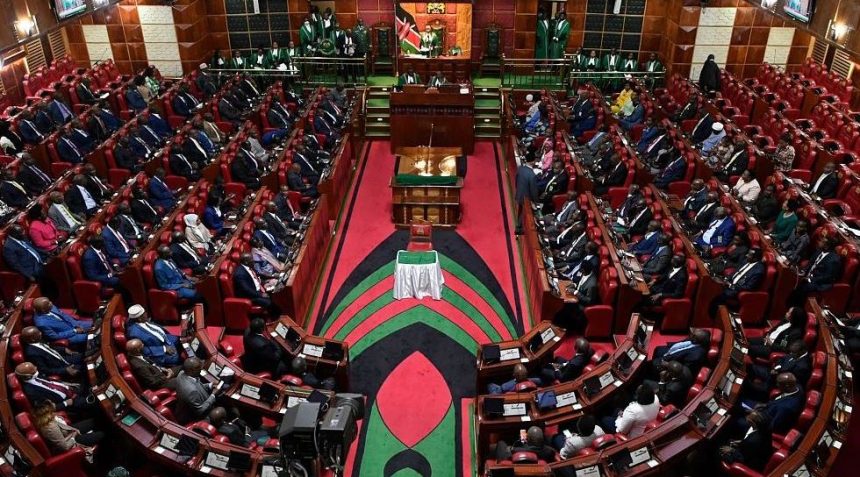
The Committee on Transport and Infrastructure, chaired by Ndia MP George Kariuki, has instead endorsed a proposal to allocate counties only five per cent of the fund.
The decision has set the stage for a major clash in Parliament and potentially reignited legal battles over the sharing of national resources.
The committee’s stance is contained in its report on the Kenya Roads (Amendment) (No 3) Bill, 2025, which was tabled in the National Assembly on Tuesday.
The Bill was introduced to comply with a High Court ruling that declared the existing road classification and funding framework unconstitutional for sidelining county governments.
In its submission to the committee, the Council of Governors had argued passionately that the proposed five per cent allocation was grossly insufficient and failed to reflect the constitutional principle of equitable revenue sharing.
The CoG pointed out that county governments are responsible for managing over 81 per cent of the country’s total road network, estimated at more than 121,000 kilometres, yet were being offered a paltry share of the levy collected from every litre of fuel sold.
"The allocation to county governments should not be less than 15 per cent of the total collections from the levy," the CoG stated in its written submission, referencing constitutional provisions on equitable sharing of national revenue.
Echoing the governors' position, the Institute of Engineers of Kenya (IEK) presented a technical argument, noting the meagre allocation would lead to the rapid deterioration of the vast county road network.
The IEK proposed an even more detailed reallocation, suggesting counties receive nine per cent of the RMLF.
"County roads form more than 121,000km out of 161,000km nationally, which is around 81 per cent of the roads. An allocation of five per cent will not have much impact on the maintenance of these roads," the engineers warned in their submission.
However, the MPs on the committee dismissed these prayers and petitions.
In its observations, the committee concluded that the five per cent allocation was "adequate to support county governments in fulfilling their mandate on county roads," provided the funds are managed transparently.
The committee argued that the Kenya Roads Board (KRB) must retain oversight to ensure fiscal responsibility, a point that further aggrieved the governors.
The CoG had also sought to limit the KRB's role to financial accountability, arguing that technical oversight should remain with county governments or the Senate to avoid violating county autonomy.
This too was flatly rejected by the committee, which asserted that the board is legally mandated to oversee the entire road network and ensure optimal use of the fund.
Beyond the financial allocation, the report reveals several other points of contention that highlight the persistent tension between national and county levels of government over devolution of functions.
Stakeholders had diverse views on who holds the power to classify roads.
The Bill grants the Cabinet Secretary for Transport the ultimate authority to classify and reclassify all public roads, including county roads.
The CoG vehemently opposed this, labelling it an over-centralisation of power that contradicts the constitution.
"The Bill grants the Cabinet secretary powers to classify and reclassify all roads... which contradicts Article 186 and the Fourth Schedule," the CoG argued, proposing instead a joint classification mechanism involving both levels of government.
The committee thus adopted an amendment requiring the Cabinet secretary to act "in consultation with the relevant county government" when classifying or reviewing roads.
Governors have also suffered defeats in their attempts to remove administrative conditions attached to the funds.
The Bill requires counties to designate a specific department for roads, maintain a special purpose account for the RMLF allocations, and submit annual road programmes to the KRB for approval.
The CoG argued these were internal county affairs and should be deleted, but the committee maintained they are necessary for accountability and transparency.
Furthermore, the CoG's proposal to amend the Kenya Roads Board Act to include three county representatives nominated by the Council of Governors on the KRB was rejected for "unduly expanding the scope of the bill".
The Ministry of Roads and Transport, represented by CS Davis Chirchir, largely supported the Bill, emphasising the need to balance the massive funding challenges in the sector.
Chirchir, citing pending bills exceeding Sh175 billion, successfully proposed amendments related to road signage and clearer descriptions of road classes.
The Kenya Law Reform Commission stressed the need for further stakeholder engagement to ensure transparent and equitable allocation of the RMLF.
INSTANT ANALYSIS
Governors can lobby sympathetic MPs to amend the Bill on the floor of the National Assembly to increase the county allocation and dilute the national government's oversight powers. The outcome of the legislative battle will have serious implications for the state of roads across the country and for the delicate balance of power between Nairobi and the counties. If the governors feel their concerns are ultimately ignored, another round of litigation is possible, returning the matter to the very courts that triggered the bill.