President William Ruto’s administration has announced that it will not introduce new taxes in the upcoming 2026-27 financial year.
The decision is outlined in the Draft 2025 Budget Review and
Outlook Paper (Brop) published by the National Treasury on Monday, which sets
the stage for next year’s budget cycle.
The government, citing the challenging fiscal environment,
says it will focus on an efficient tax administration instead of introducing
new levies and prudent spending.
“Key revenue measures will focus on reducing tax
expenditures, expanding the tax base, improving compliance and streamlining tax
structures to stimulate investment,” the budget plan reads.
The document is due for presentation to the Cabinet by
September 30 and Treasury has invited public views on the same; the memos are
to be received by Thursday this week.
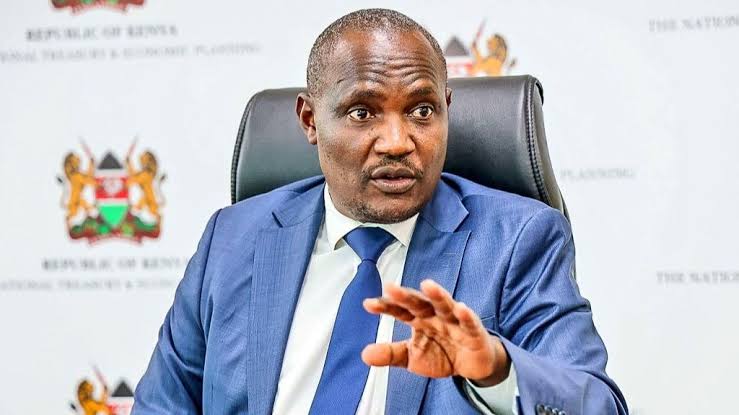
The position was reinforced by Treasury CS John Mbadi during
the ODM parliamentary group meeting where he said the government had reached an
elastic limit on matters of new taxes.
“The option of raising taxes is not available for us. We can
only improve the efficiency of the Kenya Revenue Authority,” the Treasury boss
said, adding that borrowing is also constrained.
Mbadi indicated that privatisation of key parastatals would
be the alternative to the taxes. “The good thing with privatisation is that it
makes the private sector vibrant instead of taking resources from them,” the CS
said.
Besides privatisation, the government therefore seeks to
enhance revenue collection by improving administration and bringing more
Kenyans into the tax bracket.
The government has been employing a strategic shift
following the disruptions that were caused by the withdrawal of the Finance
Bill, 2024, after public protests.
As such, the BROP states that the government would focus on
eliminating inefficiencies, bringing more individuals into the tax net,
enhancing digitisation, and better tax structures to stimulate economic
activities.
“Simultaneously, public financial management will be
strengthened through reengineering of the pension management system, integrated
human resource systems, expanded Public-Private Partnerships and governance
reforms in state corporations,” the plan reads.
Crucially, the Treasury has committed to maintaining a
reasonable degree of predictability regarding tax rates and bases, even as
future reforms are considered.
It says the strategy is aligned to the National Tax Policy
and the Medium-Term Revenue Strategy, and is intended to give businesses and
investors the confidence needed to plan for the future.
Treasury projects to collect revenue amounting to Sh3.58
trillion in the next financial year, against an expenditure of Sh4.64 trillion.
Total revenue is projected to grow by Sh260 billion, pushing the revenue as a percentage to gross domestic product to 17.1 per cent.
Expenditures, on the other hand, are projected to increase
by Sh350 billion, with recurrent expenses set to rise by about Sh300 billion
compared with the current fiscal year.
This includes recurrent expenditure of Sh3,437.2 billion,
development expenditure of Sh761.0 billion, transfers to counties of Sh446.6
billion and a Sh5 billion contingency fund.
Development is poised for a significant increase of Sh178
billion, a figure that shows how it is constrained as budgets favour recurrent
obligations.
Even so, the government would be left with a Sh1 trillion
budget gap, which it would have to finance through borrowing, in the face of no
new taxes.
As per the dossier, the Ruto administration intends to
borrow Sh241 billion from foreign lenders and Sh775 billion locally to fund the
deficit.
Acknowledging the constrained fiscal environment, the
government will entrench a zero-based budgeting approach to guide the
prioritisation of scarce resources.
This requires all All Ministries, Departments, and Agencies to
rigorously reassess all existing and planned programmes to ensure resources are
allocated to high-impact initiatives.
“All Ministries, Departments, and Agencies will be required
to rigorously re-evaluate all existing and planned programmes for the coming
fiscal year,” Mbadi said.
MDAs are expected to prioritise essential spending, focusing
on interventions that improve livelihoods, create employment, support business
recovery, and drive overall economic growth.
To streamline expenditure, Treasury says it would continue
with reforms and ensure that accounting officers adhere to principles of
efficiency, effectiveness and economy in public spending.
BROP says the reforms include full rollout and utilisation
of the end-to-end e-procurement system to maximise value for money.
It adds that the government wouldn’t initiate new projects
before completing those that are ongoing across the country.
Treasury further aims to scale up PPPs for commercially
viable projects, implement an efficient pension system, and migrate to accrual accounting.
The outlook also points to a plan by the government to
continue with the drastic austerity measures that Kenya Kwanza took to reduce
the fiscal deficit.
Debt is projected to remain elevated until 2027, when the
government will have cleared some of the outstanding obligations.
A critical issue addressed in the BROP is the clearance of
pending bills, which the national government's stood at Sh525.9 billion as of
June 2025, while county governments reported pending bills of Sh195.5 billion.
Treasury says it is developing a comprehensive strategy to
clear verified pending bills over the medium term, with a specific focus on the
roads sector.
As per the document, next year’s budget will be themed on
finance and production economy; infrastructure; land and natural resources;
social sectors; and governance and public administration.
INSTANT ANALYSIS
The 2025 BROP lays the foundation for the 2026 budget cycle, emphasising stability, efficiency, and growth without resorting to new taxes. By focusing on administrative reforms, prudent expenditure management, and strategic prioritisation, the government appears to be aiming to navigate the current fiscal constraints while supporting economic recovery and long-term sustainability. The emphasis seems to be on creating a conducive environment for investment, job creation, and improved livelihoods for all Kenyans.