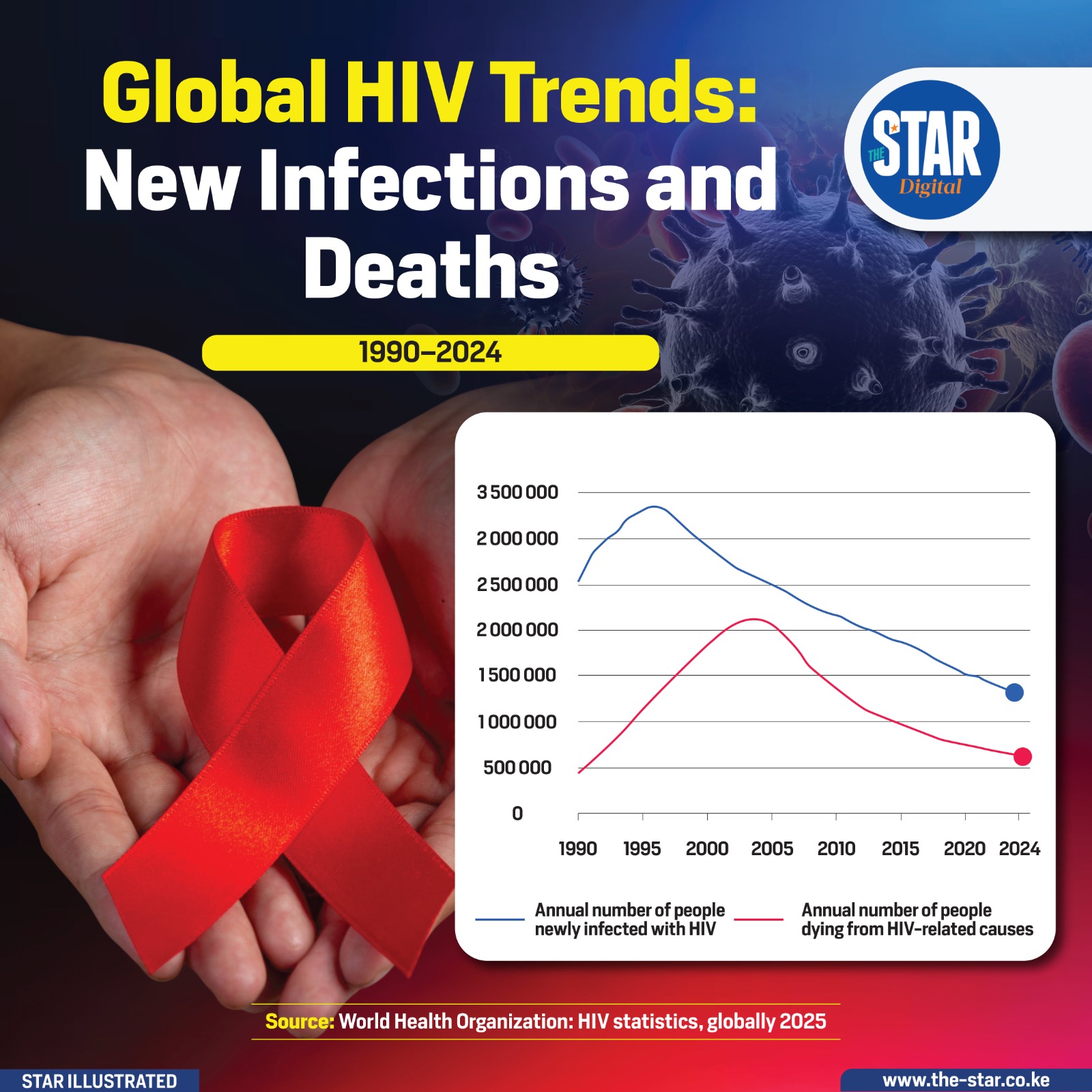
The trajectory of the global HIV epidemic reveals a significant and encouraging decline in both new infections and deaths since their respective peaks.
Enjoying this article?
Subscribe for unlimited access to premium sports coverage.
The annual number of people newly infected with HIV (blue line) showed a steady increase in the early 1990s, peaking around the mid-1990s at approximately 3.3 million.
Since then, new infections have seen a sustained decrease, falling below 2 million around 2015 and projected to be around 1.4 million by 2024.
Similarly, the annual number of people dying from HIV-related causes (red line) peaked later, around 2005, reaching slightly more than 2 million deaths.
Following this apex, the annual death toll has dropped sharply and consistently, indicating the widespread success of antiretroviral therapy (ART) and other public health interventions.






Comments 0
Sign in to join the conversation
Sign In Create AccountNo comments yet. Be the first to share your thoughts!