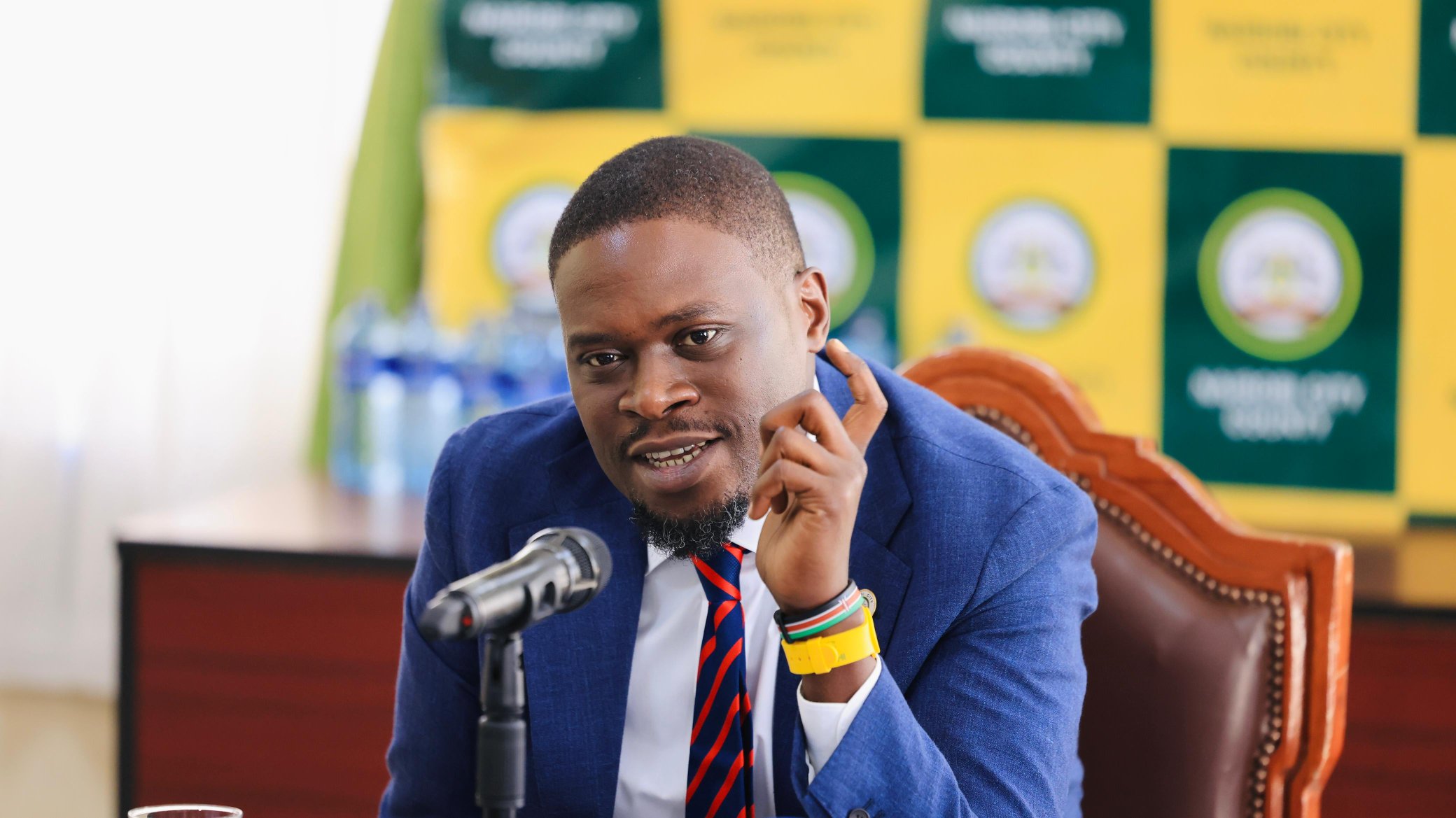
 Nairobi Governor Johnson Sakaja. /JOHNSON SAKAJA/X
Nairobi Governor Johnson Sakaja has explained why some Members of the County Assembly recently attempted to oust him.
Speaking on Inooro FM on September 15, Sakaja said the push for his removal was driven by disputes over bursaries and county projects.
He also blamed his woes on political enemies who, he claimed, are keen on tainting his image ahead of the 2027 polls.
He explained that since assuming office in 2022, his administration had been disbursing bursaries and scholarships to 5,300 students in secondary school.
Across all 45 wards, more than 1,400 learners were benefiting every term.
“You all know the Controller of Budget stopped bursaries, and there was a court case,” he said, noting that an agreement has since been reached with the national government to reinstate the funds.
Sakaja defended his track record, saying that compared to the previous three administrations, which spent Sh3 billion on bursaries over 10 years, his government had already disbursed Sh1.6 billion—plus Sh200 million for early childhood development—in just two years before the stoppage.
“So if in two years we have disbursed Sh1.8 billion, and in 10 years they had done Sh3 billion, can you compare?” he posed.
The governor added that ward-based development projects were another sticking point.
He said the allocation for such projects had dropped to as low as Sh50 million in the past, but his administration had increased the figure to Sh898 million in the last financial year.
“There are those in 11 wards that are yet to be paid, but they will be paid. You know the pressure on the ground which comes with its own challenges,” he said, alluding to the political demands MCAs face from their constituents.
According to Sakaja, his government has already completed more than 176 projects, including stadiums in Makongeni and Mwiki.
He acknowledged, however, that the pace of delivery has been slowed by delayed disbursements from the national government—not negligence.
He also highlighted Nairobi’s improved revenue collection, which grew from Sh10 billion in his first year, to Sh11.8 billion, and Sh13.8 billion in the last financial year.
“It’s the highest amount, no other county has ever collected that kind of amount,” he said.
The ouster bid had gained traction after both UDA and ODM MCAs rallied support, collecting more than 70 signatures in the 123-member assembly—just short of the 82 required to table a formal motion.
However, the impeachment push was stopped following interventions by President William Ruto and ODM leader Raila Odinga.
ODM MCAs, after a meeting with Raila at the Jaramogi Oginga Odinga Foundation on September 2, agreed to give Sakaja one month to mend relations and adjust his leadership style.
On the same day, Ruto separately urged UDA MCAs at State House to shun impeachment politics and focus on development.
Despite the truce, underlying grievances over bursaries and ward projects remain unresolved.
It now remains to be seen how Sakaja will navigate the funding challenges, manage political hostilities, and meet the expectations of MCAs eager to deliver to their constituents.