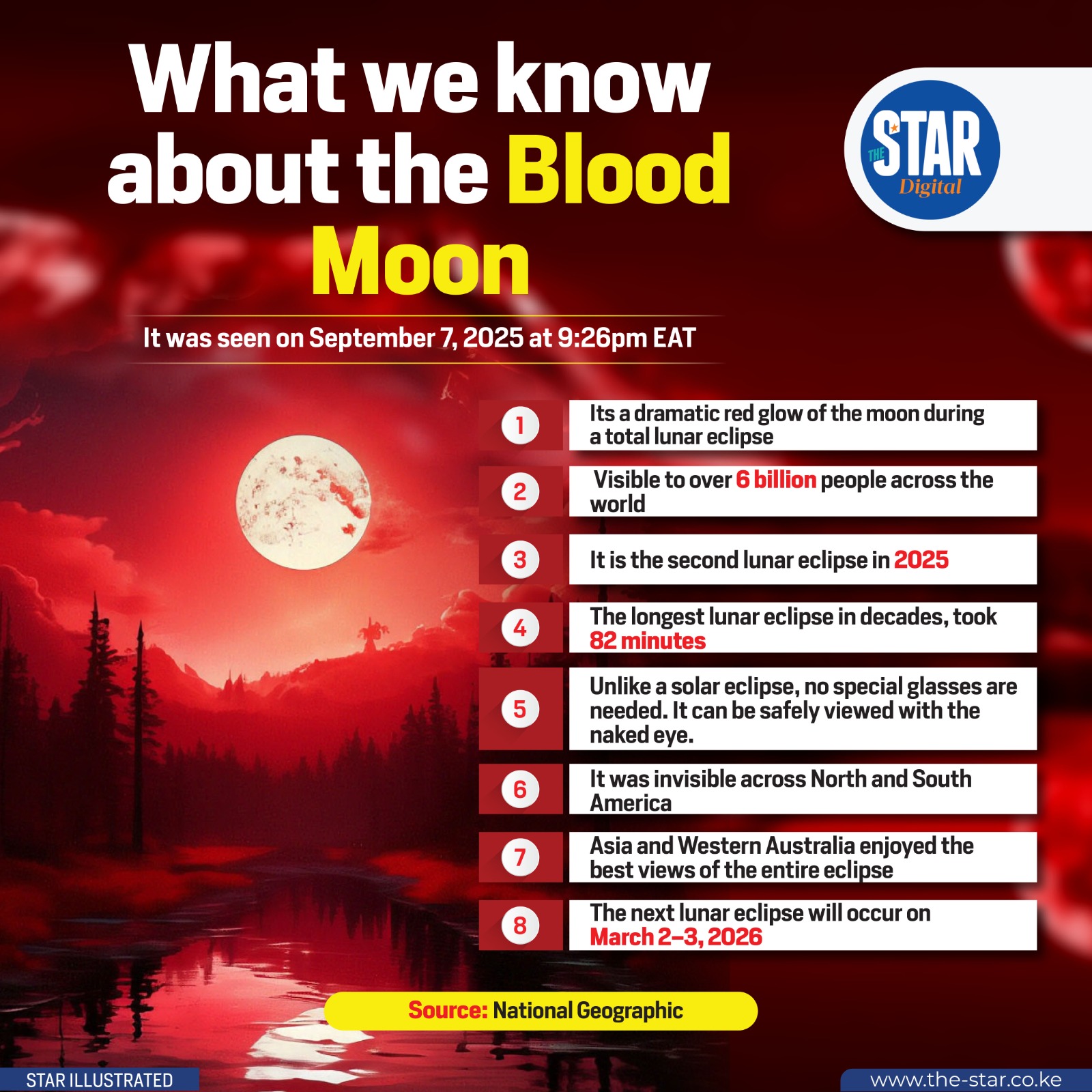
A lunar eclipse takes place when the Earth is directly between the Sun and the Moon, blocking sunlight and casting a shadow across the Moon's surface.
During a total lunar eclipse, the Moon is completely engulfed by Earth's shadow, often turning a striking red.
Before and after totality, the Moon passes through two other phases:
Read Also
Penumbral lunar eclipse –A more subtle occurrence, where the Moon travels through the outer part of Earth's shadow, resulting in a faint dimming.
Partial lunar eclipse—when only a portion of the Moon passes into Earth's shadow, creating a visible dark segment.
Enjoying this article?
Subscribe for unlimited access to premium sports coverage.
View Plans






Comments 0
Sign in to join the conversation
Sign In Create AccountNo comments yet. Be the first to share your thoughts!