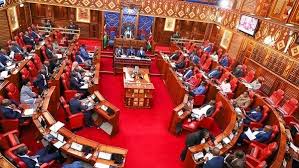
Since the advent of devolution in 2013, the Senate has heard 19 impeachment cases involving county bosses and their deputies, with eight in the last three years.
Only last week, senators heard the impeachment motion against Kericho Governor Eric Mutai for the second time in less than a year.
This came barely a month after they considered the removal motion of Isiolo Governor Abdi Guyo. The case was dismissed on a technicality.
What is the process of removal of a governor or deputy from office by impeachment?
The removal of a governor or deputy governor through impeachment is governed by the Constitution of Kenya and the County Governments Act alongside the Standing Orders of respective County Assemblies and the Senate.
Article 181 of the Constitution provides the grounds for the removal of a Governor in Kenya or Deputy, which include inter alia gross violation of the Constitution or any other law.
Other grounds include where there are serious reasons to believe that the county governor has committed a crime under the national or international law; abuse of office or gross misconduct; and physical or mental incapacity to perform the functions of the office of the county governor.
Section 33 of the County Governments Act outlines the procedure for the removal of a county governor, with the Standing Orders of County Assemblies and Senate giving further house rules on the debate and process of voting.
Before giving notice of Motion under section 33 of the County Governments Act, a member seeking to impeach a governor or DG shall deliver to the Clerk a copy of the proposed Motion in writing stating the grounds and particulars upon which the proposal is made, for the impeachment of the Governor.
The notice of motion shall be signed by the member who affirms that the particulars of allegations contained in the motion are true to his or her own knowledge and supported by at least a third of all the members and each of them sign a verification form provided by the Clerk for that purpose.
The Clerk shall submit the proposed motion to the Speaker for approval. A member who has obtained the approval of the Speaker to move a Motion under paragraph (1) shall give a seven (7) days’ notice calling for impeachment of the Governor.
Upon the expiry of seven (7) days, after notice given, the Motion shall be placed on the Order Paper and shall be disposed of within three days; provided that if the Assembly is not then sitting, the Speaker shall summon the Assembly to meet on and cause the Motion to be considered at that meeting after notice has been given.
When the Order for the Motion is read, the Speaker shall decline to allow the member to move the Motion unless the Speaker is satisfied that the member is supported by at least a third of all members of the Assembly to move the motion.
Within the seven-day’ notice, the Clerk shall cause to be prepared and deposited in his office a list of all members of the Assembly with an open space against each name for purposes of appending signatures, which list shall be entitled “SIGNATURES IN SUPPORT OF A MOTION FOR REMOVAL OF GOVERNOR BY IMPEACHMENT.”
Any signature appended to the list as provided shall not be withdrawn.
If the Motion has been passed by two-thirds of all members of the Assembly, the Speaker shall inform the Speaker of the Senate of that resolution within two days.
The Standing Orders relating to the removal of the governor shall apply, with the necessary modifications, to the removal of the Deputy Governor.
The Speaker of the Senate then convenes a meeting of the Senate to hear the charges the County Assembly brought against the Governor.
The Senate, by a determination, may appoint a special committee comprising eleven of its members to investigate the matter.
The Senate meeting and the appointment of the special committee shall occur within seven days from the day the Senate speaker receives the notice of the resolution to impeach the county governor from the County Assembly Speaker.
The 11-member special committee of the Senate shall then investigate the matter and report to the Senate within ten days.
The committee shall report whether it finds proof for the charges the accuser brought against the County Governor.
The governor has the right to appear and to be represented before the committee during the duration of its investigations.
Further proceedings do not take place if the special committee finds no proof against the allegations facing the Governor.
If it finds proof, the Senate proceeds to vote on impeachment charges. The vote only takes place after the assurance that the governor received a fair hearing as guaranteed under Article 50 of the Constitution.
If a majority of the Senators, referred to as County delegates, vote to uphold the impeachment charge, the governor ceases to hold office, but if the delegates vote to reject the impeachment charge, the Senate speaker shall notify the speaker of the respective County Assembly.
An impeached governor can appeal the decision by filing a judicial review petition in the High Court, while MCAs wishing to impeach a governor who has been acquitted by the Senate can introduce a fresh motion after six months.