More than three-quarters of all complaints made against police officers in Kenya last year were directed at the Kenya Police Service, a new report has shown.
Data from the Internal Affairs Unit of the National Police Service says of 918 complaints received in 2024, 714—equivalent to 78 per cent—were made against police officers.
The Directorate of Criminal Investigations accounted for 155 complaints (17 per cent), while the Administration Police received 49 ( five per cent).
The report highlighted growing public concern over alleged misconduct and inaction.
More complaints against police officers signifies an ever-declining trust on the police arm that interacts most with the public.
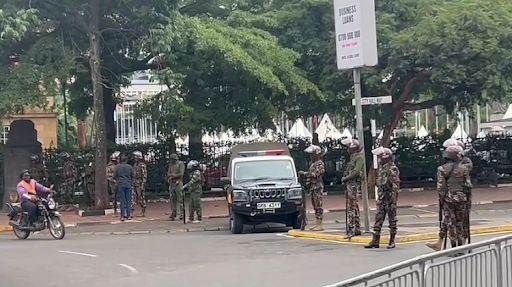
The police service is generally facing a public relations problem as a result of the sustained deadly confrontations it had with the public during the protests last year and this year.
The bulk of the grievances reported involved police inaction, harassment and intimidation, bribery, corruption, and extortion.
A total of 379 cases cited police officers failing to take appropriate action when called upon. Harassment, bribery and other forms of misconduct were each reported in 91 cases.
Other complaints included obstruction of justice, unlawful detention, threats to life, physical assault, brutality and general negligence in the line of duty.
The IAU report provides a snapshot of the troubling interactions many Kenyans face when seeking assistance or accountability from law enforcement.
It says majority of complaints—784 in total or 85 per cent—were filed by members of the public. Police officers lodged 112 complaints against colleagues or superiors, while 12 came from organisations and 20 from anonymous sources.
By gender, men filed 66 per cent of the complaints, while women accounted for just 23 per cent. The rest of the cases either did not indicate gender or were filed anonymously.
Geographically, Nairobi led in the number of reported cases, accounting for 42 per cent.
It was followed by the Rift Valley at 15 per cent, Central at 12 per cent, Eastern (11 per cent) and Nyanza (10 per cent). The remaining regions recorded fewer than 10 per cent of the total.
Interestingly, despite last year being marked by widespread youth-led protests and a heightened focus on police brutality—especially during the Gen Z demonstrations—the report recorded no complaints involving deaths resulting from police action.
It listed only one complaint related to excessive use of force, serious injuries and misuse of firearms.
This apparent underreporting stands in contrast to public narratives and findings by civil society groups, many of whom flagged last year as one of the deadliest in recent history.
Of the 918 total complaints, 576 were referred for further investigation or administrative action. The remaining cases were resolved either at the IAU’s national headquarters or at its regional offices.
Among the escalated cases, 56 were referred to the Inspector General’s office.
The Directorate of Criminal Investigations and the National Police Service Commission each received six cases.
An additional 53 were forwarded to the Commission on Administrative Justice (Ombudsman), 19 to the Office of the Director of Public Prosecutions and eight to the Independent Policing Oversight Authority.
The IAU says while majority of complaints come from everyday citizens, a growing number of officers are also reporting misconduct within the ranks—an indication that accountability concerns exist both outside and within the police force.
The report underscores the ongoing challenge of reforming Kenya’s police services amid persistent allegations of misconduct, limited transparency and a perceived lack of accountability.
As trust in law enforcement continues to erode for many Kenyans, oversight agencies will likely face increasing pressure to not only investigate complaints more rigorously but also ensure meaningful action is taken when officers are found culpable.
Instant analysis
The Kenya Police Service continues to dominate public complaints, reflecting deep-rooted issues of inaction, misconduct, and eroding trust. Despite widespread protests and allegations of brutality, official reports show minimal accountability for excessive force.