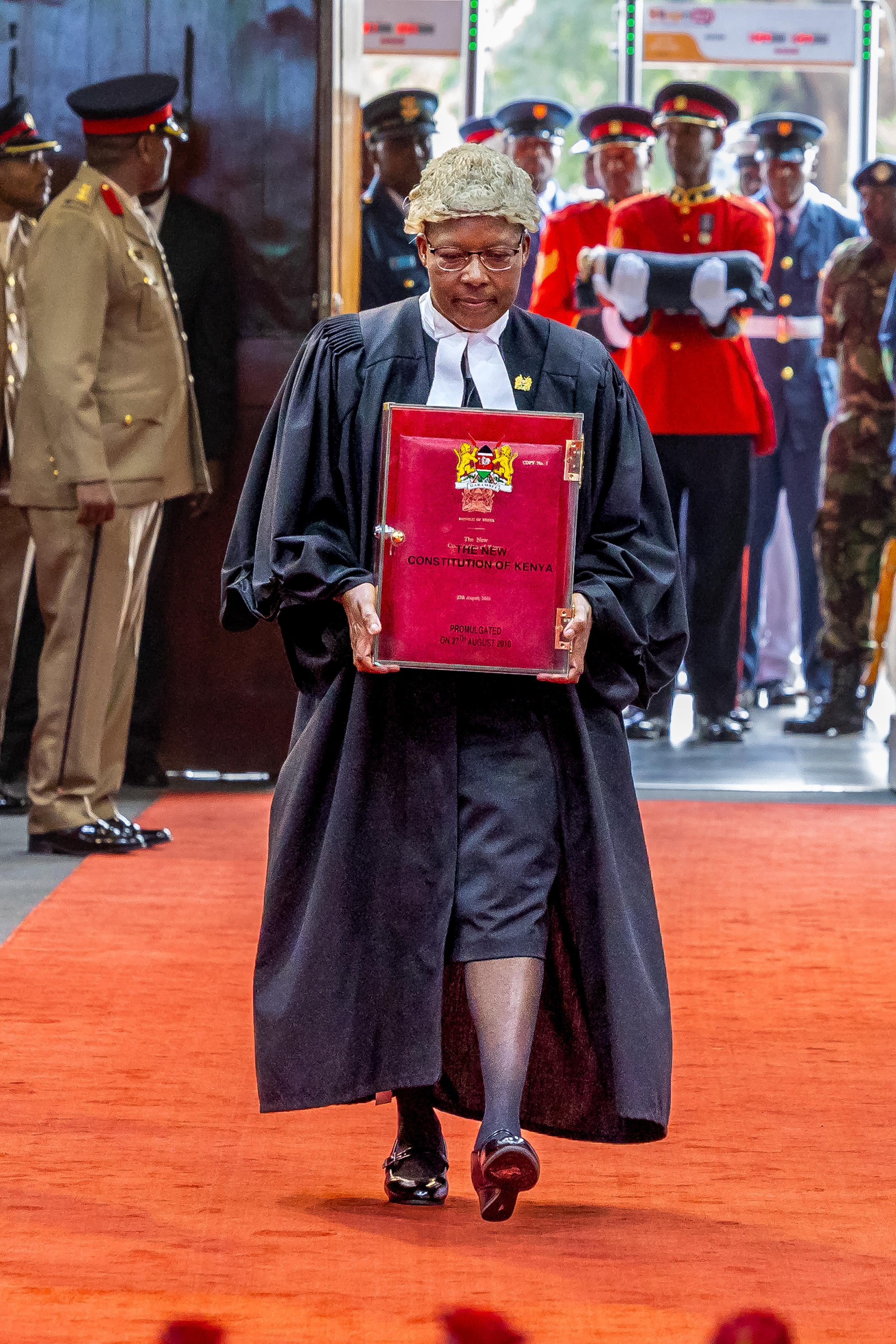
The country’s constitution, hailed as one of the most progressive document in the region, is increasingly under siege by the very custodians entrusted to defend it.
From Parliament to the Executive, the 2010 Constitution has become a political tool, twisted, bent and reinterpreted to serve narrow partisan interests.
Constitutional experts are raising alarm that the supreme law is intentionally being eroded.
From disobedience of court orders to a heavy-handed police service and runaway corruption, the constitution’s dream, experts say, is far from being realised 15 years on.
The most glaring abuse lies in how Parliament has repeatedly bulldozed amendments that tilt the balance of power, sometimes even ignoring spirit of the constitution.
Fears of political elites exploiting loopholes in devolution laws to centralise resources and patronage back to the center are getting louder.
The latest push by MPs to entrench the National Government Constituency Development Fund and the National Government Affirmative Action Fund into law has ignited fresh fears of undermining the constitution.
Critics argue the move amounts to rewriting the supreme law to suit political convenience, warning that it erodes the separation of powers by placing legislators at the center of project implementation.
Former Prime Minister Raila Odinga and constitutional experts have severally cautioned that the bid betrays the spirit of devolution and weakens institutional checks meant to curb misuse of public funds.
“Constituency is not a devolved unit. Devolution has two levels, national and county. It is not right for the national government to bypass counties and create another unit below them,” Raila said on Wednesday during inaugural Katiba Day commemorations.
“Parliament is supposed to represent, legislate and provide oversight, not implement projects.”
“I know my position is unpopular, but I don’t care. There can be no compromise on this issue. It is a matter that should be taken to the people through a referendum.”
Parliament, however, remains adamant, framing the funds as lifelines for development at the grassroots and vowing to push the amendments through despite the growing unease.
Civil society too have raised alarm over the trend, warning that the betrayal of the constitution risks plunging the country back into the authoritarian past Kenyans thought they had left behind.
Kenyan Section of the International Commission of Jurists (ICJ-Kenya) executive director Erick Mukoya and Law Society of Kenya President Faith Odhiambo said the ambitions in the 2010 supreme law have been deliberately undermined by establishment forces determined to maintain the status quo.
The human rights watchdog and jurists complain that there has been systematic undermining of the key provisions of the constitution, especially those that hold the powerful accountable.
Odhiambo said the Bill of Rights was the cornerstone of the 2010 Constitution, yet 15 years later, the written text remains far removed from the lived realities of most Kenyans.
“For many ordinary Kenyans, the Bill of Rights still feels like the promissory note that the state has not cashed,” she said.
“When a mother dies in childbirth for lack of enough medical care, when a graduate languishes in unemployment, when a whistleblower fears for their life, we are reminded that rights must be more than words on paper.”
Mukoya said despite the constitutional safeguards provided, court orders are still disobeyed by powerful government officials, and that the independence of the Judiciary remains under threat.
“The Judiciary is constantly threatened and ‘revisited’ in more ways than one,” he said, referring to common tactics of intimidation used against judges who rule against the state.
Mukoya added that the legislature, once envisioned as a powerful check on the executive, has instead been reduced to a rubber stamp.
“Members have sold their ideological philosophies—if any—issue manifestoes—if any—and social contract notes—if any—to blatant sycophancy, financial favours, and political powers,” he said.
He also decried the unsustainable public wage bill, much of which he said benefits only a few senior officials, while services meant for the public continue to collapse under the weight of corruption and mismanagement.
“What is privilege when minimum wage is about Sh10,000, and the average is Sh76,000—compared to the salaries of public officials?” he posed.
“What is the privilege of the constitution when the government must tax us so deeply and inhumanely to create resources that end up in abuse, misuse, misapplication and corruption?”
He went on, “What is privilege when social security in health does not resonate with Article 43, yet legislators who come through at the stroke of our ballot pulsate in high-end infirmaries? What is privilege when the earnings of an average person cannot discount their choice from slums?”
The fears have triggered public outrage, court battles by activists and growing citizen awareness continue to push back against attempts to mutilate the document.
“We have a very progressive constitution, one that took us a long time to achieve. It is important to reflect on how we have engaged with it, have we respected it, upheld it, and put its principles into practice?” Suba South MP Caroli Omondi said.
“It is worth celebrating our constitution. Despite violations of human rights, extrajudicial killings, kidnappings and Parliament passing laws that do not serve the interests of Kenya, we have managed to survive thanks to the constitution. Imagine where we would be without it,” added former Law Society of Kenya Nelson Havi.
INSTANT ANALYSIS
Expert caution that unless there is a fundamental political will to respect the rule of law, the promise of the 2010 Constitution risks being reduced to a hollow shell—betrayed by those who swore to protect it.