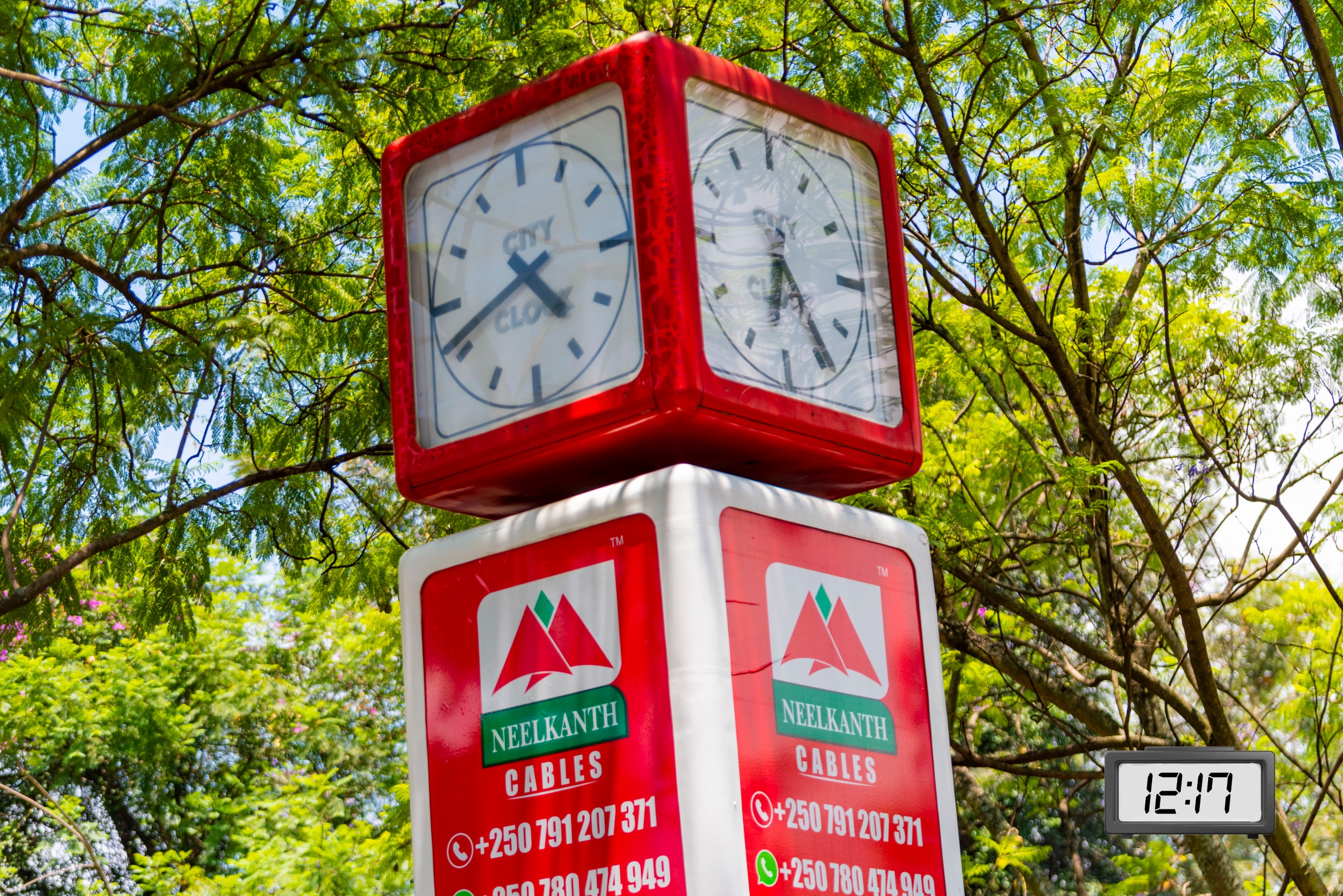
In nearly every major Kenyan town, from Nairobi’s bustling roundabouts to the serene streets of Nyeri, one common feature quietly marks the passage of time: the city clock.
Towering, four-sided, and often solar-powered, these structures are not only timekeepers but also iconic symbols of civic pride, commercial platforms, and pieces of living history.
City clocks have served urban populations around the world for centuries, evolving from ancient sundials and water clocks into today’s technologically-advanced, illuminated street fixtures.
In Kenya, the presence of these public timepieces has grown significantly over the past four decades — thanks largely to the work of City Clock Kenya Limited, a private advertising and public service company that has transformed how we see and interact with time in our cities.
Founded in 1984, City Clock Kenya Limited is a Kenyan-owned enterprise under the leadership of Tillmann Proske, who is also CEO of the broader City Clock Group.
The company has a wide footprint not only in Kenya but across Uganda, Rwanda, and Tanzania, with its Kenyan operations managed by Rehanah Mohammed, General Manager for the region.
“Our clocks provide more than just time. People often say, ‘let’s meet at the [brand name] clock,’ because these installations become local landmarks. You’ll find that people name the clock after the brand that advertises on it — that’s how deep the visual connection goes,” Mohammed says.
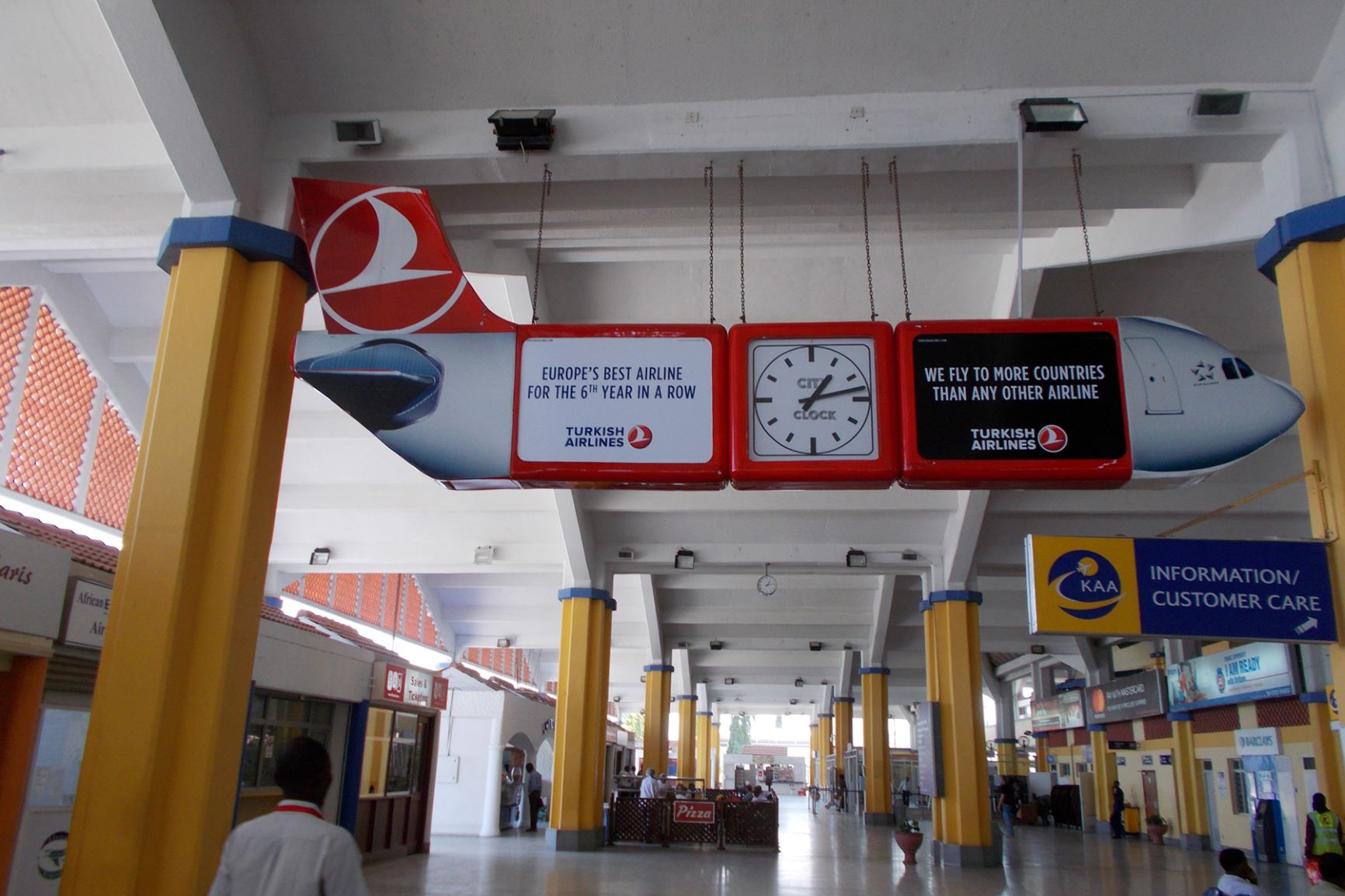
And indeed, these clocks are more than static billboards. Installed in high-traffic public areas — roundabouts, pavements, shopping districts, schools, hospitals, bus and train stations — the clocks are designed to capture the attention of thousands of pedestrians and motorists each day.
Their six-meter-high structure, illuminated faces, and solar-powered functionality allow them to display the correct time 24/7, while also acting as advertising beacons.
City Clock’s installations can be found in nearly every corner of the country: Nairobi, Mombasa, Kisumu, Nakuru, Eldoret, Malindi, Karatina, Embu, Nyeri, Isiolo, Meru, Lamu, Kitengela, Kakamega, Thika, Ngong, Narok, Machakos, Kisii, and Diani — each hosting city clocks that serve both civic and commercial purposes.
According to Mohammed, the real power of City Clock lies in its constant visibility.
“Even though the primary goal is to let you know the time, it’s also an effective and efficient way of displaying information — whether it be a product, a public campaign, or a social message. More often than not, people are looking at the time — and then they get to see your brand.”
In this sense, the clocks offer a dual service; a public utility in timekeeping and a private benefit for advertisers seeking to maintain brand visibility in dense urban environments.
That fusion of functionality and visibility is part of what has kept City Clock popular — not just in Africa, but also in several European cities where the model has been replicated.
The story of city clocks stretches far back into antiquity. The earliest public timekeeping devices were sundials and clepsydras (water clocks), some dating back to the 1st century BC — such as the Tower of the Winds in Athens.
These evolved over centuries into towering mechanical clocks found in medieval churches and town halls, often striking bells to mark the hours of prayer and work.
By the 12th century, religious institutions and civic centers had adopted tall clock towers to coordinate daily life.
The discovery of the pendulum by Galileo in the 16th century brought greater accuracy to these clocks, and by the 17th and 18th centuries, large visual clock faces were introduced, allowing entire communities to tell time from a distance.
Even as personal watches became more common in the 20th century, public clocks retained their role as civic symbols.
Today, they may no longer serve as the primary reference for timekeeping, but their presence still speaks volumes about a city’s identity, infrastructure, and commitment to public utility.
One such symbol is the Old Nyeri Clock Tower, located within the Our Lady of Consolata Catholic Cathedral.
Built in 1902, it is among the earliest landmarks in Nyeri, now standing as a gazetted national monument since 2001. For locals, the clock isn’t just a relic — it’s a reminder of the town’s rich colonial-era history and a point of communal memory.
In Nyeri and other towns, these older clock towers represent a cultural continuity, while modern City Clock units represent urban progress.
City Clock’s contribution to this evolving urban landscape is also guided by global standards. Since 2008, the City Clock Group has been a signatory to the United Nations Global Compact, reflecting its commitment to sustainability, transparency, and ethical business practices.
From a modern planning perspective, these clocks also serve as street furniture — practical, aesthetically pleasing, and socially useful infrastructure that helps organise public space.
Whether in front of a hospital in Kisumu or a shopping mall in Nairobi, their design complements the environment while fulfilling both commercial and civic purposes.
Ultimately, the city clock — whether an antique monument or a solar-powered advertising unit — continues to be a powerful symbol of how public space can be designed to serve multiple functions.
It is where timekeeping meets storytelling, and where commerce meets community.