From disobedience of court orders to a heavy-handed police service and runaway corruption, the 2010 Constitution’s dream is far from being realised 15 years on, a group of lobbyists has said.
They said there has been systematic undermining of the key provisions of the constitution, especially those that hold the powerful accountable.
Advertisement
Advertisement
Kenyan Section of the International Commission of Jurists (ICJ-Kenya) executive director Erick Mukoya and Law Society of Kenya president Faith Odhiambo said ambitions in the 2010 Constitution have been deliberately undermined by forces determined to maintain the status quo.
They spoke on Wednesday at Kabarak Law School during the commemoration of the inaugural Katiba Day, an event organised to reflect on the progress, promises and failures of the constitutional journey.
Odhiambo said the Bill of Rights is the cornerstone of the 2010 Constitution, yet it remains far removed from the lived realities of most Kenyans.
“For many ordinary Kenyans, the Bill of Rights still feels like the promissory note that the state has not cashed,” she said.
“When a mother dies in childbirth for lack of enough medical care, when a graduate languishes in unemployment, when a whistleblower fears for their life, we are reminded that rights must be more than words on paper."
Advertisement
Advertisement
Mukoya said despite the constitutional safeguards provided, court orders are still disobeyed by powerful government officials and that the independence of the judiciary remains under threat.
“The judiciary is constantly threatened and ‘revisited’ in more ways than one,” he said, referring to common tactics of intimidation used against judges who rule against the state.
Mukoya said the legislature, once envisioned as a powerful check on the executive, has instead been reduced to a rubber stamp.
“Members have sold their ideological philosophies—if any—issue manifestoes—if any—and social contract notes—if any—to blatant sycophancy, financial favours, and political powers,” he said.
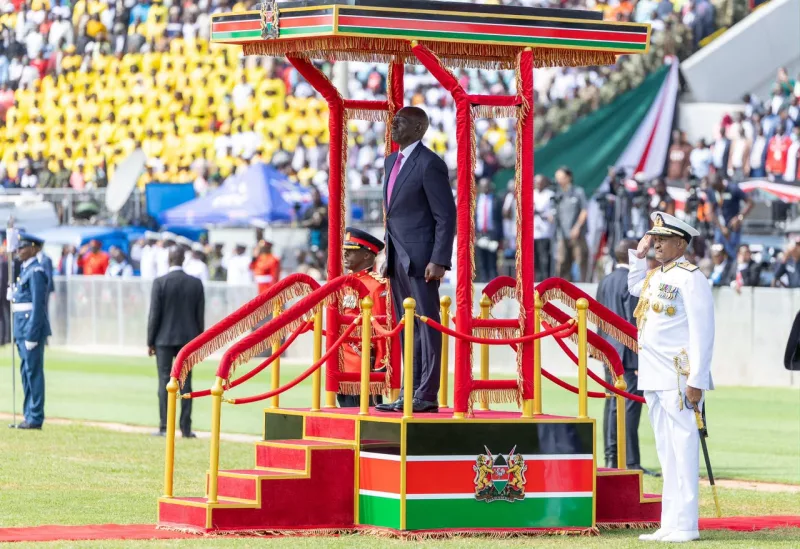
The ICJ-Kenya boss criticised "the executive’s grip on independent institutions", accusing President William Ruto’s administration of “thriving in capture of strategic oversight and accountability bodies, within the beauty of boardroom impunity and roadside bravado.”
Mukoya also decried the unsustainable public wage bill and collapse of critical public services.
“What is privilege when minimum wage is about Sh10,000, and the average is Sh76,000—compared to the salaries of public officials? What is the privilege of the Constitution when the government must tax us so deeply and inhumanely to create resources that end up in abuse, misuse, misapplication and corruption?" he asked.
“What is privilege when social security in health does not resonate with Article 43, yet legislators who come through at the stroke of our ballot pulsate in high-end infirmaries? What is privilege when the earnings of an average person cannot discount their choice from slums?”
Dr. Stefanie Rothenberger of the Konrad-Adenauer-Stiftung’s Rule of Law Programme for Sub-Saharan Africa said the constitution is a living document, but one that needs pragmatism, consistency and the political will to implement.
Instant analysis
Fifteen years after its adoption, Kenya’s Constitution remains more promise than practice. Legal experts warn that state capture, disobedience of court orders, and widening inequality threaten its legitimacy.