Are you living in Lang’ata, Kibera, Kilimani, Lavington, Kileleshwa, Riverside or Parklands? Better stock up on water now and conserve as your taps are dry or soon will be.
On Monday, a pipeline fault caused taps to run dry. Repair teams are working around the clock.
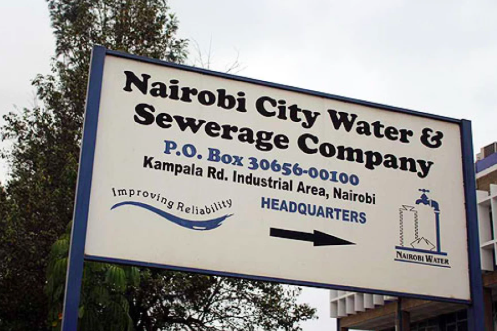
The Nairobi Water and Sewerage Company (NWSC) said on Monday its water supply infrastructure has experienced a fault that will take time to fix.
NWSC officials are monitoring the situation and will provide repair updates.
The disruption has been traced to a fault along the Kabete-Kibera-Lang’ata pipeline.
The failure has forced households, businesses, hospitals and universities to contend with limited access to water, underscoring broader issues of limited infrastructure capacity and supply shortfalls.
The interruption is affecting more than 15 residential estates and essential facilities across the city, evidence of ongoing problems in the capital’s strained water distribution system.
NWSC cited “technical challenges” and advised residents in the affected areas to use stored water sparingly as repairs continue.
Emergency repair teams have been deployed, and the company has dispatched water bowsers to provide temporary relief at no cost until the system is repaired.
Affected neighbourhoods include Lavington, Kileleshwa, Riverside, Parklands and estates along Ngong and Lang’ata roads.
Disruptions also have been reported in Madaraka and Nyayo Highrise along Raila Odinga Road, as well as in Nairobi West.
The disruption has affected Kenyatta National Hospital, The Nairobi Hospital and the University of Nairobi’s main and Chiromo campuses. These institutions and others are operating with reduced supply.
“In the meantime, we have dispatched our water tankers to the affected estates for residents to draw water free of charge,” NWSC managing director Nahashon Muguna said.
“Our teams are working around the clock to restore the supply.”
The incident again brings into focus the fragility of Nairobi’s water infrastructure and increasing pressure on its urban systems. The city’s water demand is estimated at 900 million litres per day, yet supply consistently averages 525 million litres—leaving a daily deficit of nearly 375 million litres.
Efforts to close this gap include large infrastructure projects, notably the Northern Water Collector Tunnel. The 11.8-structure will channel floodwaters from the Irati, Gikigie and Maragua rivers to the Ndakaini Dam, which is Nairobi’s primary water reservoir.
President William Ruto, speaking in Kawangware in March, said the tunnel would be commissioned within weeks. It is expected to supply an additional 140 billion litres of water annually to the Nairobi metropolitan region.
While the tunnel promises long-term relief, residents in the meantime endure frequent and unpredictable shortages, largely due to dilapidated infrastructure, population pressure and delayed upgrades to the distribution network.
Affected residents and institutions are urged to conserve water and rely on emergency tanker supplies.
Nairobi has a long history of water supply disruptions, primarily due to the gap between demand and supply.
The infrastructure was designed for a much smaller population, and rapid urbanisation has led to a significant water deficit. This deficit, coupled with drought, climate change impacts, and poor water resource management, has resulted in frequent water shortages and rationing.
Instant Analysis:
The latest outage underscores Nairobi’s limited water distribution infrastructure, which is unable to fully meet increasing demand. Without accelerated investment in water systems, disruptions will become more frequent.