Many flagship projects funded by donors are staring at uncertainty after the government failed to honour its required counterpart funding.
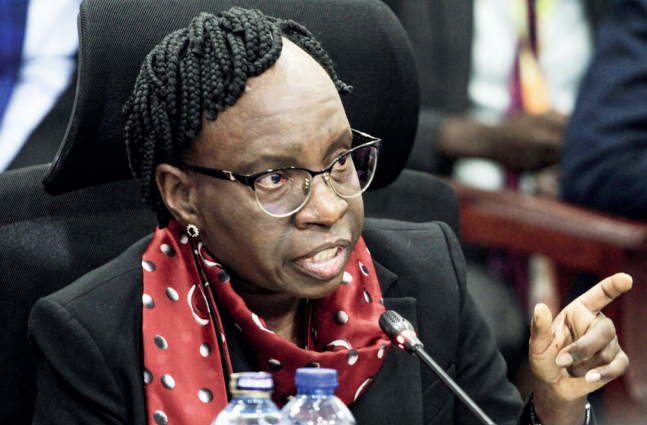
Auditor General Nancy Gathungu has singled out 20 projects that faced severe challenges relating to government counterpart funding, painting a grim picture of fiscal mismanagement that threatens to derail critical national development initiatives.
This followed a comprehensive review of project implementation across donor-funded portfolios during the financial year ending June 30, 2024.
“Some projects recorded counterpart underfunding while others channelled funds through undesignated project accounts and lacked supporting documentation for counterpart disbursements,” Gathungu said.
She said these “lapses contravened provisions of financing agreements and public finance management regulations”.
"The situation has affected the timely execution of activities and increased the risk of delayed or compromised achievement of project outcomes.”
The audit has revealed the scale of the failure, with the total amount in question exceeding Sh18.1 billion (that is what the government is yet to contribute).
The audit reveals a pattern of neglect and chaos that spans multiple key sectors of the economy, from health to education to infrastructure.
In one of the most glaring examples, the Kenya Primary Education Equity in Learning Program, a cornerstone initiative for basic education, was completely starved of funds.
Despite a colossal government commitment of Sh14.6 billion, not a single shilling was disbursed during the entire financial year, crippling the program's operations and jeopardising its objectives.
The transport sector was also hard hit.
The construction of five vital footbridges and the T-Mall flyover on Mombasa and Langata Roads, a project intended to ease Nairobi's notorious traffic congestion, is constrained.
The government provided a meager Sh8.6 million against a promised Sh40 million, leaving a gaping hole of Sh31.4 million and casting doubt on the project's completion.
Similarly, the Horn of Africa Gateway Development Project has been operating with a severe underfunding of Sh448 million, a critical shortfall that persists even though four years of the project period have already lapsed.
The Eastern Africa Regional Transport, Trade and Development Facilitation Project faces a similar race against time, with a balance of Sh663 million undisbursed and only six months remaining until its scheduled closure.
Agriculture, the backbone of the economy and President Ruto’s key value chain, is another major casualty of this funding crisis, worsened by a tight fiscal space.
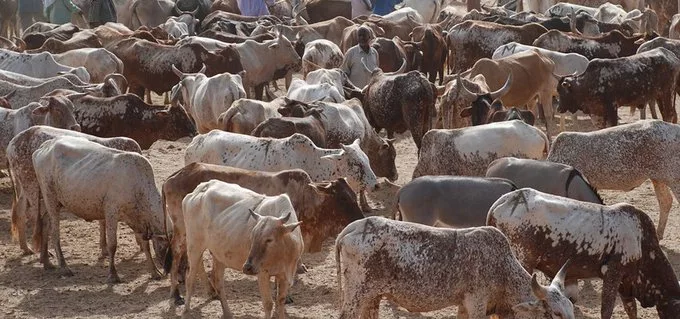
The ambitious De-Risking, Inclusion and Value Enhancement (DRIVE) of Pastoral Economies project is missing Sh441.4 million of its promised government funding, undermining efforts to build resilience in arid and semi-arid regions.
The National Agricultural Value Chain Development Project is reeling from the failure of sixteen counties to remit their contributions of Sh5 million each, creating a collective shortfall of Sh80 million.
Furthermore, the Small-Scale Irrigation and Value Addition Project was compromised not by a lack of funds, but by their misdirection,
In the referenced case, Sh99 million in counterpart funding was spent directly through the State Department instead of the project account, a situation Gathungu said violated agreed financial protocols.
The audit uncovered not just a lack of funding but also alarming irregularities in how available funds were handled.
In the Multi-National Drought Resilience Programme, the State Department for Agriculture bypassed the project account entirely, directly paying Sh80.3 million on its behalf.
A similarly troubling case was found at the East Africa Centre of Excellence for Biomedical Sciences, where Sh28.1 million was funnelled directly to the Ministry of Health instead of the designated project account, creating lack of transparency and accountability.
In West Pokot, the Emergency Locust Response Project was complicated by introduction of Sh10 million from local Saccos.
The funding mechanism was entirely absent from the original financing agreement, potentially creating future legal and accounting complications.
The Kenya Towns Sustainable Water Supply and Sanitation Programme, implemented by the Tana Water Works Development Agency, is plagued by delays in compensating Project Affected Persons, with Sh309.7 million tied up, preventing families from moving on with their lives.
The Nairobi Rivers Basin Rehabilitation project, a key environmental restoration effort Ruto’s team has taken up, is now in serious doubt.
It is uncertain whether the balance of Sh505 million needed to complete it will arrive before it is scheduled to close in December.
In further highlights that point to a breakdown in governance, projects like the Eastern and Southern Africa Higher Education Centres of Excellence had achieved 100 per cent of their targets but reported issues.
They were marred by the management's failure even to provide bank statements for counterpart funds, suggesting disregard for oversight.
INSTANT ANALYSIS
The sheer scale of the financial shortfall, of over Sh18 billion, indicates a challenge with budgetary planning and execution. This isn't about a single project running into trouble, but a pattern of neglect across multiple government entities. The most shocking example is the complete failure to disburse even a shilling of the Sh14.6 billion committed to the education program. The result is that flagship projects, often launched with great publicity, are left to languish, accruing penalties (commitment fees on undisbursed loans) and risk cancellation by donor partners.