President William Ruto is reaching back into his 2022 campaign playbook and dusting off the “Hustler” brand that propelled him to the State House, as he crafts his reelection strategy.
Twice in recent weeks, the President has hosted groups of ‘hustlers’—boda boda riders, market traders and unemployed youth—at State House, Nairobi, rolling out empowerment projects reminiscent of the populist drive that defined his historic rise.
His administration faces mounting pressure over unfulfilled promises, economic headwinds and a swelling tide of political dissent. Ruto is once again casting himself as the champion of the ordinary Kenyan—the street vendor, the small-scale entrepreneur, the struggling job seeker.
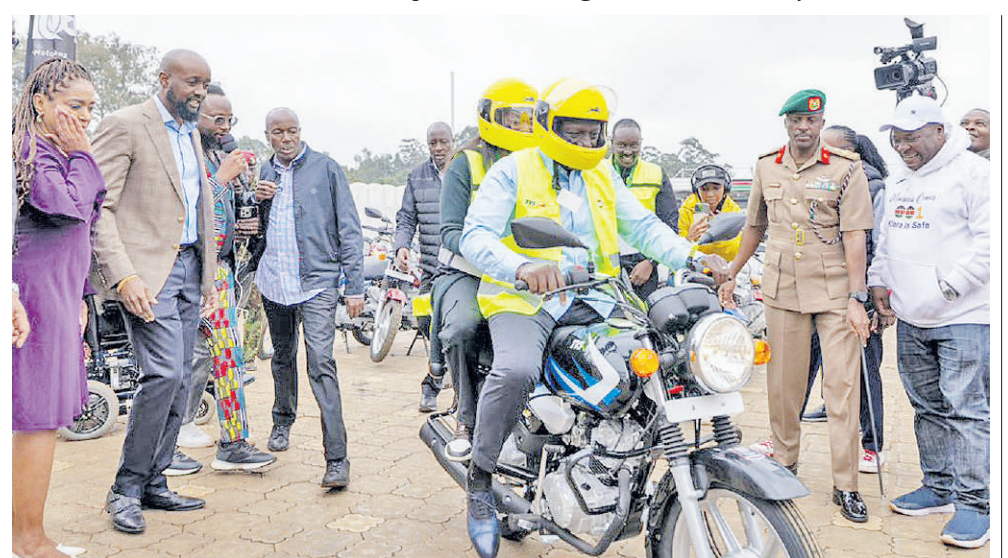
From impromptu roadside stops to high-profile State House receptions, the focus is familiar: widespread youth unemployment, boda boda riders and mama mboga remain the centerpiece of his political pitch.
On August 7, the President welcomed national officials of the boda boda sector to State House before launching an empowerment programme in Nairobi.
At the event, he donated a wide range of equipment—car wash machines, posho mills, salon kits, sewing machines, chairs, water tanks, pool tables, and motorcycles—to 1,100 business groups.
The boda boda initiative taps into a sector that is an economic lifeline for millions of people, especially the youth and a critical part of Kenya’s transport system.
Saying he was “uplifting those who have been living in the margins”, Ruto went further, announcing ward-level empowerment.
“Beginning next month, 70 young people in each of our 1,450 wards will receive Sh50,000 to start and boost their businesses in a joint programme between the government and the World Bank,” he said.
Deputy President Kithure Kindiki has also been on the road, dishing out cash and grants to small traders and youth groups—a coordinated charm offensive aimed at reawakening the emotional bond forged in 2022.
Critics warn, however, the script may no longer produce the same magic. Opposition leaders accuse the President of recycling slogans to mask insufficiently fulfilled pledges of job creation and the high cost of living.
Democratic Party boss and former National Assembly Speaker Justin Muturi was blunt.
“It’s like giving someone a spoon to dig a dam,” he said, calling the empowerment projects too insignificant to sway the 2027 contest.
Ruto remains defiant, doubling down on his bottom-up economic agenda and promising fresh opportunities for youth.
Last Tuesday, he made another wave of pledges—this time focusing on tooling and linking young people to jobs—to hold onto Kenya’s largest voting bloc aged between 18 and 35 years and makes about 35 per cent of voters.
Speaking in Kakamega, Ruto promised to equip young people with marketable skills, expand access to credit and open “unlimited digital doors” to global opportunities.
“Every year, nearly 800,000 young Kenyans enter the labour market. For too long, many have faced and continue to face the frustration of limited opportunities,” he said.
“That is why we have crafted a bold, multi-pronged strategy not only to generate jobs, but also to equip our youth with competitive, future-ready skills and ensure they thrive in the economy of the 21st Century.”
The President was in Kakamega to officiate over International Youth Day.
To realise his sweeping promise, Ruto announced that his government plans to enrol two million young people in Technical and Vocational and Training institutions by the end of the year.
The enhanced enrolment, he said, will be realised through the National Government Apprenticeship Opportunities programme.
“We have also deliberately chosen housing as one of the main engines of job creation in Kenya today,” Ruto said.
“Currently, over 161,000 housing units are under construction across the country, part of a 700,000-home pipeline that will generate more than one million jobs.”
About 320,000 people are already working in the Affordable Housing Programme, with numbers set to double in the next two months, he said.
“We have already advertised 4,000 internship positions for young professionals in the housing sector,” the President said.
“Through the Public Service Commission, we will engage architects, engineers, surveyors, IT specialists, marketers and other specialists, placing them in housing projects and municipalities across the country.”
The housing programme will absorb 10,000 interns by January.
Ruto also cited the prospect of mass engagement of young people through ClimateWorx, which he said will be extended to the counties from next month.
“This initiative is now being rolled out across all counties through an expanded roadworks programme, which will soon grow the ClimateWorx workforce to 113,000 young people,” he said.
Instant analysis
President Ruto’s high-octane youth charm offensive is already reshaping the political conversation, as State House projects him as the only leader with a clear roadmap for the so-called hustler generation. Opposition critics say it’s not enough and question the source of money for his empowerment programme.