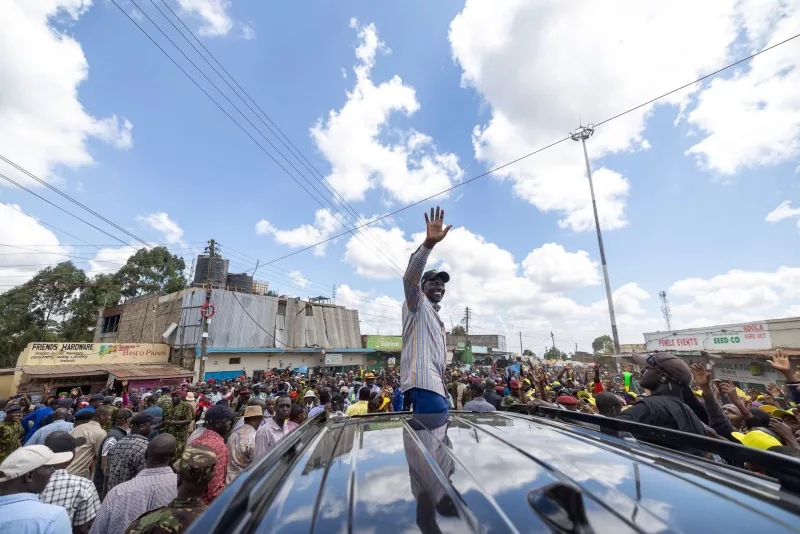
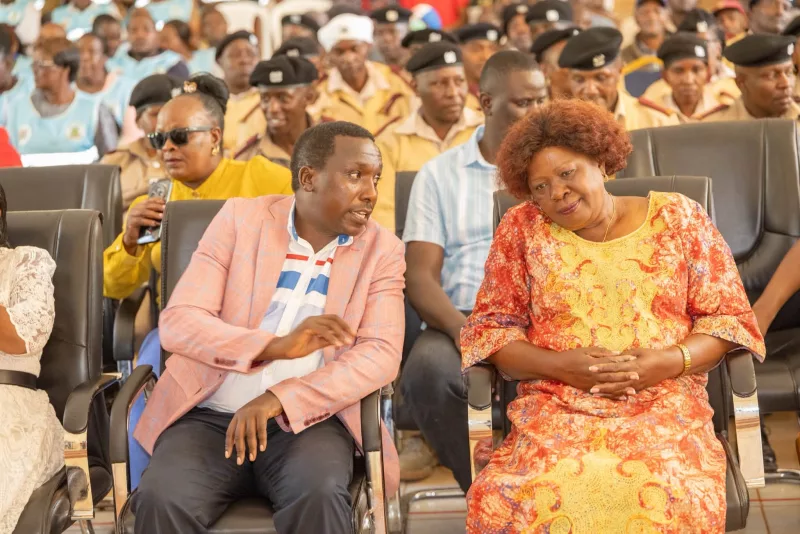
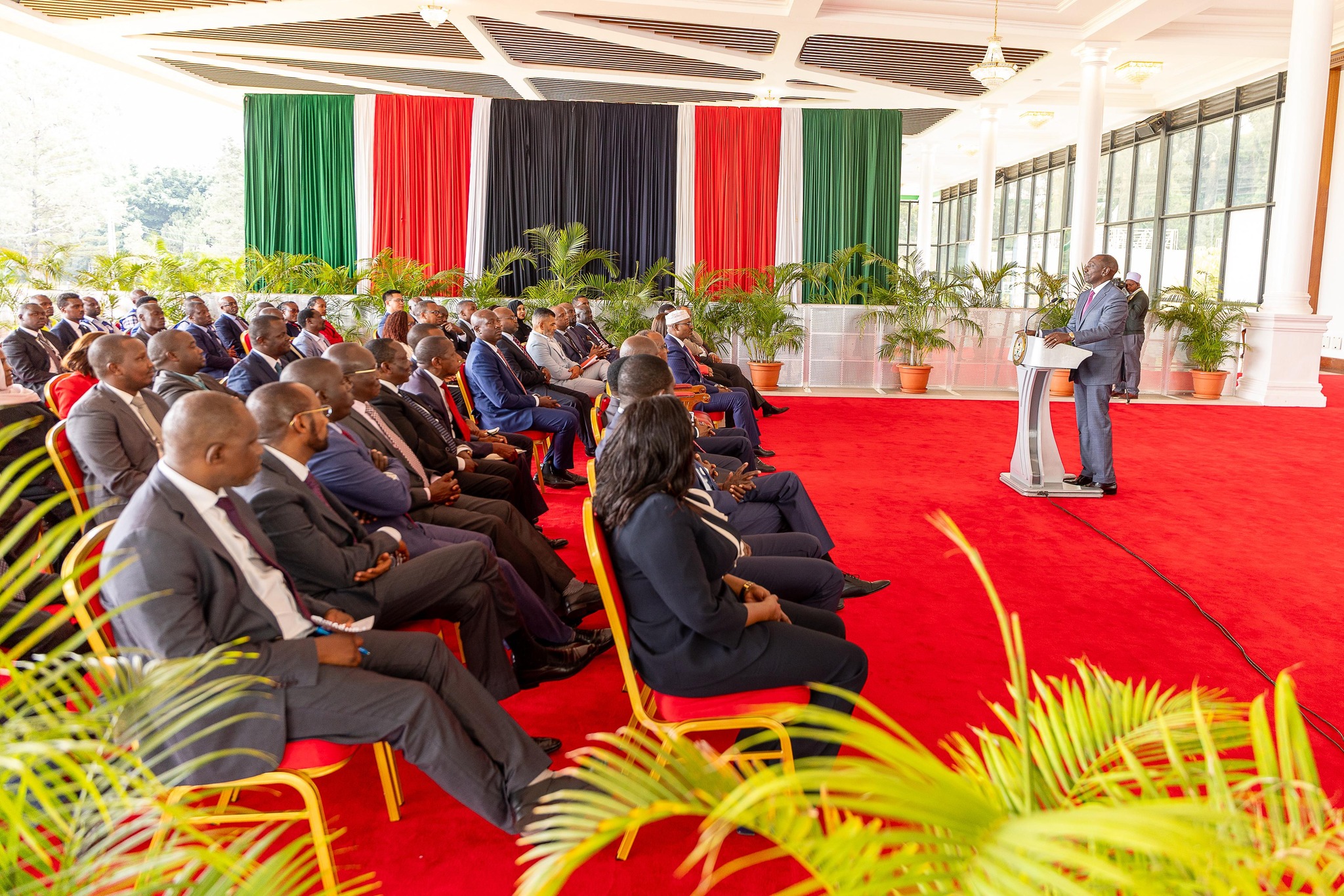
 President William Ruto address governor and other leaders during the launch of NESP at State House on August 7,2025/PCS
On August 7, President William Ruto unveiled the National Equipment Service Project (NESP), a new model for equipping public hospitals with essential diagnostic and treatment tools.
The programme replaces the controversial Medical Equipment Service (MES) scheme, which ran between 2015 and 2023 but was widely criticised as exploitative and opaque.
Parliament had previously described MES as a “criminal enterprise,” citing inflated costs, lack of transparency, and poorly negotiated contracts that left counties with huge bills and poorly serviced machines.
With NESP, the government hopes to correct these mistakes and establish a sustainable, transparent, and efficient way of delivering medical technology to Kenyans, while easing the burden on county governments.
NESP is designed to ensure continuous access to medical equipment in county health facilities across Kenya.
It builds on the successes of MES.
How NESP differs from MES
The MES programme required counties to pay significant upfront annual fees, regardless of whether the equipment was functional or in use.
Counties complained of being forced to pay billions of shillings for machines that were either poorly installed, incompatible with local hospital needs, or frequently out of service.
In some cases, hospitals lacked the specialists to operate the machines, leaving them idle despite heavy costs.
NESP, on the other hand, introduces a Fee-for-Service (FFS) model. This means:
No upfront purchase costs: Counties do not buy or lease the equipment but instead, vendors install, maintain, and upgrade machines at their own cost.
Payment based on actual use: The Social Health Authority (SHA) pays suppliers based on the number of services delivered (e.g, number of scans, dialysis sessions, or lab tests).
Accountability built in: Since payments depend on functionality, suppliers have a direct incentive to ensure machines are working at all times.
President Ruto summed it up by saying the new approach marks a shift from a fragmented, costly supply system to a smart, collaborative health delivery model.
Rollout and early results
By mid-August 2025, 45 counties had signed the Intergovernmental Participatory Agreement (IPA), which formalises their participation in NESP.
Since June 2025, more than 60,000 medical services have been delivered under the programme in 29 facilities across 18 counties.
During the launch, Ruto flagged off the delivery of 14 CT scanners, 2 ultrasound machines, 30 dialysis machines and digital X-ray systems.
Ruto said the government expects to deploy in the next two months 58 additional digital X-rays, 65 ultrasound machines, 19 CT scanners, 100 theatre equipment sets and 100 laboratory systems.
He described the new initiative as a good example of what can be achieved through collaboration between National and County governments.
Through the new programme, the President said Kenya is shifting from a fragmented and costly medical equipment supply system to a smart and collaborative approach to healthcare delivery.
“This cost-effective and sustainable model guarantees that equipment is not only installed, but also consistently maintained, thereby ensuring continuous and reliable service,” he said.
Why NESP matters
Access to modern medical equipment has long been a weak link in the country’s public health system.
Many county hospitals either lacked advanced machines or struggled with broken-down equipment.
Patients were often forced to travel long distances, or pay steep fees in private facilities, to access essential services such as dialysis, CT scans, or digital X-rays.
By guaranteeing continuous availability of functional equipment, NESP promises several benefits.
Improved access: More Kenyans can receive specialised services in their home counties, reducing referrals and travel costs. Cost efficiency: Payments are tied to actual use, ensuring taxpayers only fund services that reach patients.
Reduced downtime: Vendors have a vested interest in ensuring machines remain functional, unlike in MES where counties had already paid regardless of breakdowns.
Equity: Smaller and less resourced counties can access the same level of equipment as larger ones, since the national government shoulders the framework.
Technology upgrades: Suppliers are required to maintain and upgrade machines during the programme’s seven-year lifespan.
Lessons from MES
The MES programme was launched in 2015 under retired President Uhuru Kenyatta’s government, with the intention of standardising access to modern medical equipment across all 47 counties.
However, it quickly became mired in controversy.
Counties complained they were forced into the scheme without adequate consultation.
Parliament later found that the contracts lacked clear service agreements, while costs ballooned from an initial Sh38 billion to over Sh60 billion.
Some hospitals received machines they could not use due to lack of power supply, specialists, or supportive infrastructure.
Worse, breakdowns were common, and servicing was delayed or non-existent.
Despite heavy spending, the impact on healthcare delivery remained limited, making MES a cautionary tale of how poorly designed public-private partnerships can harm service delivery.
NESP explicitly aims to avoid these pitfalls by tying payment to performance, increasing consultation with counties, and creating a transparent oversight mechanism through SHA.
The success of NESP depends heavily on collaboration between national and county governments, as well as strong regulation of private suppliers.
President Ruto emphasised that the programme was designed after wide consultations with governors and county health officials, unlike MES which was imposed top-down.
By having 45 counties already signed on, the programme shows broad acceptance and potential for nationwide impact.
Ruto hailed it as “a good example of what can be achieved through intergovernmental collaboration.”
NESP is scheduled to run for seven years, with the possibility of renewal or expansion depending on performance.
If successful, it could become a blueprint for other sectors of public service delivery, where payment models reward functionality and efficiency rather than upfront procurement.