Despite early missteps, SHA has become a saviour for many families, easing fears of sky-high
medical bills and opening the door to smooth healthcare services.
While the health scheme has had setbacks, disappointments and
stinging criticism, some problems have been solved and success stories are
emerging.
Emmanuel Okeyo, a pre-technical studies teacher and father of
three, never gave health insurance
much thought.
For years, his monthly NHIF deductions felt like just another pay
slip deduction — something you had, but never needed. Life was predictable. The
children were healthy. Insurance was just paperwork.
One morning, everything changed.
At school, he suddenly felt his body burning up. Chills
shook him. He was sweating, dizzy. He dragged himself to a nearby private
clinic, barely able to speak.
“I was afraid I would collapse before even getting there,” he
recalls in an interview with the Star.
At the reception, clutching Sh200 in his trembling hand, he was
asked a question that caught him off guard: “Are you registered with SHA?”
“I thought, ‘What’s SHA? Is that different from NHIF?’ ”
They checked for him. Simply dialling *147# revealed his details
were up-to-date — his Teachers Service Commission deductions had migrated into
SHA. Just like that, he was covered.
“I can’t explain the relief,” Emmanuel says. “At that moment, I
felt like I had someone holding my hand. Like I wasn’t alone.”
SHA again proved its worth. The next day, his pregnant wife began
bleeding at home. Panic set in. Emmanuel rushed her to the same clinic. She was
immediately attended to — fully covered by SHA.
“That was the moment I broke down,” he says quietly. “I looked at
her in the hospital bed and realised we could’ve lost her. But we didn’t —
because help came without us needing to beg or borrow.”
Nowadays, Okeyo speaks passionately to fellow teachers
about SHA. “It’s not just insurance,” he says.
“It’s peace of mind. It’s knowing that when your world falls
apart, someone will help you pick up the pieces.”
Maureen Odhuno also has good things to say about SHA,
especially the need to register.
She still remembers the fear in her 13-year-old son’s eyes. It
was October
last year and was
just weeks away from sitting for his exams. Then malaria struck — hard.
One morning he collapsed at home, his lips pale, his skin cold. His pressure had dropped dangerously low.
At Migori County Hospital, he was rushed in for an emergency blood
transfusion. Maureen stayed by his side for two nights, praying. When the
doctor finally said he’d pull through, her knees gave out.
But joy quickly turned to anxiety when she saw the bill —
Sh13,000.
“We had nothing,” she says. “My husband and I borrowed
money from friends and family members. I
cried while paying that bill. It felt unfair.”
Nine months later, he fell ill again. Maureen rushed him to a
nearby private hospital, where she was charged Sh2,600 just for basic treatment
— before they referred him to Migori again. That’s where she first heard about
SHA.
“I thought it was too good to be true,” she says. “Sh6,000 a year
for full family cover? But we were desperate. I paid.”
When her son needed a second blood transfusion, she braced herself
for another avalanche of debt, but SHA covered every coin.
“I almost wept at the cashier’s office,” Maureen says. “Not from
fear, this time, but from relief. My child was alive. And I didn’t owe anyone
anything.”
He missed his term exams. But he’s alive. He’s smiling again. And
Maureen has made it her mission to tell every mother she meets, “Don’t wait
like I did. Register now.”
Agnes Akinyi, 49, didn’t cry when the doctor told her she had
chronic kidney disease. She’d already suspected something was very wrong. Her
body was failing. What broke her was the cost.
“Dialysis twice a week? I thought, ‘How do I tell my children I
won’t be here much longer because we can’t afford it?’ ” she asked.
Akinyi and her husband were days away from selling their only piece of land when a health officer at Migori County Referral Hospital introduced her to SHA.
They helped her register using the means-testing tool on her
phone. She qualified for a subsidised rate.
“Just like that, I was in,” she says. “No long queues, no
paperwork.”
Today, SHA covers all her dialysis — each session costing more than
Sh10,000. Akinyi walks into the hospital twice a week, greeted by nurses who
know her name, who care.
“The fear is gone,” she says, smiling. “I used to lie awake
wondering if I’d live another month. Now, I plan for next year.”
Akinyi has received more than just treatment. Through SHA, she’s
had access to nutrition counselling, physiotherapy and regular check-ups.
“SHA didn’t just save my life,” she says, “it gave me back my
dignity.”
SHA is Kenya’s new universal health coverage model, replacing
NHIF. It’s managed by the Social Health Authority and powered by the Social
Health Insurance Fund (SHIF), with contributions based on income and
means-testing for the informal sector.
SHA’s chief executive officer Mercy Mwangangi says, “Health
emergencies don’t knock. SHA is the door that opens before they arrive.”
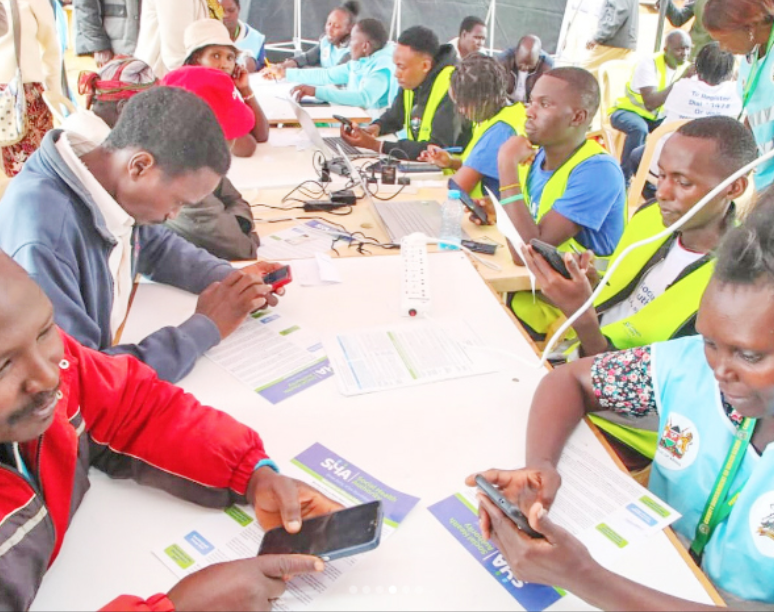
More than 25 million Kenyans are now registered, but only 4
million actively contribute. The government is urging more to join, especially
in the informal sector, where mobile-based registration (*147#) and transparent
means testing have made enrolment easier than ever.
Health economist Alphonse Kamau calls it “a revolution in
fairness”.
Back in Migori, Emmanuel still visits that same clinic. Not for emergencies, but to encourage people to register for SHA.
“People say they’ll register when they’re sick,” he says. “But why
wait for a funeral to believe in healthcare?”
SHA didn’t just heal bodies of these three families. It restored
their hope.
And in today’s Kenya, that might be the most powerful medicine of all.