
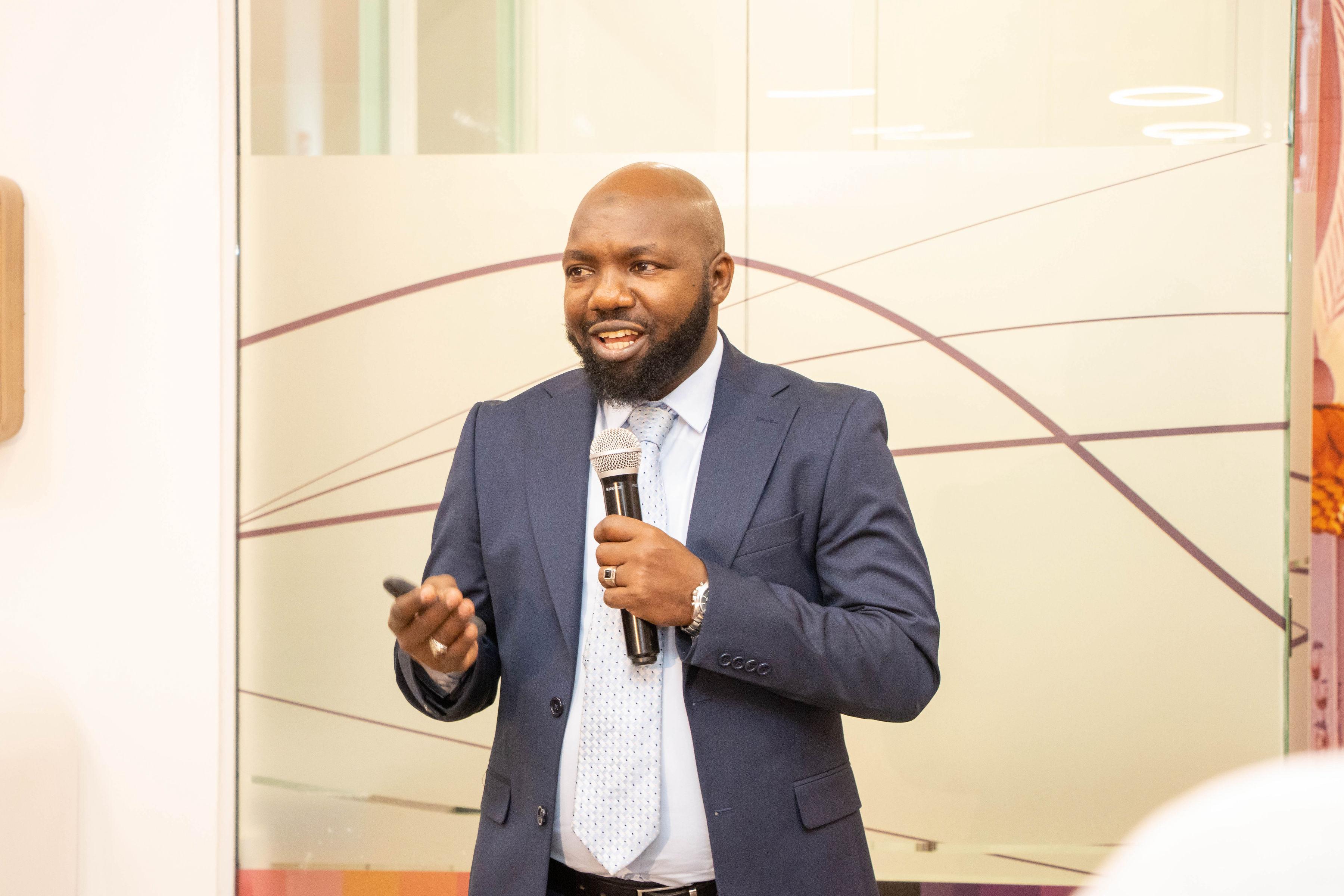
THE Kenyan financial sector is progressively adopting Islamic banking by integrating new productsincluding loan facilities, insurance, mortgages, real estate trusts and derivatives that adhere to Ahkamu Shariah (rules of Shariah).The Star spoke to Tego Wolasa, head of Islamic Banking, Absa Bank Kenya, on the sharia compliant financial market, challenges and future outlook.
Tell us a bit about yourself?
I am an Islamic banker with technical, tacticaland strategic leadership expertise with over 20 years experience. I do a lot of Sharia advisory including to the National Treasury. I have also lectured in universities. I worked in conventional banking for the first six years of my banking career then the rest are just in Islamic banking. I am also in a number of boards for Sharia advisory, in Saccos just giving them the Sharia advisory bit of things.
What motivated you to go into Islamic banking?
I started off as a normal commercial bankerbut along the way,I became very restlesspersonallyand I sought to quit.I got a call from an Islamic banker, so I joined. That is where I started now learning proper Islamic banking. But generally, my discomfort came as a result of my belief and my faith.
How is Islamic banking different from conventional?
I will talk about it from the perspective of economics and thenreligious.The religious perspective may not make much sense for someone who is not a Muslim. In Islam, there are seven major sins and taking or paying interest (riba) is one of them. If I look at it from the Islamic economic perspective, money is only a means of exchange. You cannot sale money. I can only profit from goods and services, from selling and from buying, from leasing and from renting. That is why sometimes when someone asks me what is Islamic banking, I tell them Islamic banking is not banking, it is just normal trade.
Do you see non-Muslim customers showing interest in these products?
Absolutely. We have a small percentage that is curious but those whounderstand how Islamic banking works show very genuine interest. The products are for everyone.You don't have to be a Muslim to consume them. Actually, I read somewhere that around 20 per cent of consumers of Islamic banking products are not Muslims.
From where you sit, what inspired the bank to embrace Sharia compliant products?
First, Absa believes in the spirit of inclusion.Long before any bank in Kenya dared to venture in Islamic banking, Absa was already there. We are celebrating the 20thanniversary of Islamic banking in Kenya. Other than the normal inclusion, the bank also wants to contribute to the economy because we have two regions which are largely Muslim that is North and North Eastern and coastal part of the country.The best way to support economic growth, create employment and empower the community is to make sure that everyone has access to financial services.
How has the demand evolved in Kenya over the past five years and what is driving growth of Islamic banking?
Today, we have around 15 per cent of the country’s population being Muslim. So, number one is growth of the population. Number two is people are moving towards trade and commerce, and again people are becoming more educated and more sensitive. The knowledge in Islamic banking is also becoming more common. At the close of last year, total accounts in all the Islamic banks were around 608,000 still a negligible percent compared to the other banks, but if you look at the terms of growth, it is growing very fast.
Any challenges?
There is still low awareness and a knowledge gap. These two account for more than 50 per cent of the challenges in Islamic banking. If we can address these, then the growth would be even faster. There is a huge market and potential.
How do you ensure Sharia-compliance?
There are some certain set of conditions Sharia has put in place for any bank to be deemed to be Islamic. Of course, the main and the first one is having an independent Sharia board of scholars. In Absa, we have five scholars, independent, they are not part of our employees.The other condition is to have a system that is able to adapt to the Sharia requirements. Our IT systemis very advanced and has really helped us. Being in many countries across the region, we were able to borrow expertise from South Africa, Nigeria, Tanzania and other countries which has really helped us to enhance. The other condition is separation of funds.The deposit that we have in Islamic banking is totally separated from the other deposits so that the monies don't co-mingle. We are in the same bank but internally, we run our deposit pool separately.
Do you feel the Kenyan regulatory space is supportive?
The regulatory bodies are supportive but lack the right tools.They don't have the regulation. For instance, CMA is very supportive but they don't have Islamic capital market tools. SASRA supportive of Saccos but they don't have Islamic Saccos. Central Bank is very supportive.In 2018, we had a very good move as a country where we drafted five white papers. Islamic Banking Act, Islamic Saccos, Islamic Insurance, Islamic Capital Market, Islamic Pensions. We need to bridge regulatory gaps. We are holding the first ever annual Islamic Finance Conference in Kenya this week and we have invited the regulators, players from all the data industry so that we can come and deliberate together and see how, as the market leaders, we can open the path. Meanwhile, we have sponsored the creation of Islamic Finance Practitioners Association, which is also going to be launched this week. With this, it will be easier for the players to come together and lobby the government, MPs, so that we can have the white papers we did in 2018come to light.
How do you balance profitability with Sharia principles such as risk sharing and prohibitions of, say, riba?
First, we don't really have to. Being profitable does not mean that we have to be mutually exclusive of being Sharia compliant. Secondly, we are in the industry, we are engaged in the business. The customer comes, he needs a car, maybe he has a factory, he wants to increase his services and his activities. We buy the car, sell it to him. So we will earn profit from the car and we will also enable the customer to grow his business in a Sharia compliant manner. So, in Islamic finance, so long as you are buying and selling, it is something regular doing in the economy, Sharia allows you to earn profit.
Do you foresee a rise Sukuk and Takaful?
Absolutely. One of the things we are going to propose is frequent use of Sukuk. We have been having these private bonds that are issued by institutions but we want to look at the government level, what can be done So the need is there, the knowledge is there, so we are hoping the government will really move forward and issue these products including in developing major infrastructure projects. Insurance products are also there and growing.
How best can Kenya's financial sector drive Islamic finance?
I think number one is collaboration. If you collaborate as industry players, everything becomes easy, getting to speak with the regulators and getting the regulations in place among other benefits.
Are there any fintech innovations specifically tailored to Islamic finance in your pipeline as Absa?
Of course. As the first bank in the country, we are among the first to understand how to customise existing co-banking systems and create Islamic modules.Secondly, the mobile platform. I think there is only one bank that tried to roll out mobile lending Islamically it didn't work.They pulled back. So, technically, we have become the first bank to innovate in the Islamic mobile lending. We also launched our cards.We are having a lot of discussions, even at the Sharia board level, on how we can leverage artificial intelligence in moving our business forward. We are having discussions around cryptocurrency and many more.
Do you see digital banking as a viable channel for expanding access to Islamic financial servicesespecially in underserved regions?
Yes,very much. One of the products that we are going to have out is the digital Murabaha.For instance, we aree developing a product for livestock. How that product works, for instance, is we are pre-qualifying the livestock traders. For instance, you buy and sell camel or goat or cows and you want to make a transaction, you can do it digitally. We are also coming up with a digital Murabaha for SMEs so there are a lot of things we are doing on a digital front to make sure that customers get solutions without necessarily having to come to our bank or going through the application process.
Where do you stand in terms of supporting SMEs?
SMEs are the backbone of the country.If you look at the Muslim population, they are largely in businessbecause if you go to the north, there is not much in terms of agriculture, most people are in business. So, if you look at Islamic banking, it is actually driven by SMEs. Secondly, 60 per cent of our workforce in the La Riba department are focused on SMEs. We have a team that is focused on identifyingchallenges and solutions for SMEs. We are also supporting youths on investing. The is also the La Riba Timiza, the country's first fully Shariah-compliant mobile banking platform by a Tier 1 bank where one is able to access instant facilities. We have solutions for everyone.
What is your parting shot?
Whatever we do, let us do it the best way.Islamic banking is the best way but we have to take care of the country. For the Muslims, be a 100 per cent. Give it your best. Do Islamic banking the proper way and let us uplift the economy.







