

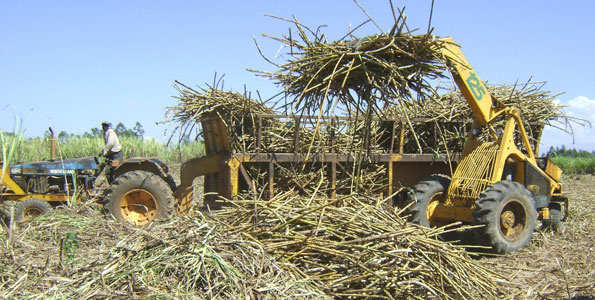
What has come out clearly is the fact that as others profited from the boom smiling all the way to their banks, the country’s sugar factories, the sugarcane farmers and their outgrower companies have been left shattered, many times forced to grind their operations to a standstill.
The worst aspect of the whole business is that millions of consumers of the sweet commodity across the country have been left exposed to dangerous consequences to their health, consuming imported sugar that has not been verified officially, not only to meet the required by the Kenya National Bureau of Standards but also internationally recognised quality verification entities.
Yet the same sugar is sold to the uninformed Kenyan consumers at high retail prices, thus spending hard cash to buy imported commodities that are dangerous to their health as the importing barons pocket hundreds of billions of shillings while consigning local millers to oblivion.
These millers are stranded with sugar stocks they cannot sell to keep going, let alone the millions of Kenyans who lose their jobs or income either directly or indirectly.
To add insult to injury, is the fact that some of this mafia-like barons with deadly strangleholds on the country’s sugar industry, re-package the same cheap imported into packages purporting that it is locally produced sugar and go to all the way to some of the mass media outlets to advertise to innocent consumers to buy their vile products as the best.
We must not forget that the worst miller was Mumias Sugar, the only one using the ultra-modern diffuser technology to produce the commodity. At its peak, it was producing more than three-quarters of the country’s annual sugar needs. However, its operations were forced to grind to a halt for more than 10 years because of mismanagement. It was also unable to sell its produce to pay its creditors because of imports worsened by a deliberately orchestrated and executed sugarcane poaching crisis, which elected leaders and government operatives kept silent about.
As a matter of fact, of all the sugar milling companies in the country, Mumias Sugar was the first and the only one privatised by the government and listed at the Nairobi Securities Exchange because of its sterling performance it was established in 1976.
Indeed, it’s an open secret that all the other state-owned millers like Nzoia, Chemilil, Muhoroni, South Nyanza Sugar Company, popularly known as Son,y including some of the recently established privately owned, have not been spared from this deadly, endless cheap sugar imports imbroglio.
That the government has been forced to lease out virtually all of them to private millers to try and salvage them from complete collapse after the same government investing hundreds of billions of shillings in those entities to keep them afloat to no avail – with endless cheap sugar imports how are those who have taken over the leases going to survive?
At the moment, there are widespread reports that colossal tonnages of imported sugar have landed at the Mombasa port ready to hit the local markets in floods to profit the importing barons some of whom have high-level connections with to government operatives who facilitate the imports at to make easy cash to get rich quick.
This development is happening when only a few weeks ago the Kenya Sugar Board ordered all sugar millers in western Kenya to stop their milling operations for alleged shortage mature sugarcane when the cane farmers had not been contacted to find out the status of sugarcane ready for processing on their farms.
The fact that this order coincided with the announcement by the West Kenya aka Kabras Millers aka Olepito sugar was closing down for maintenance operations, when others like Mumias Sugar among others had just completed theirs.
The region’s sugarcane farmers who immediately went up in-arms against the order declared an in-depth conspiracy in the whole matter and immediately went to court seeking emerging orders to nullify these order which they were granted – but the question that remains hanging to date is why the KSB issued such an order without consulting the sugarcane farmers, other millers and stakeholders in the region?
It must not have forgotten that President William Ruto is on record to have issued publicly an order concerning the sugar imports mess that was plaguing the country soon after he took office saying: ‘Mambo ni matatu’.
With the emerging developments, it is indeed time again that he cracked the whip to save not only the country’s sugar industry, but also the rice production and processing sector since recent reports clearly show that more than 95, 000 tonnes of the cereal imported to Kenya will be landing anytime.
Yet for the last two months leading rice farmers in Busia county and Mwea in Kirinyaga are on record voicing their concerns through a wide range of local media outlets that the crop they produced since last year is still stuck in warehouses with nowhere to sell – then why does the country need any imports when our own is rotting in warehouses?
What is clear is the fact that with the government’s intervention, sugarcane production in the country is once again upbea,t complete with their once dead out-grower companies like Busia Outgrowers Company roaring back to life courtesy of Mumias Sugar under Sarrai Group.
That government must also make it clear that any
millers who are not directly actively engaging sugarcane farmers in the
development and production of the raw material, but only concerned with imports
should have their licences revoked and severely penalised for economic crimes.
Journalist and a media consultant






