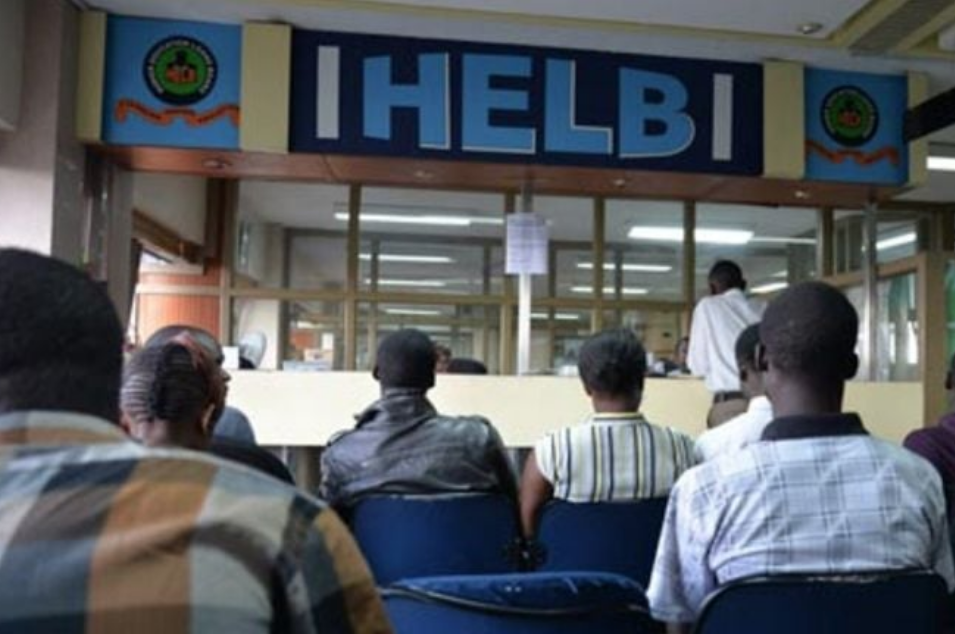
 University students wait to apply for loans at Helb headquarters in Nairobi. /FILE
Helb CEO Geoffrey Monari has shed light on what prompted a shift in the funding of university education in favour of the needs-based model touted as a game changer by the government amid grumbling by some stakeholders.
Monari, in a post on LinkedIn, said the old model, which gave every student the same level of support regardless of need, “wasn’t just underfunded – it was unfair.”
“It unintentionally subsidised wealth, ignored hardship, and failed to evolve,” he said in an August 6 statement, coming two years after the reforms began.
Monari traced the root of the crisis to the post-independence era, when the state fully funded tuition, accommodation, and upkeep.
He said economic shocks witnessed in the 1970s forced a shift towards cost-sharing.
By 1995, Helb was created to streamline student loans, and for years, the scheme disbursed a flat funding rate to public university students.
However, Monari said rising enrolment and inflation quickly outpaced allocations.
“By 2014, enrolment had risen seven times faster than public funding. Universities were being stretched beyond their limits,” Monari recalled.
A 2016 policy change that admitted all C+ and above students under government sponsorship dealt a fresh blow, wiping out the revenue from self-sponsored programmes.
The Differentiated Unit Cost model, meant to fund 80 per cent of actual student costs, never met its target.
Monari said coverage fell from 66 per cent in 2017-18 to just 23 per cent by 2024-25.
By late 2022, public universities carried Sh72 billion in debt.
“We could no longer afford to keep pretending it was working,” Monari said.
In 2023, President William Ruto introduced a new model centred on a revamped Means Testing Instrument (MTI) to assess a student’s financial need using 12 socio-economic indicators.
Students are required to state their household income, number of dependents, type of school attended, disability, and orphan status.
Depending on needs, students are now placed in five funding bands.
Those in Band 1 – the most needy – have 95 per cent of their education costs covered - 70 per cent as a scholarship and 25 per cent as a loan. They also receive Sh60,000 annual upkeep.
Band 5 students – the least needy – get 30 per cent scholarship, 30 per cent loan, and Sh40,000 upkeep.
“The most important shift is that support now follows actual need, not assumptions,” Monari said.
In the 2024-25 financial year, Helb disbursed Sh36.5 billion in loans and Sh16.9 billion in scholarships to 702,000 learners.
“We are no longer funding in the dark,” Monari said.
“This model gives us a chance to promote equity, protect the poor, reward merit, rebuild public trust, and sustain quality. Reform isn’t easy, but collapse wasn’t an option.”
Monari said while 67.5 per cent of the loan book is performing, 32.5 per cent remains in default, worth Sh32 billion.
However, he said Helb is offering an 80 per cent penalty waiver for lump-sum repayments to encourage repayment.