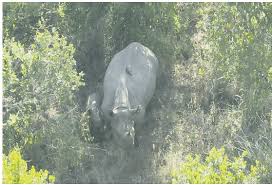
Rhino with her male calf at Sera Rhino Sanctuary/FILE
Kenya has gone five years without recording a single rhino poaching incident, a milestone the Kenya Wildlife Service attributes to technology-driven monitoring, well-trained anti-poaching units and stronger partnerships with agencies such as KRA and the DCI.
KWS director general Erustus Kanga said the Wildlife Conservation and Management Act 2013, which imposes up to life imprisonment or a fine of Sh20 million, has acted as a powerful deterrent.
“We have embraced technology, built the capacity of our teams and intensified collaboration with other agencies. We are not giving poachers an opportunity to penetrate our areas,” Kanga said.
Public education campaigns have also helped curb demand.
Kenya has the third-largest rhino population in Africa after South Africa and Namibia. As of the end of 2020, the national census recorded 1,605 rhinos — 853 black, 750 southern white and two northern white rhinos.
Black rhinos remain a species of critical concern after numbers fell from about 20,000 in the 1970s to fewer than 400 in 1987 due to poaching.
A new report, African and Asian Rhinoceroses—Status, Conservation and Trade, notes that poaching of African rhinos has declined since 2021, though drought and policy shifts threaten future growth.
The report, produced by the IUCN and Traffic for the Cites secretariat ahead of COP20 in November, shows that by the end of last year Africa’s rhino population stood at 22,540 — 6,788 black rhinos (up 5.2 per cent from 2023) and 15,752 white rhinos (down 11.2 per cent). The poaching rate dropped to 2.15 per cent, its lowest since 2011.
IUCN director general Grethel Aguliar said the gains highlight the power of intelligence-led enforcement, community engagement and secure habitats. “Lasting impact demands sustained investment, political will and global collaboration to secure species’ survival,” she said.
Instant Analysis Kenya’s five-year streak without rhino poaching is a rare conservation success in a continent still battling wildlife crime. The achievement reflects sustained investment in surveillance technology, skilled anti-poaching units, strict laws, and regional cooperation. While the poaching threat has receded, new risks — climate-related habitat stress, policy uncertainty, and the decline of white rhino numbers elsewhere in Africa — could undermine progress. Kenya’s challenge now is to maintain funding, keep political focus sharp, and adapt to shifting threats. If sustained, the country’s model could become a blueprint for rhino conservation in other range states where poaching remains stubbornly high.