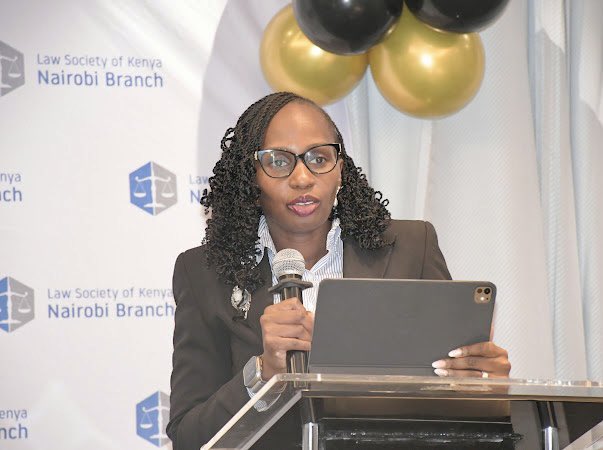
In a legal battle that questioned the heart of how Kenya’s legal profession is regulated, a woman has failed—again—in her attempt to defang the Law Society of Kenya by stopping its monopoly control of advocates.
In what could have unraveled LSK, splitting it and turning it moribund, the long running suit had sought denying it regulatory powers over advocates and allowing the learned friends to join different professional associations of their choice.
However, the Court of Appeal has rejected the appeal by Eunice Ng’ang’a, who had contested a High Court decision against her push to have courts take away the lawyers’ lobby’s oversight over lawyers, including its mandate to mount professional courses used as a basis for awarding annual practicing certificates.
Ng’ang’a had wanted the court to declare unconstitutional Section 22(1)(b) and (c) of the Advocates Act, Section 23 of the Advocates Act, Section 7 of the Law Society of Kenya Act, and Rules 10 and 11 of the Advocates (Continuing Legal Education) Regulations, 2004—rendering them invalid.
Additionally, she sought an order compelling the creation of a regulatory body, commission, or authority independent of the Law Society of Kenya—or any other society for that matter.
The body she proposed was to have powers and functions including certifying advocates, handling all complaints and disciplinary matters, and accrediting various entities to offer continued professional development courses. However, she wanted this new regulatory body barred from imposing continued personal development points as a prerequisite to renewing practicing certificates.
Further, she also wanted the court to prohibit the proposed board, commission, or authority from requiring advocates to be members of the Law Society of Kenya—or any other society—before granting or renewing their practicing certificates.
The High Court of Kenya had already rejected her constitutional review suit on March 14, 2019. She had filed it on May 22, 2017.
She appealed the decision at the next court, but a three-judge bench threw it out for lack of merit on July 25, 2025.
In opposing the case, the Law Society of Kenya argued that Ng’ang’a lacked the legal standing to bring the suit.
“… [She] was not a member of the Law Society of Kenya nor demonstrated that she was qualified to be admitted to the membership, nor had she indicated that she was acting in public interest,” the society submitted.
The LSK asserted that lawyers are professionals endowed with public trust for defending the rule of law, which necessitates a higher standard of conduct than in other professions.
Additionally, it said, it is the norm for any profession to establish for itself exacting standards of entry, operation, and advancement, and that the LSK is the established bar association for all practicing advocates in Kenya, in accordance with the Law Society of Kenya Act. Its core mandate, the society said, is to regulate the conduct of its members and ensure continuous professional development with a view to enhancing competence and service delivery to the public.