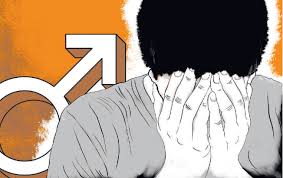
GAO is an intern doctor at a major public hospital in Kiambu. For months, his family has had to manage his antidepressants and other mental health prescriptions, as he remains on a long queue for a licensed psychiatrist.
From suicide attempts to binge drinking and missing most of his rounds at the facility, the 31-year-old is on the edge, a fact that has kept his family distraught, always fearing a call with bad news.
His mother, MA, told the Star she fears for her son’s life.
“We have stopped worrying about whether he will become a doctor. We have given up on that and made peace with it. We only want him to get help and be well, even if he will eventually turn to doing menial jobs or boda boda for a living,” the sickly mother said.
"The young man just wants to die to be free from the mental cell he is in."
The long wait for appointment and underinvestment in mental health as a public health function is keeping millions of mentally disturbed Kenyans away from accessing the help they need, a fact that is not only destroying lives but also heightening threats to lives.
A new report by the Kenya Legal & Ethical Issues Network on HIV and Aids (KELIN), a Nairobi-based human rights organisation championing access to health rights, paints a grim picture of underinvestment, stigma, and neglected policy commitments that continue to harm Kenyans living with mental health conditions.
Also, the report says there is “a lack of disaggregated analysed data, to ensure mental health policies are evidence-based and tailored to the diverse needs of the populationresults in a one-size-fits-all approach, which often fails to address the unique circumstances of various populations”.
Moreover, there is a biting shortage of specialised mental health practitioners in Kenya with an estimated 100 psychiatrists, which translates to a psychiatrist per million population.
According to the Ministry of Healthguidelines, Kenya needs 1,400 morepsychiatrists, 7,000morepsychiatric nurses and 3,000 more psychologists.
The KELIN report says despite the biting shortage, currently, many trained mental health professionals work outside the public sector; of Kenya’s 92 psychiatrists and 427 psychiatric nurses, only 36 (39 per cent) and 187 (44 per cent) are employed in public facilities.
This is way below the globally quoted minimum psychiatrist to patient ratio is 1:10,000 with a recommended pragmatic ratio of 1:8000 for the foreseeable future, the report says.
The report complains that the prevailing situation obtains yet there are excellent policies on paper that have not been implemented.
It says the Mental Health Policy 2015-30, Mental Health Action Plan 2021-25 and Mental Health Act 2023 have not been fully implemented.
Kenya’s
crude suicide rate stands at 6.1 per 100,000 people, with an age-standardised suicide
rate of 11.0 per 100,000, translating to approximately four suicide deaths per
day.
In 2021 alone, 483 suicide deaths were recorded, a significant rise from the annual average of 320 cases.
A recent High Court decision struck out the criminal code against attempted suicide, a move lauded by civil society advocates, including KELIN, that argue that criminalisation hampers efforts to design and implement effective mental health programmes.
But despite the positive court step, there is still a lack of national guidelines to address stigma and discrimination within mental health facilities and communities exacerbates the challenges faced by individuals with mental health conditions.
“Stigmatisation and discrimination stem from limited awareness and understanding of mental health issues, which fuels harmful stereotypes and exclusion,” it says.
Instant analysis
As Kenya continues to battle a growing mental health burden, families like GAO's are left fighting an invisible war—with few tools, little support, and hope hanging by a thread. Under investment in mental health is a unconscionable dereliction.