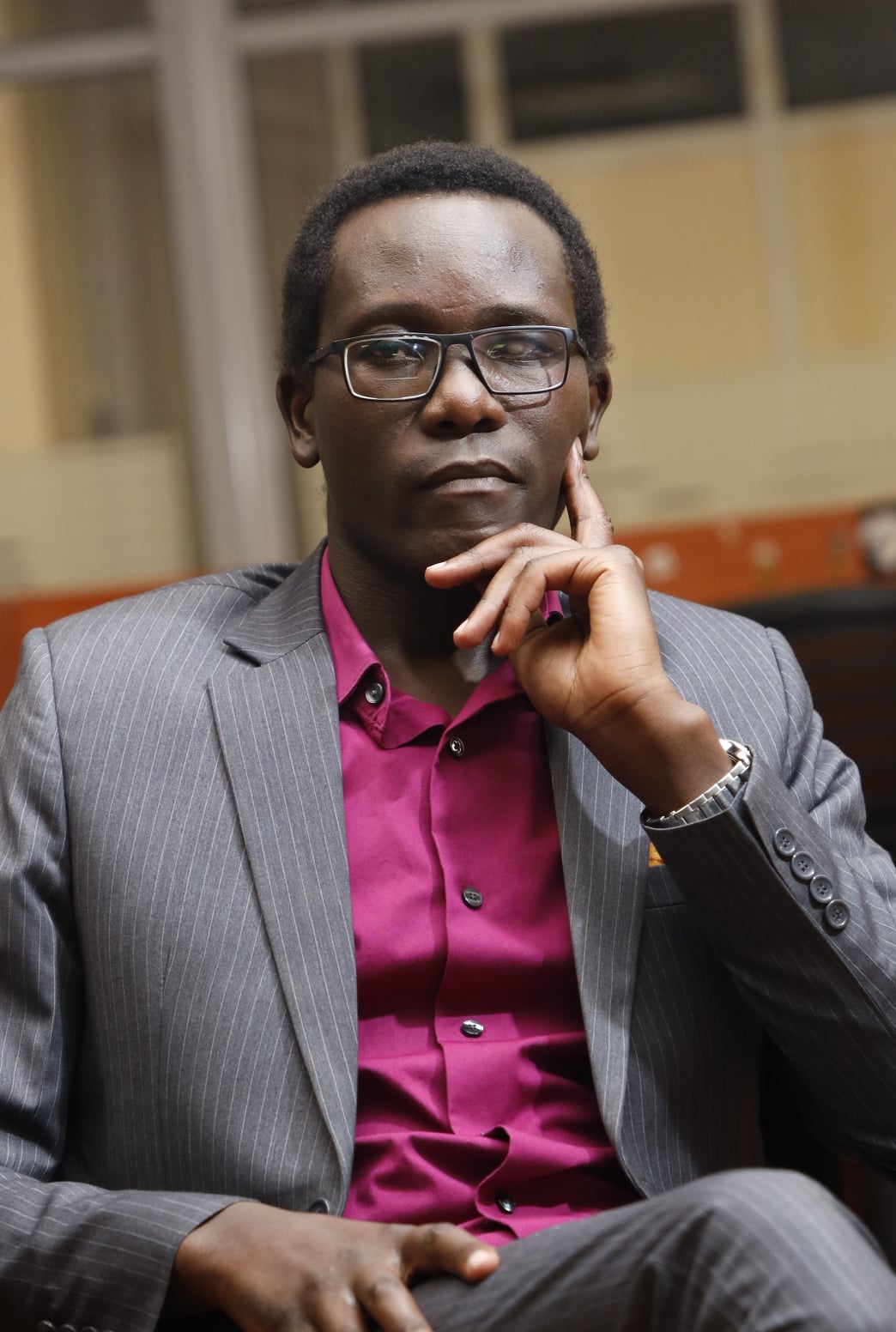
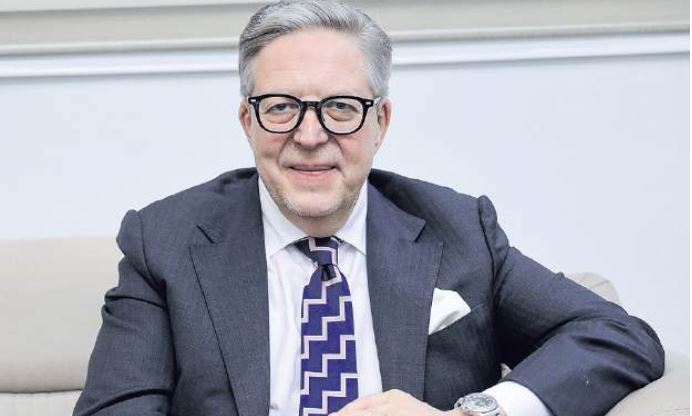
 Outgoing Finland Ambassador Pirkka Tapiola /ELIUD KIBII
Outgoing Finland Ambassador¬ Pirkka Tapiola is concluding his tour of duty in Kenya this month. He proceeds to Abidjan, Cote d’Ivoire, as executive director and member of the board of the African Development Bank.
In his new role, he will be representing a constituency of the Nordic countries, India and Ireland. In this interview edited for length and clarity, he reviews his tenure and the current political developments.
As you end your term of duty in Kenya, could you review for us your stay in Kenya and the highs and lows you experienced during your posting?
It has been a wonderful and very interesting period of nearly four years in this beautiful country, which as my President noted during his state visit is one of those middle powers that can be considered swing states in defining the new world order.
Much has happened in Kenya, the region and the world. Domestically, we saw peaceful and successful elections in 2022, devoid of post-election violence. This was a major success. Since then, however, we have seen the rise of increasing domestic problems, with popular dissatisfaction and demonstrations. The loss of life in the context of demonstrations last year and in 2025 is a reason for serious concern, as are reports of disappearances. The right to peaceful demonstration and protest is a fundamental one.
The region has also been in turmoil from the Horn of Africa to the Great Lakes region. Kenya has been called upon to play a key role. Her leadership has been and is required in mediating and finding sustainable solutions to conflicts. Here we have also been able to start a good bilateral dialogue, which I am very pleased about.
Globally the past years have been particularly challenging after Russia – a member of the P5 of the UN Security Council – challenged the entire rules-based multilateral order through an unprovoked – basically colonial – war of aggression on Ukraine. This has shaken the fundamentals of the multilateral rules-based order, which has been the guarantor of peace ever since the end of the Second World War. Kenya took a very principled stance against this aggression at the beginning. This was highly appreciated. It is important to stay on course as regards this principled stance.
One of the key battles we have had has been the fight against disinformation, which is part of the hybrid security risks posed by Russia and some other players. Fighting disinformation has been for me a major focus during my posting in Kenya.
There have been successes in this regard, but key challenges also remain. Some even talk about a post-truth world. It should also be noted that in the context of the domestic turmoil, it is absolutely vital that forces wanting to play geopolitical games or push authoritarian agendas are not instrumentalising the situation. Democracy and the rule of law need to prevail under any circumstance.
Overall, my posting here has seen the intensification of our bilateral relationship culminating in the first-ever state visit to Kenya by a Finnish Head of State, in May. Our relationship has become more political, and more equal, moving away from a donor-recipient relationship to an equal partnership. It has been a pleasure – and an honour –to be part of steering our relationship towards an ever-closer partnership.
A key highlight must have been facilitating the historic state visit by President Alexander Stubb. He then proceeded to Tanzania. What did that visit mean in regards to Finland’s interests in Kenya, the region and Africa?
The visit was a strong demonstration of our interests in Kenya, which is traditionally a strong democracy, a like-minded partner in the defence of the rules-based multilateral world order. Kenya is also the economic powerhouse of East Africa, it matters to us and it is no surprise that our Embassy in Nairobi is our largest diplomatic mission in Africa. As my President said during the visit, we see Kenya as a leader in Africa and one of those states that will help define the new world order which is emerging from the current turmoil the world is facing.
The visit reflected well what goes on in our relationship, with in-depth talks between the two Presidents on our bilateral relations, as well as regional and global developments. The President and First Lady also met with representatives of civil society for a frank and open conversation on the direction Kenya is taking. There was a business forum and a visit to a Finnfund financed development investment on providing affordable internet connectivity to people on a commercially sustainable basis. We also visited a Tvet institution to showcase the important work we are doing together with Germany in terms of skills-development and job creation for Kenya’s vibrant young population.
Two MoUs were signed during the visit – on regular political consultations and on co-operation in peace mediation – to help us intensify our dialogue and co-operation in tackling key challenges. This is very much in line with the transformation of the nature of our relationship.
So – the visit was about engagement and listening, as well as conveying messages. Kenya’s role in defending the rules-based international system is key. The visit therefore really went to the heart of both our interests and values, sending a strong signal of the importance we attach to Kenya
For me the President’s public lecture – who also has a solid academic background – at the University of Nairobi, was a particularly important element of the visit, allowing for a strong contribution to the conversation on where the world is heading.
The lecture described the current global tensions, which are affecting different states differently. Who is to blame and what do you think needs to be done?
As ambassador, I will certainly not speculate on my President’s words, nor interpret them. His key message was more about the importance of North – South engagement and the multilateral order we are seeing transforming. Kenya’s role is key and we as Finland are also strongly in favour of reforming the UN systems, which still largely reflects the realities at the Second World War.
Without pointing fingers of blame, I will of course state the obvious. Russia’s war of aggression on Ukraine constitutes the most dramatic challenge to the international system since the Second World War. We have spent decades carefully building international institutions to ensure wars could no longer be a possible as a means of changing borders and grabbing territory. Now we are seeing a colonial war aimed at re-subjugating a country that re-gained her sovereignty at the fall of the Soviet empire. The war has also caused global suffering with the interruption of supplies of grain and fertiliser. Russia alone is to blame for this suffering.
What then should be done? Fundamentally, this is about efforts of defending and restoring a just and functioning rules-based multilateral order. The defence of a rules-based system is also a domestic choice between authoritarianism from the one hand and democracy, accountable institutions and the rule of law on the other. Those who have started wars are usually for authoritarianism, violence and might rather than rules and right.
Finland has been vocal on the current national affairs, particularly police brutality and repression. Did you have a chance to share these concerns through diplomatic channels? Was government responsive and what are they saying?
Our relationship with Kenya and Kenya’s standing is very much linked to her status as a leading democracy in Africa. As part of the EU and the international community, Finland is following Kenyan domestic developments closely. I have also joined public statements by likeminded envoys who are invested in governance-related issues. We also regularly speak up as part of the EU.
Diplomacy will at times use public statements, but it is not fundamentally about such statements. Dialogue and quiet diplomacy are what our profession is and should mostly be about. In this context, we are in a constant conversation with the authorities on issues of democracy, human rights and the rule of law.
In line with good diplomatic practice, I will leave it to the Kenyan authorities to comment on their response. It is not my place to do so.
One of the key issues during your tenure was the “Finland scholarship scandal”. The President termed it as unfortunate and that mistakes were made. What measures has Finland done to avoid a repeat of the same?
This issue did indeed happened during my tenure, but strictly speaking did not involve the Finnish government. What we are talking about was a private business agreement between a county in Kenya and a University of Applied Sciences in Finland on what we call a commission education project. The so-called scandal erupted following the county government in question not honouring its payment obligations to the Finnish educational institution. The problem has, therefore, been at county level, and the needed investigative and legal action concerning local actors lies within the purview of the relevant Kenyan authorities. Accountability is and needs to be key in this context.
While the Finnish educational institution did find a solution to ensure that the affected students could finish their education, there have been important lessons in the process. These are being studied by Finnish educational institutions.
The Ministry of Education and Culture has guided higher education institutions to carefully prepare contracts and to ensure the legal protection of students, so that the buyer is not acting merely as an intermediary for student recruitment.
The Finnish government considers it of utmost importance that the rights and the well-being of students are ensured. The Embassy – and I personally – have been in touch with educational institutions is Finland to sensitise them to realities in Kenya and the risk involved in commercial education projects.
During the Kenya-Finland Business Forum, solid legislation, strong compliance and a culture of transparency came up. To what extent would you say Finnish investors have been affected by corruption in the country?
Finnish businesses are highly intolerant of corruption; even perceived risks can significantly reduce the interest compared to those from more corrupt countries. For them, any direct involvement in corruption abroad would also lead to legal consequences in Finland. Against this background, Finnish companies generally encounter challenges related to corruption in Kenya predominantly in indirect ways that elevate risks and costs rather than through direct involvement in corrupt practices. The effects of corruption are evident in the following aspects:
First, through barriers to entry corruption creates significant hurdles for potential trade and investment. It discourages companies from diving into opportunities that could otherwise seem promising.
Secondly, there are rising operating costs. Navigating compliance and due diligence requirements can result in substantially higher expenses for businesses.
Thirdly, there are operational inefficiencies due to refusing to engage in corrupt practices, companies routinely experience delays that lead to competitive disadvantages.
Finally, there is the question of effective risk management. Tackling these challenges requires a commitment of substantial resources, but the reward of safeguarding the future is well worth the investment.
So – the negative effects of corruption are considerable and lead to losses for everyone. In the end, it is the Kenyan economy and the population that lose out, as business will go elsewhere if the investment climate is not right and corruption is not tackled head on.
What is the status of the bilateral trade, and which areas should investors from both sides can explore?
Our bilateral trade remains relatively modest. However, there is a strong strategic alignment between Kenya's development priorities, such as digital transformation, healthcare and the built environment and Finland's technological strengths. It creates significant potential. The recent business forum highlighted a shared commitment to strengthening these ties.
Investments within our bilateral economic relationship should focus on healthcare, digitalisation, sustainable forestry and water technology. We are working strategically towards utilising Kenya's market and innovation potential alongside Finnish technology and processes.
However, success significantly relies on ongoing enhancements in Kenya's business environment. Key focus areas for improvement include transparency, robust institutions and efficient processes. These enhancements effectively address the compliance concerns of risk-averse Finnish companies.
With the implementation of the Economic Partnership Agreement that entered into force in 2024, the EU’s market is now fully open for Kenyan goods, while the Kenyan market will only open gradually. With the right business environment, I could well see European companies coming to Kenya to produce for the EU market. This would bring new jobs and prosperity. The EU is already Kenya’s second largest trading partner. The perspectives of this relationship could be almost limitless. But success will depend first and foremost on the business environments, which would need easy, and simply rules and processes and a serious push to fight corruption.