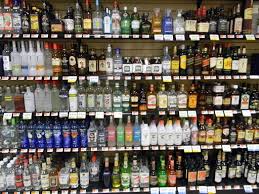
The sweeping ban to the sale of alcohol in supermarkets, petrol stations and restaurants has triggered a storm, with traders protesting the decision will destroy jobs and create a thriving bootleg market.
The proposed embargo also cuts out online orders and sales in residential areas, a move most believe targets Gen Zs who do not patronise bars but instead enjoy their tipple in vehicles after making orders online.
The controversial move, unveiled with the launch of the
National Policy for the Prevention, Management and Control of Alcohol, Drugs
and Substance Abuse, has sparked outrage among business leaders and drawn legal
questions from stakeholders.
Under the new rules, the legal age for drinking, selling or
handling alcohol has also been raised from 18 to 21 years, a decision the
government says is based on science about adolescent brain development and
public health risks.
Interior Cabinet Secretary Kipchumba Murkomen said the
crackdown targets not only illicit brews but also legal alcohol outlets that
fail to meet strict zoning and licensing rules.
Alcohol consumption is now banned in public beaches, parks,
medical facilities, sports grounds, petrol stations and public transport hubs.
Delivery of liquor to homes has also been outlawed, along
with all volume-based sales promotions, discount offers, or giveaways.
But critics say the government is going too far.
The Small and Medium Liquor Traders Association (Melta)
warned the measures could wipe out thousands of jobs and devastate small
businesses.
Melta chairman Frank Mbogo described the new policy as
well-intentioned but economically reckless, arguing that raising the drinking
age would displace more than two million young adults working in the
hospitality and liquor sectors.
“These are Kenyans who make a living in this space. Raising
the age limit will not only deny them income but will also fuel black market
alcohol consumption,” he said in a statement.
The ban on alcohol outlets within 300 metres of schools,
churches and residential areas is particularly alarming for traders in dense
urban centres.
"Where will these outlets move to? Nairobi doesn't have
the space for that kind of separation," the statement added.
Industry insiders also say the move undercuts the digital
economy.
Samuel Ndunda, head of e-commerce at East African Breweries,
termed the policy "regressive", especially the prohibition of online
alcohol sales.
He said digital platforms now account for more than five per
cent of their total revenue—up from less than one per cent in 2020—and are
driven by consumer preferences for home-hosting and convenience.
“The modern consumer isn’t necessarily drinking more, but they’re drinking differently. We’re punishing innovation,” Ndunda said.
Restaurant owners echoed similar frustrations, accusing the government of blindsiding businesses that are already struggling under high taxes, inflation and political instability.
“Alcohol is a legitimate part of our business model. We
don’t serve minors, and we follow the law. But this policy could force many of
us to shut down,” a Westlands-based restaurant owner said.
A manager at one of Kenya’s top supermarket chains added,
“We’ve invested millions into controlled liquor stores and employed hundreds of
young people. The sale of alcohol in supermarkets is heavily regulated. Banning
it is punitive.”
The policy's health rationale is backed by sobering data.
Alcohol remains Kenya’s most abused substance.
Government surveys show one in every eight Kenyans (3.2
million) drinks alcohol, while one in every six (4.7 million) uses at least one
drug or substance.
Among youth aged 15–24, substance abuse is rising fast, with
more than 630,000 using drugs and nearly 370,000 consuming alcohol.
Nacada CEO Anthony Omerikwa defended the reforms, citing
global best practices and research showing that the brain continues developing
until age 25.
He said youth between 18 and 20 are at the highest risk of
alcohol-related accidents, unsafe sex, violence and academic failure.
“This is a public health crisis. We cannot pretend it’s
business as usual,” Omerikwa said.
In a statement to newsroom, Omerikwa said the communication
is part of a national policy, contrary to media reports that it had imposed
ban.
He clarified that the next step for policy document is being
subjected to a multi-sectoral implementation framework, which comprises of the
government, civil society, industry and the public.
Omerikwa said the policy is a roadmap, not an enforcement
measure.
Interior CS Murkomen went further, declaring war on drug
barons and rogue alcohol producers.
He said the government would now partner with the Assets
Recovery Agency to seize vehicles, equipment and bank accounts linked to
illegal alcohol trade.
“Lenient court fines aren’t working. We need to hit
offenders where it hurts—take their assets, their vehicles, their businesses,”
Murkomen said.
He proposed redirecting recovered funds to build rehabilitation
centres and public awareness campaigns.
Despite the public health urgency, questions persist about
the legality, enforceability and economic impact of the new directives.
Many fear the sweeping bans could backfire, pushing alcohol
trade underground and reducing tax revenues from one of Kenya’s
highest-yielding sectors.
The policy’s stated aim is to reduce alcohol-related harm,
protect young people and address the rising burden of non-communicable diseases
(NCDs), which now account for 33 per cent of deaths in Kenya—up from 27 per
cent in 2014.
Globally, alcohol contributes to more than three million
deaths annually, with tobacco killing more than seven million.
While the policy signals a bold shift in Kenya’s approach to
public health, its success will hinge on effective enforcement, stakeholder
buy-in and mitigation of economic fallout.
As implementation begins, the government faces an uphill task: safeguarding lives without destroying livelihoods.
Instant analysis
Kenya’s sweeping alcohol reform aims to tackle substance abuse by banning sales in supermarkets, petrol stations, online platforms and near schools or churches, while raising the legal drinking age to 21. The government frames it as a public health initiative, citing rising alcohol use among youth and brain development science. However, critics argue it’s economically reckless, threatening jobs, businesses, and the digital economy. Stakeholders warn it may drive the alcohol trade underground, reduce tax revenue, and punish compliant businesses. The policy's success hinges on balancing public health with economic realities, strong enforcement, and inclusive stakeholder dialogue to avoid unintended consequences.